

The Kileleshwa zoning plan could become one of the most important planning developments affecting landowners, apartment owners, landlords, developers and property investors in this established Nairobi neighbourhood.
But there is an important distinction to make first.
A fully adopted new Kileleshwa-specific zoning plan has not yet been publicly confirmed as final.
What Nairobi City County has confirmed is that it is preparing detailed zonal plans for all 15 development zones in line with the Nairobi Integrated Urban Development Master Plan.
The county describes the project as ongoing and says the objective is to create comprehensive and enforceable Local Physical and Land Use Development Plans to guide development across Nairobi.
See Nairobi City County’s official Local Physical and Land Use Plans project.
That matters greatly for Kileleshwa because the neighbourhood has already experienced substantial transformation.
Older standalone homes and low-density residential properties have increasingly been replaced by:
- Apartment developments
- High-rise residential towers
- Mixed-use buildings
- Serviced apartments
- Commercial activity
So the central question is no longer whether Kileleshwa is changing.
It already has.
The bigger question is:
How will future planning rules control that growth?
A new Kileleshwa zoning plan could influence:
- Building height
- Plot ratio
- Ground coverage
- Density
- Parking requirements
- Land use
- Setbacks
- Redevelopment potential
- Neighbouring construction
Here are seven major implications property owners should watch.
1. The Kileleshwa Zoning Plan Could Change How Much Can Be Built on a Plot

The biggest zoning issue is development intensity.
Two plots of the same size can have very different values depending on what is legally permitted.
One parcel may support:
- A low-rise residential building
while another may support:
- A multi-storey apartment development
- Mixed-use property
- Significantly greater floor area
That difference affects what a developer is willing to pay.
Under Kenya’s Physical and Land Use Planning Act, county governments have the power to regulate:
- Land use
- Density
- Development applications
- Zoning
- Subdivision
- Development permission
The law specifically gives counties the authority to formulate zoning rules regulating the use and density of development.
That means a revised planning framework could materially affect the value of land in Kileleshwa.
A house may remain exactly the same physically.
But if the land underneath it gains greater development rights, its economic value can change substantially.
2. Kileleshwa Has Already Outgrown Its Older Zoning Model
Kileleshwa’s current built environment looks very different from the planning rules historically associated with the area.
A 2025 Environment and Land Court decision discussing Nairobi planning history noted that the 2004 Nairobi zoning guide grouped Kileleshwa, Riverside Drive, Kilimani, Spring Valley and other areas within Zone 4.
That older guide allowed residential apartment development up to four storeys in the relevant context.
However, the same judgment noted that the Nairobi Integrated Urban Development Master Plan recognised that actual development had already moved far beyond those older controls.
Read the Environment and Land Court decision through Kenya Law.
The judgment also records that the older 2004 guide did not meet the full requirements of a modern Local Physical and Land Use Development Plan under the current planning law.
That is important.
It helps explain why Nairobi City County is now working toward more detailed and enforceable zonal plans.
For Kileleshwa owners, clearer zoning could mean greater certainty around:
- What can be built
- Where higher-density development belongs
- What land uses are permitted
- What infrastructure should support development
3. Higher Density Could Increase the Value of Older Kileleshwa Properties
Imagine you own an older standalone house on a large parcel in Kileleshwa.
As a residence, the property has one value.
As a redevelopment site, it may have another.
If planning rules allow a significant apartment development, a developer will look at:
- Plot size
- Road access
- Frontage
- Permitted height
- Plot ratio
- Ground coverage
- Parking requirements
and calculate how much saleable floor area can be created.
That can make the land more valuable than the house sitting on it.
This is why older properties sometimes attract strong developer interest.
Developers may propose:
Cash Purchase
The landowner sells outright.
Joint Venture
The owner contributes land while the developer provides financing and construction expertise.
Land-for-Units Arrangement
The owner receives apartments in the completed project.
These arrangements can be valuable.
But owners should not negotiate blindly.
Before accepting an offer, establish:
- Current planning controls
- Potential development rights
- Independent land valuation
- Development feasibility
The right question is not simply:
“What is my house worth?”
It is:
“What can legally and commercially be developed on this land?”
4. The Kileleshwa Zoning Plan Could Affect Existing Apartment Owners
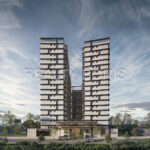
Zoning is equally important for people who already own apartments.
Imagine you bought your apartment because it has:
- Open views
- Natural light
- Privacy
- Low neighbouring development
The plot next door currently contains an old house.
If future zoning permits substantially greater density, that plot may eventually support a large apartment building.
Your property could lose:
- View
- Privacy
- Daylight
- Quiet surroundings
At the same time, more development could improve the neighbourhood through:
- New retail
- Restaurants
- Services
- Better commercial activity
So the same zoning change can create both winners and losers.
A landowner may benefit because the neighbouring land becomes more valuable.
An apartment owner beside that land may face reduced privacy.
This is why buyers should never inspect only the unit they are purchasing.
They should also ask:
What could legally be built on surrounding plots?
5. More Density Could Increase Apartment Competition
Higher density is not automatically positive for every property investor.
If more development is permitted, Kileleshwa could see even more:
- One-bedroom units
- Two-bedroom units
- Three-bedroom apartments
- Furnished units
- Off-plan developments
That increases supply.
Existing landlords may then compete with newer buildings offering:
- Better finishes
- Newer gyms
- Heated pools
- Smart-home systems
- Flexible rents
- Furnished packages
This can affect:
- Rental pricing
- Vacancy
- Tenant retention
- Resale value
So a future Kileleshwa zoning plan could potentially increase the value of development land while creating more competition for existing apartments.
Those outcomes are not contradictory.
Land value and apartment rental performance are different things.
6. Infrastructure Will Become Even More Important
Higher density only works well when infrastructure keeps pace.
More apartments mean:
- More residents
- More vehicles
- More water demand
- More sewer usage
- More electricity demand
- More pressure on roads
This makes planning about much more than building height.
It also involves:
- Road capacity
- Drainage
- Sewerage
- Water
- Parking
- Public space
- Transport
The Physical and Land Use Planning framework requires local plans to consider matters such as population, housing, transport, roads, water and sewerage infrastructure.
That is one reason proper local planning matters.
Density without infrastructure can reduce neighbourhood quality.
Kileleshwa property owners should therefore monitor not only how many floors may be allowed, but also whether infrastructure upgrades accompany the increased development.
7. Development Permission Will Still Be Required

Even where zoning allows higher-density development, developers cannot simply start construction automatically.
Section 57 of the Physical and Land Use Planning Act requires development permission before development is undertaken.
The county also has authority to:
- Review development applications
- Regulate density
- Control land use
- Impose planning conditions
That means zoning sets the framework.
It does not automatically approve a particular building.
A project may still need to address:
- Parking
- Structural design
- Access
- Drainage
- Environmental requirements
- Building setbacks
- Population density
So if someone tells you:
“The zoning allows high-rise development, therefore this project is already approved,”
that is incomplete.
Planning potential and formal project approval are different.
What Does Zone 4 Mean for Kileleshwa?
Historically, Kileleshwa has been grouped within Nairobi’s Zone 4 planning framework.
Court records discussing older Nairobi zoning guidelines identify Zone 4 as including areas such as:
- Kileleshwa
- Kilimani
- Riverside Drive
- Spring Valley
- Woodley
The Nairobi City County Finance Act planning schedules have also continued to reference Zone 4 for planning-related charges.
The challenge is that Kileleshwa has changed dramatically since the older zoning framework was created.
That is why a more detailed local plan could be significant.
It may introduce more precise controls according to:
- Exact road
- Infrastructure
- Neighbourhood character
- Development intensity
This could make micro-location increasingly important.
What Is Plot Ratio?
Plot ratio is one of the most important planning concepts for landowners.
It controls how much total floor area can be developed relative to the land size.
Suppose a property has:
1,000 sqm of land
and a permitted plot ratio of:
3.0
The theoretical gross floor area may be approximately:
3,000 sqm
subject to other controls.
If a future zoning framework increases the permitted plot ratio, the site may support more floor area.
That can make the land more attractive to developers.
This is one reason planning changes can increase land value even before construction begins.
What Is Ground Coverage?
Ground coverage controls the percentage of land that can be occupied by the building footprint.
Suppose the site is:
1,000 sqm
and ground coverage is:
40%.
The building footprint may generally occupy about:
400 sqm
subject to other planning requirements.
The remaining land may need to accommodate:
- Setbacks
- Parking
- Landscaping
- Access
Ground coverage and plot ratio work together.
A zoning change affecting either can materially change the economics of development.
Could the Kileleshwa Zoning Plan Increase Property Values?
Possibly.
But the effect will vary.
Landowners Could Benefit From:
- Greater redevelopment potential
- Higher permissible density
- Mixed-use potential
- Stronger developer demand
Apartment Owners Could Benefit From:
- Better amenities nearby
- Stronger neighbourhood activity
- Improved infrastructure
But Some Owners Could Face:
- More traffic
- Loss of views
- Reduced privacy
- Greater apartment supply
- More rental competition
The important lesson is:
zoning changes do not affect every property in the same way.
Could Kileleshwa Become Even More Vertical?
Potentially.
The neighbourhood is already moving strongly toward apartment living.
Future planning could formalise where higher-density development is most appropriate.
The real planning question is whether growth remains balanced.
A neighbourhood should not be evaluated only by:
how many floors can be built.
It should also consider:
- Roads
- Trees
- Open space
- Parking
- Drainage
- Sewerage
- Quality of life
If development intensity rises faster than infrastructure, the area can become less attractive even as land values rise.
What Could the Kileleshwa Zoning Plan Mean for Rental Investors?
Investors should monitor both sides of the equation.
Demand Could Increase
More businesses and residents may create stronger demand for:
- Apartments
- Restaurants
- Retail
- Services
Supply Could Increase Too
More development rights can produce thousands of additional units.
That means landlords should assess:
- Future pipeline
- Unit type
- Competing buildings
- Rental pricing
A one-bedroom apartment may face greater supply pressure than a rare four-bedroom family unit.
The impact will differ by segment.
Could Older Apartments Benefit?
Possibly.
Older Kileleshwa buildings can offer:
- Larger bedrooms
- Bigger balconies
- Lower density
- More mature landscaping
As newer projects become smaller and denser, some older apartments may become attractive because of their space.
But they may also face disadvantages such as:
- Older lifts
- Higher maintenance
- Less modern amenities
Zoning does not automatically make older properties obsolete.
It can actually make certain scarce property characteristics more valuable.
What About Parking?

Parking is a major concern in densifying neighbourhoods.
More apartments mean more vehicles.
Future planning controls may therefore place greater emphasis on:
- Resident parking
- Visitor parking
- Basement parking
- Access design
Parking requirements affect development feasibility.
A developer may have theoretical permission for substantial floor area but still need enough parking to support the project.
This can influence:
- Construction cost
- Unit pricing
- Site layout
For smaller land parcels, parking can materially limit development potential.
Should You Buy Because of a Future Zoning Change?
Not on speculation alone.
You may hear claims such as:
“This road will soon allow 25 floors.”
or:
“This plot will double in value.”
Ask for evidence.
Check:
- Is the plan final?
- Is it still under review?
- Has it been approved by the County Executive?
- Has the County Assembly approved it?
- What rules apply today?
A property should still make sense based on current fundamentals.
Future planning changes should be treated as:
possible upside
not guaranteed returns.
Property Owners Should Watch Public Participation
Nairobi City County uses its HusikaNai public participation platform to publish plans, projects and opportunities for residents to comment.
This is important because zoning affects:
- Development rights
- Neighbourhood character
- Property values
- Traffic
- Infrastructure
Owners should monitor:
- Draft zonal plans
- Planning notices
- Public meetings
- Stakeholder consultations
- County Assembly processes
Do not wait until the final document is adopted.
If planning changes affect your property, engage while proposals are still being considered.
Kileleshwa Zoning Plan: What Property Owners Should Check
Monitor at least these issues:
- Permitted land use
- Building height
- Plot ratio
- Ground coverage
- Setbacks
- Parking requirements
- Density controls
- Mixed-use permissions
- Infrastructure requirements
- Approval status
These can materially affect property value and redevelopment potential.
Could the Kileleshwa Zoning Plan Make Your Property Worth More?
Potentially.
But only where the planning rights create commercially usable development potential.
A professional valuer or planner should consider:
- Plot size
- Site access
- Comparable sales
- Permitted use
- Plot ratio
- Construction economics
- Market demand
Do not assume greater height automatically means greater land value.
A site can have generous planning rights but still be difficult to develop because of:
- Shape
- Access
- Parking
- Infrastructure
The strongest value uplift occurs where planning potential is:
legally clear + technically feasible + commercially viable.
Final Thoughts on the Kileleshwa Zoning Plan
The Kileleshwa zoning plan could significantly influence the next stage of one of Nairobi’s most established residential markets.
Nairobi City County is currently preparing detailed zonal plans across its 15 development zones, with the stated goal of creating clearer and more enforceable planning controls.
See the official Nairobi City County Local Physical and Land Use Plans project.
For Kileleshwa property owners, future planning changes could affect:
- Land values
- Apartment values
- Development density
- Rental supply
- Traffic
- Privacy
- Parking
- Redevelopment opportunities
But property owners should distinguish between:
proposals
and
legally adopted planning controls.
Before buying, selling or redeveloping property in Kileleshwa, ask:
- What zoning applies today?
- What changes are proposed?
- Has the new plan been approved?
- What can legally be built?
- What can surrounding plots become?
- How would increased density affect my property?
For landowners, the greatest opportunity may be redevelopment.
For apartment owners, the greatest risk may be uncontrolled surrounding density.
The strongest property decisions will come from understanding both.
Considering an Off-Plan, Newly Completed Apartment or Development Opportunity in Nairobi?
Contact Realty Boris to explore carefully selected opportunities across Kileleshwa, Westlands, Kilimani, Riverside, Lavington and Nairobi’s other premium locations—and assess zoning, surrounding development, land-use potential, purchase price, developer credibility and proper legal and planning due diligence before committing to a property or making substantial payments.