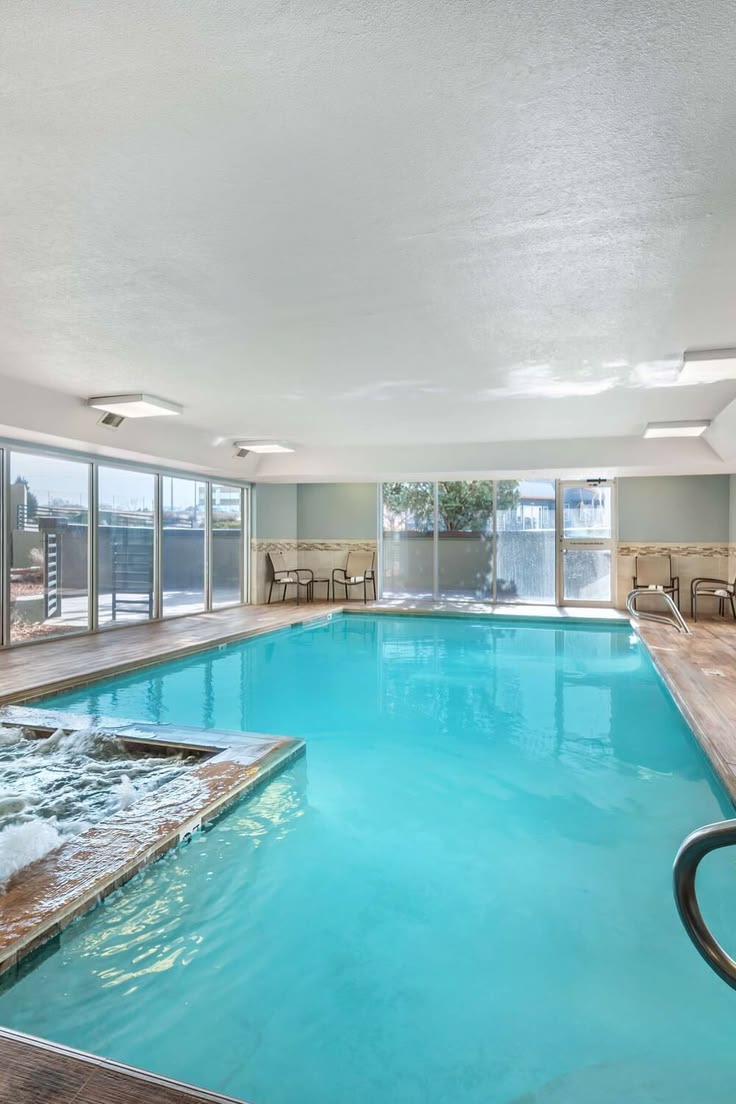
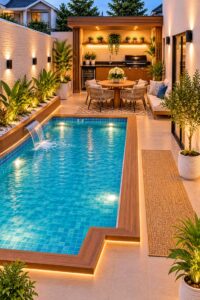
Does a swimming pool increase property value? In Nairobi, the answer is sometimes yes—but not automatically.
A swimming pool can make an apartment development, townhouse or luxury home more attractive.
It can improve:
- Buyer perception
- Tenant appeal
- Lifestyle value
- Marketing
- Short-term rental positioning
But a pool can also create:
- Higher service charges
- Maintenance expenses
- Water-treatment costs
- Safety obligations
- Repair costs
So the correct question is not simply:
“Does this property have a pool?”
It is:
“Does the pool create enough additional buyer or tenant value to justify what it costs?”
This distinction matters particularly in Nairobi’s premium residential market.
According to the Kenya National Bureau of Statistics Real Estate Survey, swimming pools were present in 39.9% of surveyed residential properties, while gyms were found in 44.3%.
That tells us something important.
A swimming pool is a meaningful residential amenity—but in many modern premium developments, it is no longer unusual.
So having one may help a development compete.
Not having one may sometimes put a premium development at a disadvantage.
But simply adding a pool does not guarantee that an apartment becomes worth millions more.
Here are seven factors buyers, investors and developers should consider.
1. Does a Swimming Pool Increase Property Value for Owner-Occupiers?
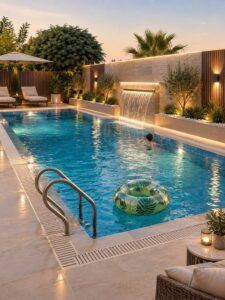
For an owner-occupier, value is not measured only through rental yield.
Lifestyle matters.
A family may value having a pool because it provides:
- Recreation
- Children’s activity
- Exercise
- Social space
- Convenience
Instead of driving to a private club or gym, residents have access within the compound.
That can increase a buyer’s willingness to choose one development over another.
Imagine two otherwise similar apartments.
Development A
- Gym
- Security
- Parking
- No swimming pool
Development B
- Gym
- Security
- Parking
- Heated swimming pool
If both are similarly priced, many premium buyers may prefer Development B.
That can improve marketability.
But marketability and actual valuation uplift are not identical.
A buyer might prefer the property with a pool without agreeing to pay KSh 3 million more for it.
That distinction is critical.
2. A Swimming Pool Can Increase Marketability More Than Price
This may be the most important point.
A pool may make a home:
- Easier to market
- More visually impressive
- More attractive during viewings
- More competitive online
That can help a property sell faster.
But selling faster does not necessarily mean selling at a dramatically higher price.
Suppose:
Apartment A
Price:
KSh 20 million
No pool.
Apartment B
Price:
KSh 21 million
Pool.
If buyers consistently choose Apartment B, the pool clearly has value.
But if the developer asks:
KSh 25 million
simply because there is a swimming pool, buyers may decide the premium is excessive.
The amenity needs to make economic sense.
3. Does a Swimming Pool Increase Property Value in Premium Nairobi Areas?
The answer can depend heavily on location and property type.
In areas such as:
- Westlands
- Riverside
- Kilimani
- Kileleshwa
- Lavington
buyers increasingly compare developments based on amenity packages.
A modern apartment may offer:
- Swimming pool
- Gym
- Co-working space
- Rooftop terrace
- Children’s play area
- Backup generator
- Borehole
- Smart-home systems
In this environment, a pool may become part of the expected specification rather than an exceptional luxury.
That changes its value.
If nearly every competing development offers a pool, having one may not allow the developer to charge a massive premium.
Instead, the pool helps the development avoid being perceived as inferior.
This is sometimes called a defensive amenity.
It protects competitiveness rather than creating extraordinary value.
4. Pools May Matter More in Certain Property Categories
The value of a swimming pool depends on the buyer.
Luxury Family Homes
A private pool can be highly attractive in areas such as:
- Karen
- Runda
- Kyuna
- Lavington
especially where the property has:
- Large garden
- Entertainment space
- Family-oriented layout
Here, a well-designed private pool can become part of the overall lifestyle package.
Premium Apartment Developments
A shared pool can increase perceived quality.
But because many residents share it, buyers may value:
- Size
- Heating
- Privacy
- Sunlight
- Design
A tiny rooftop pool used mainly for marketing may add much less value than a genuinely usable one.
Entry-Level Apartments
A pool may add unnecessary service-charge pressure.
If tenants in that market are highly price-sensitive, they may prefer:
lower rent
over
premium amenities.
So the same pool can be valuable in one segment and financially inefficient in another.
5. Does a Swimming Pool Increase Rental Income?
Potentially.
But the rent increase needs to be measured.
Suppose two similar two-bedroom apartments exist in comparable locations.
Building A
Monthly rent:
KSh 100,000
No pool.
Building B
Monthly rent:
KSh 110,000
Swimming pool.
The apparent pool-related premium is:
KSh 10,000 per month
or:
KSh 120,000 per year.
That sounds useful.
But now consider the service charge.
If Building B costs the owner an additional:
KSh 8,000 per month
because of the pool and other amenities, the net rental advantage becomes much smaller.
That is why investors should compare:
rent premium minus operating cost
rather than simply asking whether tenants like pools.
6. Service Charges Can Cancel Out the Benefit
Swimming pools are expensive to maintain.
Costs can include:
- Chemicals
- Filtration
- Pumps
- Cleaning
- Heating
- Lighting
- Repairs
- Water
- Pool attendants
- Safety equipment
These expenses are usually passed to owners through service charge.
Suppose:
Apartment Without Pool
Service charge:
KSh 12,000 per month
Apartment With Pool
Service charge:
KSh 22,000 per month
Difference:
KSh 10,000 monthly
Annual difference:
KSh 120,000
Over five years:
KSh 600,000
before increases.
This is why buyers should never judge amenities only by how impressive they look during a viewing.
Ask:
What will this cost me every month?
For rental investors, high service charges can reduce net yield significantly.
7. A Poorly Maintained Pool Can Reduce Property Appeal
A pool is valuable only if it works.
A badly maintained pool can become a negative feature.
Buyers may see:
- Dirty water
- Broken tiles
- Cracked surrounds
- Non-functioning pumps
- Closed facilities
and conclude that the entire development is poorly managed.
That can damage confidence.
A neglected pool can signal:
- Weak management
- Low sinking funds
- Poor service-charge collection
- Deferred maintenance
So a pool is not automatically an asset.
It must be properly maintained.
Swimming Pools Are Already Common in Kenya’s Formal Residential Market
Official KNBS data helps put the amenity into perspective.
The 2023/24 Real Estate Survey reported that among residential properties surveyed:
- 59.8% had CCTV
- 59.1% had a garden, backyard or play area
- 55.0% had a backup generator
- 54.6% had fixed internet infrastructure
- 44.3% had a gym
- 40.9% had an elevator
- 39.9% had a swimming pool
This suggests a swimming pool is important, but not unique.
For premium buyers, it increasingly forms part of a broader amenity package rather than acting as the sole reason to pay a premium.
Does a Heated Pool Add More Value?
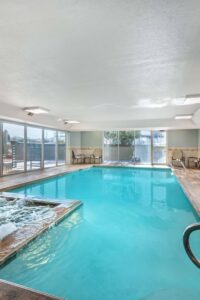
Potentially.
Nairobi’s climate means outdoor pools can feel cold during:
- Early mornings
- Evenings
- Cooler months
A heated pool can therefore be more usable.
That may increase lifestyle value.
But heating also increases:
- Electricity consumption
- Maintenance
- Service charge
Again, the question is not:
Is heated better?
It is:
Does the added usability justify the ongoing cost?
What About Private Pools in Villas?
Private swimming pools require a different analysis.
A luxury villa buyer may value a private pool much more highly than an apartment buyer values a shared pool.
Why?
Because the resident has:
- Full control
- Privacy
- Exclusive use
For a premium villa, a professionally integrated pool can enhance the overall property proposition.
But private pools also involve direct ownership costs.
These include:
- Cleaning
- Chemicals
- Pump maintenance
- Electricity
- Repairs
A homeowner must therefore ask whether they will genuinely use it.
A beautiful pool that nobody uses becomes a maintenance expense.
Safety and Construction Standards Matter
Swimming pools are also subject to construction and drainage requirements.
Kenya’s National Building Code 2024 contains provisions dealing with swimming pools, including how overflow and filter backwash should be discharged.
For developers, that means a pool must be properly designed as part of the overall building infrastructure.
A poorly executed pool can create:
- Water damage
- Drainage problems
- Structural concerns
- Ongoing repair costs
So buyers should also consider construction quality, not only appearance.
Does a Swimming Pool Increase Property Value for Airbnb?
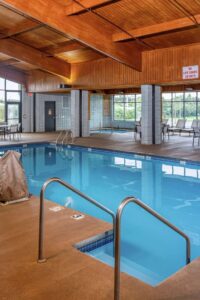
It can help.
Short-stay guests often choose properties based on:
- Photos
- Amenities
- Experience
A pool can make an Airbnb listing look more attractive.
It may support:
- Higher click-through rates
- Better marketing
- Premium positioning
But again, it does not guarantee higher profit.
Suppose a pool allows you to increase your nightly rate by:
KSh 500
At 20 occupied nights per month:
Additional gross income:
KSh 10,000
If the pool-related share of service charges and other operating costs exceeds that, the financial benefit may disappear.
The stronger Airbnb property is one where the amenity improves both:
occupancy
and
nightly rate.
Do Tenants Actually Care About Swimming Pools?
Some do.
Some do not.
Tenant priorities vary.
A young professional may prioritise:
- Gym
- Internet
- Backup power
- Location
over a pool.
A family may value:
- Children’s play area
- Security
- Parking
more highly.
An expatriate or corporate tenant may expect a pool as part of a premium development.
This is why developers should design amenities around their target tenant.
The best amenity is not necessarily the most expensive one.
It is the one residents actually use.
Pool Versus Bigger Apartment: Which Is More Valuable?
Imagine two units at the same price.
Apartment A
110 sqm
No pool.
Apartment B
90 sqm
Swimming pool.
Which is better?
For an investor, Apartment A may offer:
- More usable space
- Better family demand
Apartment B may offer:
- Better lifestyle appeal
- Better short-stay marketing
There is no universal answer.
But buyers should avoid sacrificing too much usable space simply to gain a long amenities list.
Bedrooms, layout and natural light usually affect everyday living more directly than amenities used occasionally.
Pool Versus Lower Service Charge
This is another useful comparison.
Suppose:
Building A
No pool
Service charge:
KSh 12,000
Building B
Pool
Service charge:
KSh 25,000
Difference:
KSh 13,000 monthly
Over one year:
KSh 156,000
Over ten years:
KSh 1.56 million
before increases.
Ask yourself:
Would I personally pay KSh 1.56 million over ten years for access to that pool?
For some buyers, yes.
For others, absolutely not.
That is how amenities should be evaluated.
Does a Swimming Pool Increase Property Value More in Older Developments?
Sometimes.
If an older apartment complex was built with:
- Large grounds
- Mature landscaping
- Proper swimming pool
- Low density
the combination can be particularly attractive because modern developments may struggle to reproduce the same amount of shared space.
But the pool must still be well maintained.
Age alone does not create value.
Developers Should Avoid “Amenity Inflation”
Nairobi developers increasingly compete by adding:
- Infinity pools
- Cinemas
- Golf simulators
- Spas
- Games rooms
- Co-working spaces
- Children’s areas
This can create amenity inflation.
Every project tries to advertise a longer list.
But buyers should ask:
How many of these facilities will actually be used?
Ten practical amenities can be better than thirty expensive facilities that residents rarely use.
The stronger development balances:
- Lifestyle
- Maintenance
- Service charge
How Investors Should Evaluate a Pool
Before buying, compare:
1. Rent Without Pool
What do similar nearby properties achieve?
2. Rent With Pool
Is there a measurable premium?
3. Service Charge Difference
How much does the amenity cost?
4. Occupancy
Does the pool improve demand?
5. Resale
Do buyers actively prefer these developments?
6. Maintenance Quality
Is the pool consistently functional?
Then calculate whether the amenity improves net return.
For qualifying resident landlords, the Kenya Revenue Authority currently charges Monthly Residential Rental Income Tax at 7.5% of qualifying gross rent received.
This reinforces the importance of comparing net economics rather than headline rent.
Does a Swimming Pool Increase Property Value? The Answer by Buyer Type
Owner-Occupier
Potentially yes, especially if the household will genuinely use it.
Long-Term Rental Investor
Possibly, if it raises rent or reduces vacancy enough to outweigh service charges.
Airbnb Investor
Often useful for marketing, but the economics still depend on occupancy and nightly rates.
Luxury Villa Buyer
Potentially significant, particularly where the pool is private, well designed and integrated into outdoor living.
Budget Apartment Investor
Not necessarily. Lower service charges may be more valuable than an amenity tenants will rarely pay extra for.
Five Signs a Pool Is Actually Adding Value
A pool is more likely to strengthen the property where:
- It is professionally maintained.
- Residents genuinely use it.
- Comparable developments without pools rent or sell for less.
- The service charge remains reasonable.
- The pool fits the target buyer or tenant profile.
Without those factors, the pool may be more marketing feature than investment advantage.
Final Thoughts: Does a Swimming Pool Increase Property Value?
Does a swimming pool increase property value? Yes, it can—but the increase is rarely automatic.
A pool can improve:
- Lifestyle
- Marketability
- Tenant appeal
- Short-term rental positioning
- Premium perception
But buyers and investors also need to account for:
- Service charges
- Maintenance
- Repairs
- Water
- Electricity
- Management
Official KNBS data shows that swimming pools already exist in roughly 39.9% of surveyed residential properties, meaning pools are a meaningful but increasingly common amenity in Kenya’s formal property market.
So when comparing two developments, do not ask only:
“Which one has a pool?”
Ask:
“How much additional value is the pool actually creating?”
If the property:
- Rents for more
- Attracts tenants faster
- Sells more easily
- Provides genuine lifestyle value
while maintaining reasonable service charges, the pool can be a worthwhile amenity.
If it simply looks impressive on the brochure while driving up ownership costs, it may add very little real investment value.
The best property is not necessarily the one with the longest amenities list.
It is the one where:
purchase price + rent + service charge + location + usable space + amenities
work together.
Considering an Off-Plan or Newly Completed Apartment in Nairobi?
Contact Realty Boris to explore carefully selected developments across Westlands, Kilimani, Kileleshwa, Riverside, Lavington and Nairobi’s other premium locations—and compare amenities, usable space, service charges, realistic rental demand, developer quality and overall net investment value before committing to a property or making substantial payments.