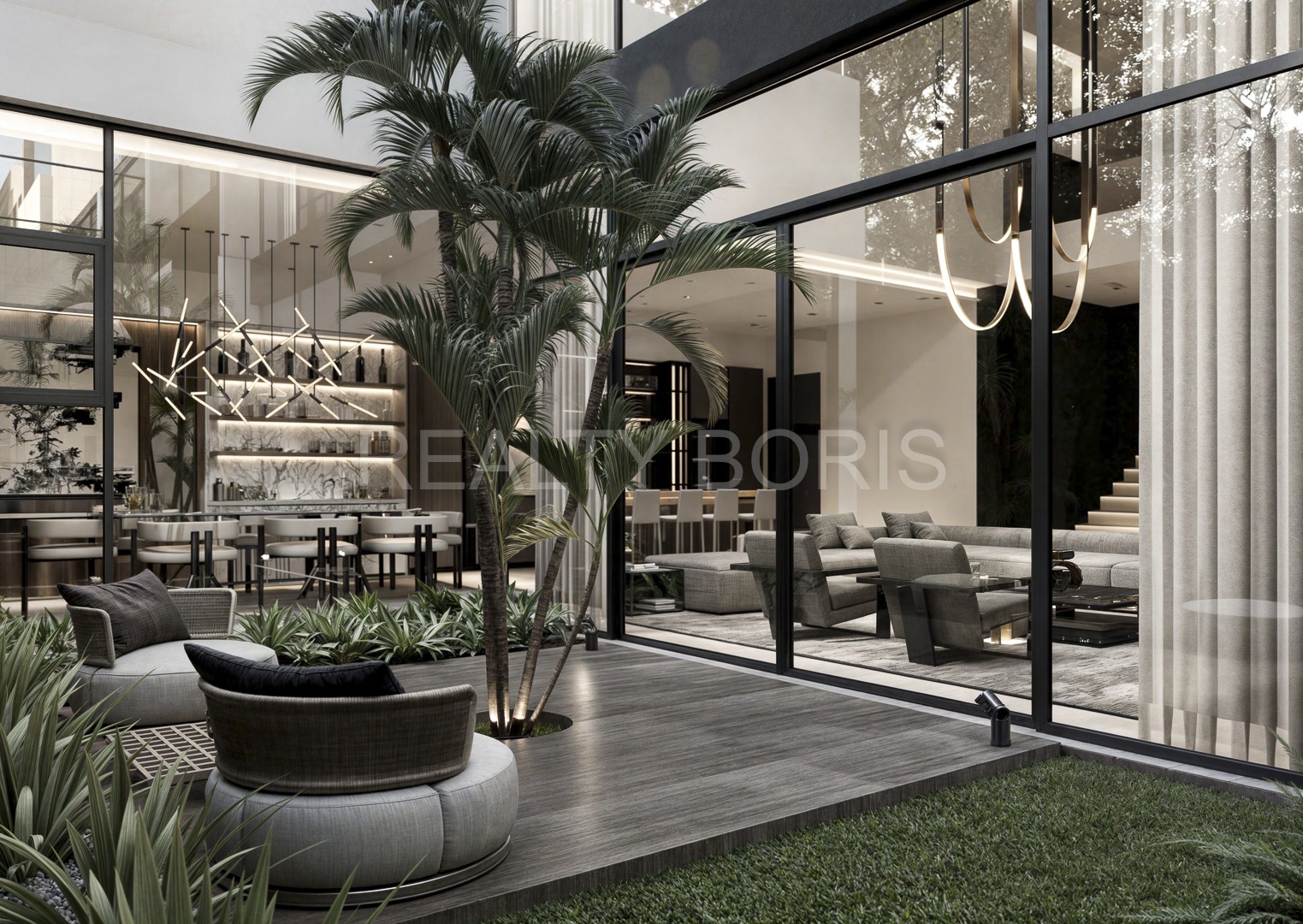


Quiet Pockets of Kilimani are becoming increasingly valuable as one of Nairobi’s most popular residential neighbourhoods becomes denser, busier and more heavily developed.
Kilimani remains one of Nairobi’s strongest residential addresses because of its central location.
Residents have relatively easy access to:
- Upper Hill
- Nairobi CBD
- Westlands
- Lavington
- Kileleshwa
- Ngong Road
- major shopping centres
- schools
- hospitals
- restaurants
But this convenience has also attracted significant development.
Some streets now contain:
- large apartment towers
- restaurants
- commercial businesses
- serviced apartments
- short-stay rentals
- construction sites
- heavy traffic
That means saying:
“I want to live in Kilimani”
is no longer specific enough.
The experience of living directly along a busy commercial road can be completely different from living only several hundred metres away on a quieter residential street.
At Realty Boris, we believe buyers increasingly need to understand micro-location.
The neighbourhood name tells you where the property is.
The exact road tells you what living there may actually feel like.
Official KNBS property-price reporting itself groups Kilimani within the broader Nairobi Middle residential market alongside areas such as Kileleshwa, Westlands, Parklands and Hurlingham. But KNBS also notes that individual property value depends on the specific characteristics of the property rather than broad index movements alone.
KNBS Residential Property Price Index
The same principle applies within Kilimani.
Two apartments can both have a Kilimani address while providing completely different residential experiences.
This is why understanding the Quiet Pockets of Kilimani can give buyers an advantage.
Quiet Pockets of Kilimani: Why Micro-Location Matters

Quiet Pockets of Kilimani are not necessarily isolated or remote.
In fact, the best ones often provide the opposite.
They allow residents to remain close to:
- Yaya Centre
- Adlife Plaza
- Prestige Plaza
- schools
- restaurants
- gyms
- hospitals
- major roads
while avoiding some of the heaviest traffic and commercial activity.
For many buyers, that balance is exactly what makes a good Kilimani address.
Imagine two apartments.
Apartment A
Located directly beside a major commercial road.
Advantages:
- shops downstairs
- restaurants nearby
- public transport
- high visibility
Disadvantages may include:
- traffic noise
- more pedestrian activity
- delivery vehicles
- short-stay activity
- commercial traffic
Apartment B
Located five minutes away on an interior road.
Advantages may include:
- lower through-traffic
- more residential surroundings
- greater privacy
- quieter evenings
while still providing similar access to the wider Kilimani lifestyle.
Both can be good properties.
But they suit different buyers.
This is why a purchaser should never evaluate Kilimani solely by neighbourhood name.
1. The Kirichwa–Muringa Road Pocket
One of the first Quiet Pockets of Kilimani buyers should investigate is the area around sections of Kirichwa Road and Muringa Road.
This pocket sits close enough to the main Kilimani lifestyle corridors to remain convenient while parts of it still maintain a more residential feel.
Residents can reach:
- Yaya Centre
- Argwings Kodhek Road
- Ngong Road
- Adlife Plaza
- Prestige Plaza
without necessarily living directly on those heavily trafficked roads.
The appeal is particularly strong for buyers looking for:
- family apartments
- larger two-bedroom units
- three-bedroom apartments
- longer-term rentals
rather than purely short-stay investment stock.
However, buyers should understand that Kirichwa Road itself is changing.
New apartment developments continue appearing in the wider area.
A street that feels relatively calm today can change considerably when several new developments are completed.
That means the buyer should investigate not only the existing environment but the development pipeline.
Before purchasing, walk beyond the building gate.
Look for:
- demolished houses
- construction hoarding
- vacant plots
- old low-rise apartments
- development notices
These can indicate where future construction may occur.
Quiet Pockets of Kilimani Around Kirichwa: What Buyers Should Check
A good Kirichwa-area property should ideally balance:
Convenience
with:
Residential positioning.
Ask:
- Is the building directly on the road?
- Is the unit facing the road or internal courtyard?
- What sits on the neighbouring plots?
- How much construction is nearby?
- Is the project primarily owner-occupied or investment-led?
- Are short stays common?
Sometimes the quieter unit is not in the quieter building.
A high-floor apartment facing internally may feel much calmer than a low-floor apartment directly facing traffic.
Micro-location continues inside the development itself.
2. Riara Road Toward the Lavington Edge
Another of the stronger Quiet Pockets of Kilimani is the western side of the neighbourhood approaching Lavington.
The Riara side can offer a different residential experience from central Kilimani.
As you move away from the busiest commercial stretches, parts of this area can feel more residential.
This appeals particularly to:
- families
- professionals
- longer-term tenants
- residents who want easier access toward Lavington
The strategic advantage is location.
You can remain connected to Kilimani while also gaining relatively convenient access toward:
- Lavington
- Junction area
- Ngong Road
- nearby schools
This can create a useful middle ground.
You do not completely sacrifice Kilimani’s convenience.
But you may avoid some of its more intensely commercial streets.
For an end-user buyer, this distinction can be more valuable than another shared amenity.
Why the Riara Side Can Appeal to Families
Families tend to evaluate neighbourhoods differently from short-term investors.
An Airbnb investor may prioritise:
- visibility
- restaurants
- transport
- nightlife
A family may prioritise:
- quieter evenings
- schools
- bedrooms
- storage
- parking
- security
- lower resident turnover
That means the same Kilimani road can perform differently depending on the buyer.
At Realty Boris, we advise clients to start with the intended resident.
If you are buying a three-bedroom apartment for a family tenant, the quiet side of a neighbourhood may matter considerably more than nightlife proximity.
3. Elgeyo Marakwet’s Interior Residential Sections
Another area buyers can investigate when searching for Quiet Pockets of Kilimani is the interior around Elgeyo Marakwet Road and its less commercial side streets.
The important distinction is which section.
A road can change character several times.
One junction may be busy.
Several hundred metres farther away, traffic may reduce substantially.
This is why buyers should avoid evaluating the property from Google Maps alone.
Drive the route.
Better yet, drive it at:
- 7:30 a.m.
- 5:30 p.m.
- 9:00 p.m.
You may discover three completely different neighbourhood experiences.
Traffic patterns affect:
- noise
- access
- privacy
- commute
- resale appeal
An apartment that appears perfectly positioned on a map may sit beside a significant morning traffic bottleneck.
Another apartment one street behind it may avoid most of that activity.
Quiet Pockets of Kilimani Can Exist One Street Away From Busy Roads
This is one of the most important ideas in the article.
You do not necessarily have to move far away from Kilimani’s amenities to find greater residential calm.
Sometimes moving one street behind the commercial corridor changes the experience dramatically.
This applies throughout Kilimani.
Instead of asking:
“How far is Yaya Centre?”
also ask:
“What sits between me and Yaya Centre?”
A five-minute drive is still a five-minute drive.
But one building may sit in the middle of commercial traffic while another sits inside a residential pocket.
For end users, this can be a significant quality-of-life difference.
4. Woodlands Road and the Upper Residential Side

Woodlands Road and some surrounding residential streets are another area worth investigating.
The appeal here comes from proximity to Kilimani while retaining connections toward the more established residential side of the wider neighbourhood.
Certain sections can provide easier access toward:
- Valley Road
- Milimani
- Upper Hill
- Nairobi CBD
without requiring the resident to live directly along central Kilimani’s busiest commercial roads.
This can work particularly well for professionals working around:
- Upper Hill
- Community
- CBD
who still want Kilimani lifestyle access.
But buyers should remain careful.
The development character of Nairobi can change quickly.
A quiet road containing several older compounds can become a construction corridor once those compounds are sold for redevelopment.
The Future-Neighbour Test
Whenever you find one of the Quiet Pockets of Kilimani, look at the neighbouring plots.
Ask:
If the houses beside me were replaced with apartment towers, would I still want this property?
That question can reveal hidden risk.
A buyer may fall in love with:
- greenery
- open views
- low density
- quiet surroundings
without realising those characteristics depend entirely on privately owned neighbouring plots remaining undeveloped.
Nairobi City County’s Built Environment and Urban Planning Sector is responsible for urban development planning, development control and planning compliance within the city.
Nairobi City County Built Environment and Urban Planning
The County’s 2026 development-control work also reflects the continuing importance of managing how Nairobi grows as development intensity increases.
This means buyers need to think beyond today’s view.
5. The Kindaruma Interior Pocket
Kindaruma Road is widely recognised in Kilimani, but its residential experience varies considerably depending on the exact section and how close the property is to major junctions.
Some interior stretches and nearby side roads can provide a more residential environment than properties sitting directly beside Ngong Road or the busiest commercial intersections.
The attraction here is accessibility.
Residents can remain close to:
- Ngong Road
- Prestige Plaza
- Adams area
- Yaya
- Kilimani commercial services
while potentially avoiding some of the immediate road activity.
The County has continued road-development and rehabilitation works within Kilimani Ward, including projects connected to roads such as Kamburu Drive off Kindaruma Road.
That illustrates another important factor:
Neighbourhood quality is affected not only by buildings but also by:
- road condition
- drainage
- access
- infrastructure
For buyers, this means quiet should never be evaluated separately from accessibility.
A completely quiet road with very poor access can become frustrating.
The strongest pocket provides both.
6. Upper Denis Pritt and Its More Residential Edges
Denis Pritt Road is not uniformly quiet.
In fact, parts of it experience significant traffic and development.
But the upper side and some of the residential streets connected toward the greener Milimani and Arboretum-facing side can feel very different from the more intensely developed sections.
This is a good example of why Quiet Pockets of Kilimani should not be treated as fixed boundaries.
One road may contain:
- restaurants
- offices
- high-rise apartments
- low-density compounds
within a relatively short distance.
The buyer must evaluate the exact building.
For certain end users, this side of Kilimani can be attractive because it offers access toward:
- Nairobi Arboretum
- State House side
- Valley Road
- CBD
- Upper Hill
while retaining access to Kilimani’s restaurants and retail.
Quiet Does Not Always Mean Low Density
This distinction is important.
A modern apartment tower can still provide a relatively quiet living experience if it has:
- proper setbacks
- good glazing
- strong acoustic insulation
- internal-facing bedrooms
- professional management
Likewise, an older low-rise building can be noisy if it sits beside:
- nightlife
- construction
- heavy traffic
Buyers should therefore evaluate both:
Neighbourhood noise
and
Building performance.
A high-quality window system can make a major difference.
A beautiful apartment with poor acoustic insulation can make even a relatively quiet road feel noisy.
7. Kilimani Road and Its Interior Backstreets
The final area buyers should investigate is the network of residential roads around Kilimani Road and the interior streets behind the main commercial corridors.
This pocket can provide strong central convenience.
Depending on the exact building, residents may remain close to:
- Yaya
- hospitals
- schools
- restaurants
- Upper Hill access
without being directly exposed to the activity of Argwings Kodhek Road.
This is particularly useful for buyers who want central Kilimani rather than the neighbourhood’s outer edges.
The trade-off is development pressure.
Central Kilimani continues to attract new apartment construction.
That means buyers need to examine:
- neighbouring plots
- construction activity
- expected density
- access
before assuming the current quiet environment will remain unchanged.
Quiet Pockets of Kilimani: Construction Risk Matters
One of the biggest threats to a quiet Kilimani purchase is not current traffic.
It is future construction.
Imagine buying a peaceful apartment.
Six months later, the neighbouring compound is demolished.
Construction begins on a 20-storey development.
For the next two years you experience:
- trucks
- drilling
- concrete works
- dust
- workers
- machinery
Eventually, the development finishes.
But your view may also change.
This is why buyers should investigate surrounding construction.
The National Construction Authority requires construction projects to be registered and lists requirements including approved architectural and structural drawings, licensed professionals and county planning approvals.
National Construction Authority Project Registration
NCA also provides an approved-project search facility.
A buyer cannot predict every future development.
But looking around the neighbourhood can reveal obvious clues.
What Actually Makes a Kilimani Pocket Quiet?
Quiet is not simply the absence of traffic.
Several factors determine the residential experience.
Road Hierarchy
A smaller internal road generally carries different traffic from a major through-route.
Commercial Activity
Restaurants, supermarkets and nightlife can increase evening traffic.
Construction
A quiet street can become noisy temporarily during development.
Short-Stay Apartments
Frequent guest turnover can create more movement inside the building.
Schools
School traffic can create major morning and afternoon peaks.
Unit Orientation
An apartment facing an internal courtyard may be much quieter than one facing the road.
Floor Level
Higher floors can reduce certain street-level noise, although they do not eliminate it.
Building Quality
Glazing and acoustic insulation matter.
This is why buyers should never rely on the agent saying:
“This is a quiet area.”
Experience it yourself.
Quiet Pockets of Kilimani: Why Investors Should Care
The Quiet Pockets of Kilimani conversation is not only relevant to owner-occupiers.
It matters to investors too.
Different tenant groups value different things.
Family Tenants
May prioritise:
- quiet
- space
- schools
- parking
- stability
Corporate Tenants
May prioritise:
- privacy
- commute
- security
- management
- quiet working environment
Short-Stay Tenants
May prioritise:
- restaurants
- nightlife
- transport
- entertainment
Therefore, the best road for Airbnb is not automatically the best road for a long-term family rental.
Investors should align location with tenant strategy.
If you are purchasing:
A three-bedroom + DSQ apartment
your target tenant may value a quiet residential environment.
If you are purchasing:
A compact furnished one-bedroom
your tenant may value central convenience more.
There is no universally best Kilimani street.
There is a best street for a particular strategy.
Why Quiet Can Become More Valuable as Kilimani Gets Denser
Urban development creates scarcity.
As more Kilimani land is redeveloped, certain characteristics become harder to find.
These may include:
- open views
- mature trees
- low traffic
- low density
- privacy
Scarcity can create desirability.
This does not mean every quiet apartment will automatically appreciate.
Property value still depends on:
- price
- quality
- management
- size
- demand
- supply
But as density increases, buyers may increasingly distinguish between:
Kilimani convenience
and
Kilimani convenience with privacy.
That second combination can become harder to reproduce.
Quiet Pockets of Kilimani: What Buyers Should Inspect
Before buying, complete a simple neighbourhood test.
Visit in the Morning
Look for:
- school traffic
- delivery vehicles
- construction workers
Visit During Lunch
Observe commercial activity.
Visit at 5–7 p.m.
This is critical for understanding traffic.
Visit at Night
Listen.
Can you hear:
- bars
- generators
- traffic
- construction
- neighbouring businesses?
Check the Weekend
Some roads become much busier on weekends.
Walk Around the Block
Do not inspect only the development.
Look at neighbouring plots.
Stand Inside the Bedroom
Close the windows.
Listen again.
This simple exercise can tell you more than the brochure.
Quiet Does Not Mean You Should Sacrifice Convenience
The goal is not necessarily to find the most isolated property.
A buyer could move much farther from central Nairobi and find quieter residential areas.
The value of Quiet Pockets of Kilimani is that they potentially offer both:
Urban convenience
and
residential calm.
That balance is the attraction.
You may still want:
- café access
- restaurants
- gym
- shopping
- schools
- work commute
You simply may not want all of those things directly beneath your apartment.
Sometimes the ideal luxury is being five minutes away from the action rather than living inside it.
Common Mistakes Buyers Make in Kilimani
Choosing Based Only on the Neighbourhood Name
Kilimani is too diverse for that.
Viewing Only Once
One viewing cannot reveal all traffic patterns.
Ignoring Construction
Look beyond the building.
Paying for a View Without Checking Nearby Land
Views can change.
Ignoring Unit Orientation
Road-facing and internal-facing units can perform differently.
Assuming New Means Quiet
A modern development can still be noisy.
Ignoring Density
More residents create more movement.
Buying the Wrong Property for the Target Tenant
Match the unit to the location.
Frequently Asked Questions
Which Are the Quiet Pockets of Kilimani?
Some areas worth investigating include residential sections around Kirichwa and Muringa Roads, the Riara side toward Lavington, interior sections around Elgeyo Marakwet, Woodlands Road, parts of Kindaruma’s interior streets and selected sections toward the upper Denis Pritt side.
The exact experience depends on the specific building and surrounding development.
Is Kilimani Still a Good Residential Area?
Kilimani remains attractive because of its location, amenities and access to major commercial areas.
However, development density varies significantly from road to road.
Is Riara Road Quieter Than Central Kilimani?
Some parts toward the Lavington side can provide a more residential feel than Kilimani’s busiest commercial corridors.
Buyers should still evaluate the exact location personally.
Is Denis Pritt Road Quiet?
It depends on the section.
Some parts are heavily trafficked and developed, while others toward the residential edges can provide a different environment.
How Can I Know if a Quiet Kilimani Road Will Remain Quiet?
You cannot guarantee it.
Investigate neighbouring land, existing construction, redevelopment potential and current approvals where possible.
Is a Quiet Kilimani Apartment Better for Investment?
Not automatically.
It can be particularly attractive for family and corporate long-term tenants, while more central busy areas may work well for short-stay demand.
The investment strategy matters.
Realty Boris Expert View on Quiet Pockets of Kilimani
At Realty Boris, we believe Quiet Pockets of Kilimani deserve more attention from serious buyers.
The market often focuses on:
- swimming pools
- gyms
- rooftops
- smart-home systems
But the road outside the building can matter just as much.
You cannot move the apartment after you buy it.
You cannot easily remove traffic.
You cannot stop another developer from legally developing neighbouring private land.
That is why micro-location needs to be treated as a property feature.
When we evaluate a Kilimani property, we believe buyers should ask:
What is the road like?
What is beside me?
What could be built beside me?
Who lives in this building?
Who is the likely tenant?
Where does the apartment face?
What happens here at 6 p.m.?
These questions often reveal more than a list of amenities.
A good Kilimani purchase should give the buyer the benefits of central Nairobi living without unnecessary compromises.
For many people, finding the right quiet pocket can be the difference between buying a property that simply looks impressive and buying one that is genuinely enjoyable to live in.
Final Thoughts
Quiet Pockets of Kilimani prove that property buying is often about details.
Two buildings can sit only five minutes apart.
Both can have:
- swimming pools
- gyms
- balconies
- parking
- modern finishes
Yet one can provide a much calmer residential experience.
That difference may come from:
- road position
- traffic
- neighbouring plots
- orientation
- density
- commercial activity
As Kilimani continues to evolve, buyers should stop treating it as one single property market.
Central Kilimani is different from the Lavington edge.
A main road is different from an internal road.
A road-facing apartment is different from an internal-facing apartment.
And a short-stay investment requires different location priorities from a long-term family home.
The strongest buyer therefore does not simply ask:
“Is this property in Kilimani?”
They ask:
“Where exactly in Kilimani—and what does living here actually feel like?”
That is where some of the neighbourhood’s most overlooked opportunities can be found.
Call to Action
Looking for property in Kilimani?
Contact Realty Boris for expert property guidance and carefully selected opportunities.