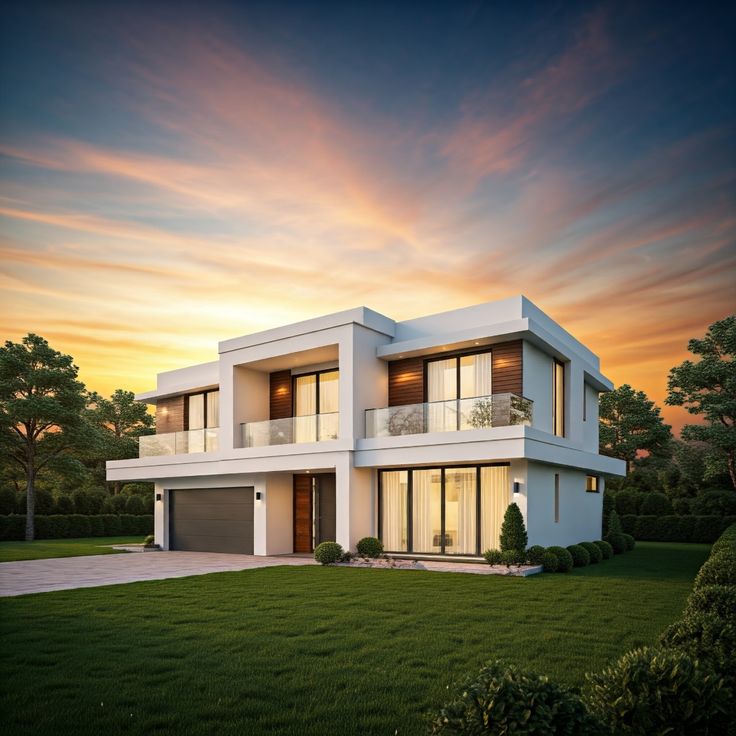
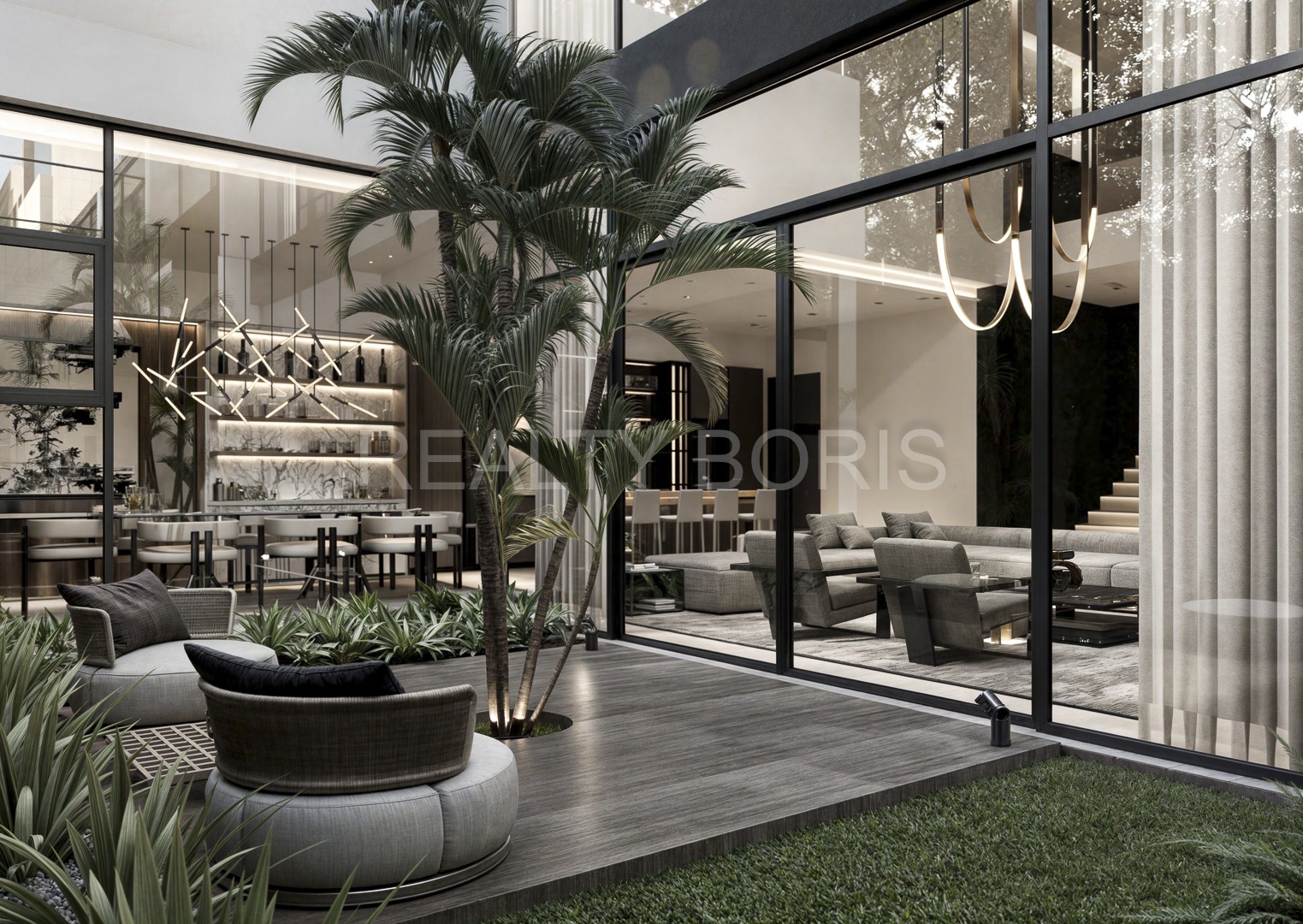
Off-Plan Property in Kenya is often sold through a vision of the future.
The buyer does not walk into a completed apartment.
Instead, they are shown:
- Architectural renders
- Floor plans
- Computer-generated interiors
- Landscaping concepts
- Rooftop visualisations
- Swimming pools
- Gyms
- Clubhouses
- Skyline views
- Show apartments
The render may show mature trees around the swimming pool.
The lobby may appear several metres high.
The rooftop may look spacious and quiet.
The apartment may appear flooded with natural light.
The balcony may appear to overlook an uninterrupted Nairobi skyline.
Then construction finishes.
The trees are smaller.
The lobby feels narrower.
The swimming pool is different.
The materials have changed.
The rooftop is more crowded.
The apartment appears smaller than expected.
And another development is standing where the render showed an open view.
This is the off-plan expectation gap.
It is the difference between what the buyer believed they were purchasing and what eventually gets delivered.
Not every difference between a render and a completed building is automatically evidence of wrongdoing.
Architectural visualisations are representations of a project that has not yet been completed. Some changes may legitimately arise because of engineering requirements, regulatory approvals, product availability, design development or other construction considerations.
The real problem begins when changes materially affect what the buyer believed they were purchasing.
At Realty Boris, we believe buyers of Off-Plan Property in Kenya should therefore distinguish between:
Marketing material that helps you imagine the project
and
contractual documents that define what the developer is actually required to deliver.
That distinction can prevent one of the most common disappointments in off-plan property investment.
Off-Plan Property in Kenya: Why Renders Are So Powerful
Off-Plan Property in Kenya depends heavily on imagination.
A developer may begin selling apartments when the site contains:
- Excavation
- Foundation works
- A few floors
- Or sometimes very little visible construction
The buyer therefore needs something that communicates what the finished development should look like.
That is where renders become important.
A good architectural render can communicate:
- Architecture
- Colour
- Landscaping
- Amenities
- Lighting
- Interior concept
- Building scale
- Lifestyle
But a render is also a marketing tool.
Its purpose is to make the future project emotionally understandable.
That can create a psychological problem.
The buyer may remember the image more clearly than they remember the contract.
They remember:
The beautiful rooftop.
The massive swimming pool.
The double-height lobby.
The forest view.
But when a dispute arises, what matters may be the documentation attached to the transaction.
That is why buyers need to investigate beyond the marketing brochure.
1. The Render Shows a Lifestyle, But the Contract Describes the Property
The first major lesson when buying Off-Plan Property in Kenya is understanding what legally forms part of your purchase.
A developer may show you:
- Website images
- Instagram posts
- Brochures
- Videos
- Animations
- Show-house photographs
But the sale agreement may contain different or more specific documents.
These could include:
- Unit floor plan
- Schedule of finishes
- Apartment number
- Approximate unit size
- Parking allocation
- Completion provisions
- Common-area provisions
- Specifications
For proposed units falling within the sectional-property framework, Kenya’s Sectional Properties Act requires a developer to provide purchasers with specific documentation before selling or agreeing to sell a unit or proposed unit.
Section 43 includes documents such as:
- Purchase agreement
- Proposed by-laws
- Management agreement where applicable
- Relevant title or lease information
- Information relating to charges
- Sectional plan or proposed sectional plan
The Act also requires sectional plans to illustrate individual units and show their approximate floor areas.
Kenya Law — Sectional Properties Act
The practical lesson is straightforward.
Before signing, ask:
Which documents actually define the apartment I am purchasing?
Do not assume every feature appearing in a promotional render has automatically become a contractual promise.
2. The Apartment Looks Much Bigger in the Render
One of the most common expectation gaps in Off-Plan Property in Kenya involves space.
Marketing images can make rooms appear larger because of:
- Wide-angle perspectives
- Minimal furniture
- Small furniture proportions
- High camera positions
- Open layouts
- Lighting
- Rendering techniques
The finished apartment may still have exactly the floor area stated in the documents.
But the buyer may feel disappointed because their mental picture was based on the render rather than the actual dimensions.
This is why buyers should evaluate:
- Square metres
- Room dimensions
- Corridor space
- Balcony size
- Kitchen dimensions
- Bedroom dimensions
rather than depending entirely on pictures.
Consider two three-bedroom apartments.
Apartment A
135 sqm
Apartment B
190 sqm
Both may have equally impressive renders.
But they will provide very different living experiences.
When reviewing Off-Plan Property in Kenya, ask the agent to explain the floor plan rather than only showing the renders.
Look at where space is being allocated.
A 180 sqm apartment could still feel inefficient if too much area is used by:
- Corridors
- Entrance halls
- Awkward corners
- Oversized circulation areas
Square metres matter.
Layout matters too.
3. The Finished Materials Do Not Match What the Buyer Expected
Another major off-plan expectation gap involves finishes.
The render may show:
- Marble
- Timber
- Large-format tiles
- Premium sanitary fittings
- Designer lighting
- Stone countertops
But what exactly is promised?
Buyers should ask for a schedule of finishes where available.
This document may describe expected:
- Flooring
- Kitchen counters
- Cabinets
- Sanitary ware
- Doors
- Windows
- Wardrobes
- Wall finishes
The important question is not:
“Does the render look expensive?”
It is:
“What material specification is the developer actually committing to?”
Buyers should also look carefully for wording such as:
- Equivalent
- Similar
- Subject to availability
- Developer-approved alternative
- Or equivalent specification
These clauses may allow some substitutions.
That does not automatically make the project problematic.
Construction projects often need flexibility.
However, buyers should understand how much flexibility they are agreeing to give the developer.
A substitution between two comparable brands is different from substantially reducing the promised quality.
The stronger the buyer’s documentation, the clearer this becomes.
4. Off-Plan Property in Kenya Can Change Between Concept Design and Approved Design
Off-Plan Property in Kenya sometimes begins marketing before the buyer fully understands which design documents are final.
This distinction matters because construction is regulated around approved project documentation rather than marketing imagery.
The National Construction Authority states that all public and private construction projects must be registered with the Authority.
NCA project-registration requirements include:
- Registered contractor
- Licensed project consultants
- Approved architectural drawings
- Approved structural drawings
- County planning approvals
- Other applicable regulatory approvals
National Construction Authority — Project Registration
This creates an important question for an off-plan buyer:
Does the marketing material correspond with the approved design?
Do not assume the first render you see is necessarily the final approved configuration.
Ask:
- Are these the current renders?
- Have approvals been obtained?
- Has the design materially changed since marketing started?
- Does the unit floor plan match the approved plans?
- Has the number of units changed?
The current National Building Code 2024 provides Kenya’s updated framework for building planning, design, approval and construction and came into force in March 2025.
National Construction Authority — National Building Code 2024
For serious buyers, approvals are more important than animations.
5. The Swimming Pool Exists—But Not Like the Render

Amenities are one of the easiest places for expectations to become distorted.
A render may show:
- Large swimming pool
- Empty sunbeds
- Beautiful landscaping
- Spacious gym
- Cinema
- Sauna
- Co-working area
- Children’s play area
Technically, all of these amenities may eventually exist.
But their actual scale can be very different from what the buyer imagined.
The pool exists.
But it is smaller.
The gym exists.
But it serves 300 apartments.
The rooftop exists.
But several mechanical services occupy part of the space.
The garden exists.
But it is less extensive than the render suggested.
This is why a buyer should ask:
How large is the amenity?
Ask for approximate dimensions where relevant.
How many apartments share it?
A pool shared by 40 units feels very different from one shared by 400.
Is it included in the approved plans?
Understand whether the amenity is part of the project’s formal design.
Will it affect service charge?
Every amenity eventually needs:
- Cleaning
- Electricity
- Repairs
- Staff
- Maintenance
The goal should not be to count amenities.
The goal should be to understand the experience those amenities will actually provide.
6. The Render Shows a View That the Developer Cannot Guarantee
This is one of the most important issues in Off-Plan Property in Kenya.
Views sell apartments.
A developer may advertise:
- Forest views
- City views
- Skyline views
- Green views
- Open views
The buyer chooses a higher floor and pays a premium.
But what happens if somebody later develops the neighbouring plot?
The developer selling your apartment may have no control over privately owned land next door.
This means buyers need to distinguish between:
The view from the proposed apartment today
and
A legally protected view.
Those are not necessarily the same thing.
Before paying a major premium for a view, investigate:
- Adjacent vacant plots
- Existing low-rise properties
- Development activity
- Road reserves
- Protected areas
- Likely future density
A render showing nothing in front of the balcony may simply represent the project itself.
It may not be a promise that no other building will ever exist nearby.
This is especially important in fast-developing neighbourhoods such as:
- Kilimani
- Kileleshwa
- Westlands
- Lavington
where low-rise properties can be replaced by larger apartment developments.
The buyer should evaluate the wider neighbourhood—not just the development site.
7. Landscaping Is One of the Easiest Things to Over-Imagine
Renders often show mature landscaping.
Trees are tall.
Lawns are perfect.
Gardens are dense.
Plants soften the architecture.
The completed project may look dramatically different on handover day because landscaping needs time to mature.
That does not necessarily mean the developer failed.
The buyer needs to ask:
- What landscaping is actually planned?
- What is permanent planting?
- What is decorative imagery?
- How much ground-level green space is available?
- Is the development genuinely low density enough to support the landscaping shown?
This is particularly important in large apartment towers.
A render may visually surround the building with greenery even though the actual plot needs to accommodate:
- Driveway
- Parking
- Fire access
- Ramps
- Services
- Waste-management areas
The remaining landscaping area may be much smaller than the buyer assumed.
Whenever greenery forms a major part of the project’s selling proposition, ask to understand the actual site plan.
8. More Apartments Can Change the Final Resident Experience
One of the most important questions when purchasing Off-Plan Property in Kenya is:
How many units will the completed development contain?
Density affects:
- Lift waiting times
- Parking
- Swimming pool use
- Gym use
- Security
- Visitor traffic
- Water demand
- Privacy
- Service charge
- Common areas
A buyer may initially imagine an exclusive residential development.
But exclusivity means something very different at:
60 apartments
versus:
400 apartments.
The problem becomes more serious if the buyer believes the development will contain one number of units and later discovers a materially different configuration.
Ask before purchase:
- Total number of apartments
- Number of towers
- Units per floor
- Number of lifts
- Number of parking spaces
- Number of phases
Also understand whether later phases are planned.
You may be buying Phase One while future construction is expected beside you.
That could mean several years of:
- Construction activity
- Noise
- Dust
- Trucks
- Workers
The completed vision may eventually be excellent.
But the buyer should understand the full development programme before purchasing.
9. The Sale Agreement Contains the Real Protection

This may be the most important lesson in the entire Off-Plan Property in Kenya conversation.
The render creates expectation.
The agreement creates contractual obligations.
Kenyan law requires contracts involving disposition of interests in land to meet formal requirements, including that the contract be in writing, signed by the relevant parties and properly attested. Kenyan courts continue to emphasise these requirements.
A buyer should therefore have an independent advocate review the sale agreement before committing substantial funds.
Important provisions may include:
- Unit description
- Purchase price
- Payment schedule
- Completion date
- Extension provisions
- Size
- Parking
- Specifications
- Developer rights to make changes
- Default
- Refund
- Handover
- Defects liability
- Title or lease structure
Particular attention should be given to clauses allowing design changes.
Ask your advocate:
How much can the developer change without my consent?
What happens if the unit size changes?
What happens if completion is delayed?
What happens if an amenity is removed?
What remedies does the agreement provide?
The answers matter far more than a sales presentation.
Off-Plan Property in Kenya: Can a Misleading Render Create a Legal Problem?
Potentially, but the facts matter.
Kenyan consumer law generally prohibits false or misleading representations made in trade.
The Competition Authority of Kenya states that its Consumer Protection Department investigates complaints relating to false or misleading representations and unconscionable conduct.
Kenya’s Competition Act also prohibits false or misleading representations concerning matters such as quality, value, standard, performance characteristics and benefits of goods or services.
Competition Authority of Kenya — Consumer Protection
However, buyers should not automatically assume that every difference between a render and a finished building is legally actionable.
Whether a specific representation creates legal rights can depend on factors such as:
- What exactly was represented
- Where it appeared
- Whether disclaimers existed
- What the agreement states
- Whether the difference is material
- Whether the representation induced the purchase
- Which legal framework applies
If the completed property materially differs from what was promised, obtain legal advice based on the actual documents and evidence.
Do not rely on general internet advice for a transaction-specific dispute.
Render vs Approved Plan vs Sale Agreement
Off-plan buyers should understand three different layers.
1. Marketing Render
Shows how the developer wants you to imagine the completed project.
2. Approved Plans
Show the development approved through the applicable planning and construction process.
NCA project-registration requirements specifically include approved architectural and structural drawings.
3. Sale Agreement and Transaction Documents
Define what the parties have contractually agreed to.
These documents should be read together where relevant.
The safest buyer does not rely solely on one of them.
Off-Plan Property in Kenya: What Buyers Should Ask Before Paying
Before purchasing Off-Plan Property in Kenya, ask the following questions.
Has the Land Been Verified?
Confirm ownership independently.
Is the Project Registered?
Ask for NCA project-registration information.
Are the Architectural Plans Approved?
Do not rely only on marketing material.
What Is the Exact Unit Size?
Understand the area and how it is described.
Can the Unit Size Change?
Check the agreement.
What Finishes Are Promised?
Request the specifications or schedule of finishes.
How Many Units Are There?
Understand density.
How Many Lifts?
Critical in high-rise developments.
Are the Amenities Included in Approved Plans?
Understand what is actually planned.
Is Parking Allocated?
Clarify exactly what you are buying or being granted.
Can the Developer Substitute Materials?
Review contractual provisions.
What Happens if Completion Is Delayed?
Understand extension and remedy provisions.
What Happens if the Final Unit Is Materially Different?
Discuss the agreement with your advocate before signing.
What Buyers Should Keep as Evidence
When buying off-plan, keep copies of:
- Brochure
- Render images
- Marketing emails
- Floor plans
- Price list
- Booking form
- Reservation form
- Sale agreement
- Schedule of finishes
- Payment receipts
- Construction updates
- Written promises
- Approved plans where provided
Do not assume the developer will still have the same website three years later.
Download important documentation.
If a major representation influences your buying decision, request confirmation in writing.
For example:
If the salesperson tells you:
“This unit comes with two parking spaces.”
make sure the transaction documents support that understanding.
If you are buying specifically because of:
Private garden
Roof terrace
Storage unit
Particular parking allocation
those details should not exist only in conversation.
Off-Plan Property in Kenya and the Show Apartment Problem
Show apartments create another expectation challenge.
A show unit may contain:
- Upgraded furniture
- Designer lighting
- Premium appliances
- Custom wallpaper
- Decorative mirrors
- Expensive curtains
The buyer may unconsciously assume everything visible is included.
Always ask:
What comes with the apartment?
Separate:
Developer Finish
What is included in the purchase price.
Furniture Package
Possibly sold separately.
Styling
Decorative items used only for marketing.
Optional Upgrade
Available at extra cost.
A show house should help buyers understand the apartment.
It should not replace reading the specifications.
Common Render-to-Reality Differences Buyers Should Watch
Ceiling Height
Rendering can exaggerate vertical volume.
Window Size
Confirm actual window specifications.
Balcony Size
Study the floor plan.
Landscaping
Understand actual planting area.
Swimming Pool
Check approximate dimensions.
Gym
Ask how large it will be.
Lobby
Confirm actual design.
Materials
Check the finish schedule.
Furniture
Determine what is excluded.
Views
Investigate neighbouring development.
Density
Check total units.
Parking
Confirm allocation and location.
Each difference may appear minor alone.
Together, they can dramatically change the final experience.
How Developers Can Reduce the Off-Plan Expectation Gap
The expectation gap is not only a buyer problem.
Developers should also manage it.
Strong developers can improve trust by providing:
- Realistic renders
- Accurate unit dimensions
- Updated designs
- Clear specifications
- Transparent construction updates
- Written explanations when material changes occur
If plans change significantly, communication matters.
A buyer is more likely to understand a legitimate technical change when the developer explains:
- What changed
- Why it changed
- What replaces it
- Whether value is affected
Silence creates suspicion.
Transparency creates confidence.
Developers should remember that the property is not finished when construction ends.
Their reputation continues into the next project.
Off-Plan Property in Kenya: What Investors Should Focus on Beyond the Render
Investors need to think differently from emotional owner-occupiers.
Ask:
Will Tenants Like the Final Layout?
Not whether the render looks beautiful.
Is the Unit Efficient?
Usable space matters.
Is Density Too High?
This affects rental competition.
Will Service Charge Be Sustainable?
Amenities cost money.
What Competing Projects Are Coming?
Supply matters.
Is the Developer Reliable?
Delivery history matters.
Does the Final Product Justify the Price?
Do not pay a luxury price for a standard final product.
Investment returns depend on what gets delivered.
Not what was rendered.
Frequently Asked Questions
Why Do Off-Plan Property Renders Sometimes Look Different From the Finished Building?
Renders are visual representations created before completion. Construction, engineering, regulatory requirements, material availability and design development can lead to differences.
Buyers should therefore compare marketing material with approved plans, specifications and contractual documents.
Are Renders Legally Binding in Kenya?
The answer depends on the specific transaction, representation and contractual documents.
A render should not automatically be treated as equivalent to the sale agreement. Buyers should obtain legal advice on specific representations that materially influenced their purchase.
How Can I Protect Myself When Buying Off-Plan Property in Kenya?
Verify:
- Developer
- Land
- Project registration
- Approved plans
- Unit size
- Specifications
- Amenities
- Sale agreement
Use an independent advocate before committing substantial funds.
How Do I Check Whether an Off-Plan Project Is Registered?
NCA requires construction projects to be registered and publishes information relating to project registration requirements.
What Documents Should an Apartment Buyer Receive?
For proposed sectional units, the Sectional Properties Act provides for disclosure of documents including the purchase agreement, proposed by-laws, relevant title information, information relating to charges and the sectional or proposed sectional plan.
What Should I Do if the Finished Apartment Is Very Different From What Was Promised?
Collect the relevant documents and representations and obtain independent legal advice.
The strength of any claim will depend on the specific agreement, representations, changes and applicable law.
Realty Boris Expert View on Off-Plan Property in Kenya
At Realty Boris, we believe Off-Plan Property in Kenya can be an excellent investment model.
It allows buyers to:
- Enter projects earlier
- Spread payments
- Secure preferred units
- Potentially benefit as construction progresses
But the buyer should understand what they are purchasing.
You are not buying the render.
You are buying the property described by the transaction.
That means a sophisticated buyer should ask:
What is the approved plan?
What is the exact size?
What is included in the finish?
What can the developer change?
How many units are being built?
What does the agreement protect?
Which features are guaranteed and which are conceptual?
The render is useful.
It helps buyers see the vision.
But the strongest off-plan investor looks behind the vision.
They analyze:
- Documentation
- Developer history
- Construction progress
- Design
- Density
- Price
- Rental demand
- Contract
A beautiful render should make you interested.
It should not make you stop asking questions.
Final Thoughts
Off-Plan Property in Kenya requires buyers to purchase partly on trust.
The building may not exist yet.
The landscaping has not matured.
The swimming pool has not been built.
The lobby has not been finished.
The view may only exist inside a computer-generated image.
That uncertainty is part of off-plan investing.
But uncertainty should be managed with information.
Understand the render.
Study the floor plan.
Ask for specifications.
Check approved plans.
Verify project registration.
Understand density.
Investigate surrounding land.
Read the sale agreement.
Keep marketing documentation.
And ask what the developer is actually promising to deliver.
The biggest mistake is expecting the render itself to protect you.
It may help you imagine the future.
The documents help define the transaction.
When those two align, off-plan property can deliver the experience buyers expected.
When they do not, the difference between the dream that was sold and the building that was delivered can become extremely expensive.
Call to Action
Thinking of buying off-plan property in Nairobi?
Contact Realty Boris for expert property guidance and carefully selected opportunities.