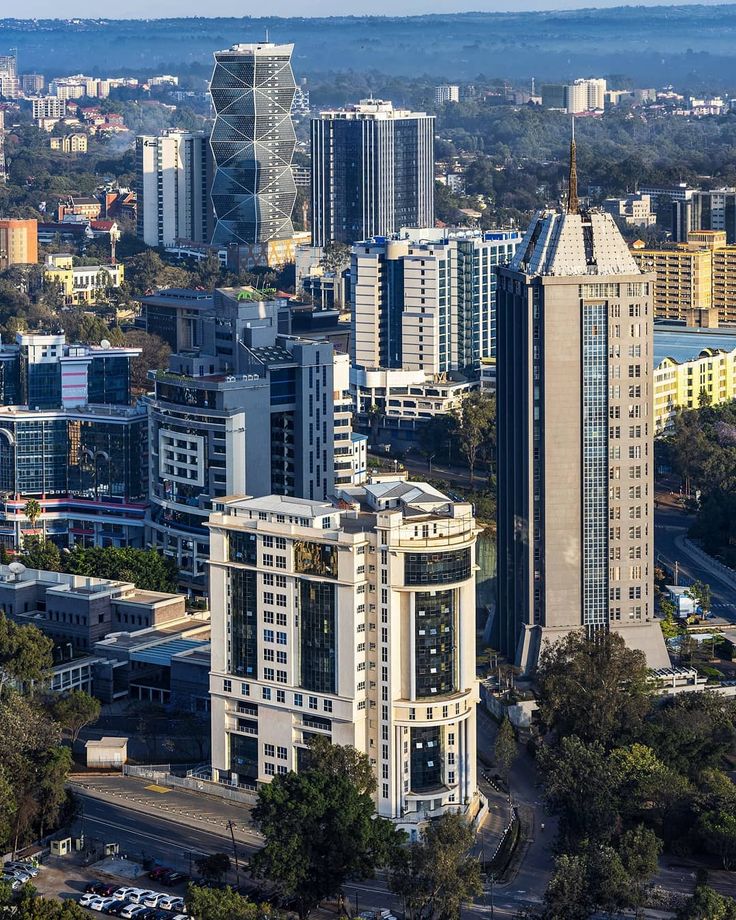


Nairobi Property and Inflation have become increasingly important considerations for investors trying to preserve the purchasing power of their money in 2026. When the cost of food, transport, housing, energy and everyday services rises, keeping money in an asset that fails to grow at a similar or faster rate can gradually reduce its real value.
Kenya’s annual consumer inflation reached 6.6% in August 2026, according to the Kenya National Bureau of Statistics. Food and non-alcoholic beverages, transport, and housing-related costs were among the main contributors.
This raises an important question for Nairobi investors:
Can property actually protect your wealth from inflation?
The answer is: potentially yes—but not automatically.
At Realty Boris, we advise investors to distinguish between simply owning property and owning the right property, in the right location, at the right price, with sustainable rental and resale demand.
Nairobi Property and Inflation: Understanding the Relationship
Inflation reduces purchasing power.
If something costs KSh 10 million today and prices across the economy continue increasing, the same KSh 10 million may buy less several years from now.
The [Kenya National Bureau of Statistics inflation reports] regularly track changes in consumer prices, while the [Central Bank of Kenya inflation data] monitors annual and monthly inflation trends. KNBS Consumer Price Inflation Reports Central Bank of Kenya Inflation Rates
For investors, the objective is therefore not simply to make a nominal return.
The important question is:
Is my investment growing faster than the loss of purchasing power?
This is where property may become useful.
1. Property Is a Real Asset

Real estate is a tangible asset.
Unlike cash, which represents a fixed number of shillings, property represents ownership of land, buildings or an apartment within a physical market.
When construction materials, labour, land and development costs increase, replacement costs can also rise.
That can support property values over time—but only where there is sufficient demand.
A poorly located or oversupplied apartment does not automatically become more valuable simply because inflation rises.
The strength of the underlying market still matters.
For investors considering entry into the market, our guide on how to start investing in Nairobi property explains how budget, location and investment objectives should shape the decision.
2. Rental Income Can Adjust Over Time

One major advantage of investment property is the ability to generate income.
A well-selected apartment, townhouse or villa can produce rental income while the investor continues owning the underlying asset.
Over time, market rents may change as:
- demand increases;
- operating costs change;
- household incomes change;
- neighbourhoods develop;
- inflation affects the wider economy.
This means rental property has a potential income-adjustment mechanism that cash sitting idle does not have.
However, rental increases are never guaranteed.
If there is excessive supply of similar apartments in one neighbourhood, landlords may find it difficult to increase rents even during inflationary periods.
That is why investors should study occupancy, competing supply, tenant profile and achievable rent, not simply the purchase price.
3. Property Values Can Appreciate—but Not Every Property Does

One of the most important lessons about Nairobi Property and Inflation is that property appreciation is not uniform.
Official KNBS residential-property data demonstrates this clearly.
In the first quarter of 2026, KNBS reported that apartment price indices in Nairobi Upper and Nairobi Middle declined compared with the first quarter of 2025, while standalone-house indices increased across the reported strata.
That is significant.
It shows why statements such as “property always appreciates” are too simplistic.
An inflation-resistant property needs underlying demand.
Investors should consider:
- land scarcity;
- neighbourhood desirability;
- unit size;
- property type;
- purchase price;
- rental demand;
- competing developments;
- quality;
- management;
- resale liquidity.
The official KNBS Residential Property Price Index is useful for understanding how different segments of Kenya’s housing market are performing.
4. Location Can Matter More Than Inflation

A strong location can give property several demand drivers at once.
Within Nairobi’s upmarket market, areas such as Westlands, Kilimani, Kileleshwa, Lavington, Riverside, Karen and Runda appeal to different categories of buyers and tenants.
For example, an investor targeting corporate and professional tenants may evaluate Westlands differently from a family buyer considering Lavington or Runda.
Location affects:
- tenant demand;
- achievable rent;
- vacancy;
- resale demand;
- future development;
- competition;
- long-term desirability.
Investors can compare current apartments, villas, townhouses and other opportunities through the Realty Boris Nairobi property listings.
Inflation cannot rescue a fundamentally weak location.
5. Rental Yield Provides a Second Return
Property investors can potentially earn returns from two sources:
Rental income and capital appreciation.
This is important when evaluating an inflation hedge.
Consider an illustrative property worth KSh 15 million generating KSh 100,000 per month in gross rent.
That represents KSh 1.2 million annually before expenses.
The investor should then deduct costs such as:
- service charge;
- management;
- repairs;
- vacancy;
- furnishing where applicable;
- taxes and other expenses.
The resulting net rental yield can then be compared with inflation and alternative investments.
Investors should therefore avoid focusing solely on advertised gross yield.
The real question is:
What return remains after all costs?
6. Off-Plan Property May Lock In Today’s Price

Off-plan property introduces another potential inflation strategy.
A buyer may secure an apartment at today’s agreed price while paying through instalments during construction.
If the completed property’s market value rises by handover, the investor may benefit from capital appreciation before taking possession.
But this strategy also introduces risks.
The project may:
- delay;
- experience construction changes;
- enter an oversupplied market;
- fail to appreciate as expected;
- face developer or approval issues.
Therefore, off-plan property should not be purchased merely because someone predicts inflation.
At Realty Boris, we recommend evaluating the developer, location, payment structure, comparable properties and realistic completion value before committing.
Our detailed guide on inflation protection through Kenyan real estate provides additional context for investors considering property as part of a long-term wealth strategy.
7. Property Can Preserve Wealth Over the Long Term

The strongest case for real estate as an inflation hedge is usually long-term rather than short-term speculation.
Property has transaction costs.
Buying and selling may involve:
- stamp duty;
- legal fees;
- valuation;
- registration;
- agency costs;
- financing costs;
- maintenance.
An investor purchasing today and expecting to sell within a few months may struggle to overcome these costs.
A longer investment horizon gives rental income, neighbourhood growth and potential appreciation more time to work.
That is why Nairobi Property and Inflation should be considered within a broader wealth-preservation strategy rather than treated as a guaranteed short-term trade.
When Nairobi Property May Fail to Beat Inflation

Property can perform poorly when an investor buys:
- at an inflated price;
- in an oversupplied development;
- an unsuitable unit type;
- in a weak rental location;
- from an unreliable developer;
- using expensive debt;
- without considering service charges;
- without calculating net rental return.
The latest official property data reinforces this point: different Nairobi housing segments can move in different directions at the same time.
The objective is therefore not simply to buy property.
It is to buy property where the fundamentals support long-term demand.
Frequently Asked Questions
Is Nairobi property a good hedge against inflation?
It can be. Property may provide rental income and capital appreciation, both of which can help preserve purchasing power. However, performance depends on location, price, property type, supply, management and demand.
Is property better than keeping cash?
They serve different purposes. Cash offers liquidity, while property may provide income and long-term capital growth. Investors should compare expected net returns against inflation rather than assuming either option is automatically superior.
Which Nairobi property types can perform well during inflation?
There is no universal winner. Well-located rental apartments, scarce standalone homes and properties serving strong tenant markets may perform well, but investors should assess each opportunity individually.
Conclusion
Nairobi Property and Inflation can work in an investor’s favour when the property generates sustainable rental income, has strong underlying demand and is purchased at a sensible price.
But real estate is not automatically protected from inflation.
The strongest investment decisions consider:
purchase price, location, rental yield, supply, developer quality, resale demand, financing costs and investment horizon.
The goal is not simply for your property price to rise.
The goal is for your total return after costs to preserve or increase your purchasing power over time.
Call to Action
Looking for a Nairobi Property Investment?
Explore properties for sale in Nairobi with Realty Boris or speak with our team about investment opportunities across Kilimani, Kileleshwa, Westlands, Lavington, Riverside and Nairobi’s other upmarket neighbourhoods.
We can help you compare purchase price, rental potential, location, unit type, developer, payment plan and long-term investment suitability before you commit.
Contact Realty Boris today and let us help you identify Nairobi property built around your investment objective.