
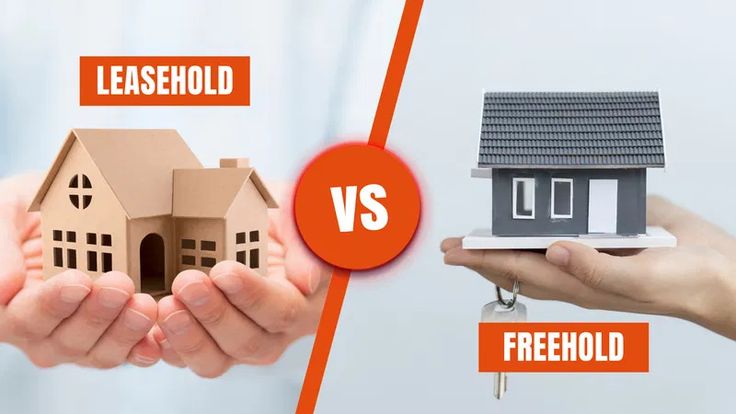

Freehold vs Leasehold in Kenya is one of the most important topics every property buyer, investor, developer and diaspora client should understand before purchasing land, an apartment, a townhouse or a family home. Many buyers focus on price, location, size, views, amenities and payment plans, but they do not always understand the type of ownership they are acquiring.
In Kenya, land ownership is not only about having a title. The title must be understood. Is the property freehold? Is it leasehold? How many years are remaining on the lease? Are there land rent obligations? Is the lease renewable? Does the buyer have full ownership rights, or only rights for a defined period? These questions matter because they affect value, financing, resale, development, inheritance and long-term investment planning.
At Realty Boris, we advise buyers not to treat freehold and leasehold as small legal details. They are ownership structures that can affect the strength, flexibility and future value of your property. A buyer purchasing land in a rural area may encounter freehold title. A buyer purchasing an apartment or property in Nairobi’s prime urban areas may more commonly encounter leasehold title.
This guide explains Freehold vs Leasehold in Kenya, the major differences, what investors should ask and what buyers should check before signing or paying.
Freehold vs Leasehold in Kenya: What Is the Main Difference?
Freehold vs Leasehold in Kenya comes down to the nature and duration of ownership.
Freehold ownership generally means the owner holds the land for an indefinite period, subject to the law. It gives the owner strong ownership rights and is common in many rural, agricultural and private land settings.
Leasehold ownership means the owner holds an interest in the land for a defined period, usually under a lease from the government, county government, private landowner or another lessor. In many urban areas, leasehold titles may run for terms such as 50 years, 66 years, 99 years or another stated period depending on the grant and title history.
The key difference is this:
Freehold is ownership without a fixed expiry period.
Leasehold is ownership for a fixed lease term.
At Realty Boris, we advise buyers to confirm the tenure before committing. Do not assume that every title is the same. A title deed, certificate of lease or sectional title may carry different implications depending on the property.
Buyers can review Kenya’s land laws through Kenya Law and use official land information platforms such as Ardhisasa where applicable.
1. Freehold Ownership Explained

Freehold ownership gives the registered owner a stronger and more permanent ownership interest in the land. The owner generally holds the land indefinitely and can use, transfer, develop, lease, charge or pass it on through succession, subject to planning laws, land use rules, environmental laws and other legal restrictions.
Freehold land is often associated with:
- Rural land
- Agricultural land
- Family land
- Ancestral land
- Some satellite town properties
- Private residential plots
- Long-term landholding
- Inheritance planning
- Land banking
At Realty Boris, we advise buyers to understand that freehold does not mean “no rules.” A freehold owner must still comply with zoning, land use, building approvals, environmental rules, road reserves, wayleaves, easements, planning controls and other public-interest restrictions.
Freehold can be attractive because it gives long-term ownership confidence. For families and investors thinking across generations, freehold land may feel more secure because there is no lease expiry date to monitor.
However, freehold land still requires due diligence. A buyer should confirm ownership, boundaries, land rates where applicable, access road, land use, disputes, encumbrances and seller authority before paying.
A freehold title is strong only when it is clean, verified and properly transferred.
2. Leasehold Ownership Explained

Leasehold ownership gives the owner rights over the land or property for a specific period. The lease term should be clearly stated on the title or lease document.
Leasehold land is common in many urban areas, especially where land was historically allocated by government or county authorities. Many prime Nairobi properties, apartments and commercial properties may sit on leasehold land.
Leasehold property may involve:
- A fixed lease term
- Land rent obligations where applicable
- Lease conditions
- Renewal or extension considerations
- User restrictions
- Development conditions
- Lessor consent in some cases
- Reversion risk if not renewed
- Special conditions attached to the grant
At Realty Boris, we advise buyers to check the number of years remaining on the lease. A leasehold title with 90 years remaining is very different from one with 12 years remaining. The remaining lease term can affect value, financing, resale confidence and long-term planning.
Buyers should also confirm whether land rent is payable and whether it is up to date.
For official land search guidance, buyers can refer to the State Department for Lands search certificate page.
Leasehold is not automatically bad. In Nairobi, many valuable properties are leasehold. The key is to understand the lease term, obligations and renewal position.
3. Freehold vs Leasehold in Kenya for Nairobi Buyers

Freehold vs Leasehold in Kenya is especially important for Nairobi buyers because many prime urban properties are leasehold.
In Nairobi’s upmarket areas such as Kilimani, Kileleshwa, Westlands, Riverside, Lavington, Parklands, Upper Hill, Muthaiga, Runda, Gigiri and Karen, buyers may encounter leasehold structures more frequently than freehold, especially in apartment and urban commercial developments.
This is not unusual. Many urban properties in Kenya are leasehold because of historic land allocation, planning control, public land administration and urban development frameworks.
At Realty Boris, we advise Nairobi buyers not to reject leasehold property automatically. Some of the most valuable real estate in Nairobi sits on leasehold land. What matters is the quality of the title, the lease term remaining, the renewal prospects, the land rent position and the strength of the transaction documents.
A Nairobi buyer should ask:
- Is the property freehold or leasehold?
- How many years are remaining?
- Is land rent payable?
- Is land rent cleared?
- Are there special lease conditions?
- Has the title been searched officially?
- Are there charges, cautions or restrictions?
- Does the property have approved use?
- Will the lease term affect financing?
- Will the lease term affect resale?
A good Nairobi investment should be understood legally before it is judged emotionally.
4. Why Many Nairobi Properties Are Leasehold

Many buyers ask why properties in Nairobi and other prime urban areas are often leasehold while rural or satellite-town properties may be freehold.
The answer is linked to history, planning and land administration.
Urban land is often controlled through leasehold tenure because cities need structured planning, land use control, development conditions, public infrastructure planning and renewal mechanisms. Leasehold tenure allows the government or relevant authority to place conditions on land use, development intensity and long-term planning.
Rural land, family land and agricultural land are more commonly held under freehold because they are often private, ancestral or agricultural holdings without the same urban planning pressure.
At Realty Boris, we explain it this way:
Leasehold is common where government or county planning control is stronger.
Freehold is common where private long-term landholding is more established.
However, buyers should avoid general assumptions. There can be freehold properties in urban or peri-urban areas, and leasehold properties outside the city. The only safe answer comes from the title and official search.
The tenure must be verified, not guessed.
5. Freehold vs Leasehold in Kenya for Investors

Freehold vs Leasehold in Kenya can affect how investors assess risk and value.
For investors, the main issue is not only whether the property is freehold or leasehold. The bigger question is whether the tenure supports the investment goal.
For example, a leasehold apartment in Westlands with a long remaining lease, strong rental demand, good management and clean documents may be a better investment than a freehold parcel in a weak location with poor access and unclear demand.
A freehold plot in a strong growth area may be excellent for long-term land banking, development or family wealth preservation.
An investor should consider:
- Location
- Tenure
- Remaining lease term
- Land rent obligations
- Rental demand
- Resale demand
- Financing prospects
- Development potential
- Planning restrictions
At Realty Boris, we advise investors not to treat freehold as automatically superior in every case. Freehold can be powerful for long-term ownership, but location and demand still matter. Leasehold can be excellent in prime urban markets, but the lease term must be checked.
A smart investor buys value, not just tenure.
6. Lease Term and Renewal Risk

Lease term is one of the most important details in leasehold property.
A buyer should know how many years are remaining. This affects confidence and value.
A leasehold property with a long remaining term may be easier to buy, finance and resell. A property with a short remaining term may require deeper legal review, renewal planning and possible price adjustment.
Before buying leasehold property, ask:
- What was the original lease term?
- When did the lease start?
- When does the lease expire?
- How many years remain?
- Has renewal or extension been applied for?
- Is land rent paid?
- Are there any breaches of lease conditions?
- Are there encumbrances?
- Is there government or county interest in the land?
- What does the advocate advise?
The Land Extension and Renewal of Leases Rules provide legal context on lease extension and renewal processes. Buyers should not rely on informal assurances such as “the lease will just be renewed.”
At Realty Boris, we advise buyers to let an advocate review the lease position carefully.
Lease renewal may be possible in many cases, but it should not be assumed casually. The buyer must understand the procedure, conditions and timing.
A leasehold property should be bought with clear eyes.
7. Freehold vs Leasehold in Kenya for Non-Citizens and Diaspora Buyers

Freehold vs Leasehold in Kenya is especially important for non-citizens and diaspora buyers.
Under Kenya’s constitutional framework, non-citizens may hold land only on leasehold tenure and the lease must not exceed 99 years. This is a critical issue for foreign buyers, foreign-owned companies and some cross-border investment structures.
Diaspora buyers who are Kenyan citizens may have different rights from non-citizens, but they should still verify documents carefully.
At Realty Boris, we advise diaspora buyers to avoid assumptions about ownership rights. Before sending money from abroad, confirm:
- Citizenship status and ownership eligibility
- Whether the title is freehold or leasehold
- Remaining lease term
- Seller identity
- Title search
- Land rent status
- Land rates status
- Sale agreement
For official legal context, buyers can refer to the Constitution of Kenya on Kenya Law.
Diaspora buyers should also use official land information platforms such as Ardhisasa where applicable.
Distance should not weaken due diligence.
Freehold vs Leasehold in Kenya for Apartment Buyers

Apartment buyers must understand that their unit ownership may be linked to the tenure of the underlying land.
A buyer purchasing an apartment should ask:
- Is the mother title freehold or leasehold?
- If leasehold, how many years remain?
- How will individual ownership be registered?
- Is there a sectional plan?
- Is there a certificate of lease or title?
At Realty Boris, we advise apartment buyers to be careful with off-plan projects. The mother title, approved plans, sectional property structure and transfer process should be checked before payment.
A buyer should not assume that buying an apartment is only about the unit. The legal structure behind the development matters.
For sectional property context, buyers can review the Sectional Properties Act.
A well-structured apartment purchase should clearly explain the buyer’s ownership rights.
Freehold vs Leasehold in Kenya for Developers

Developers must also understand tenure before acquiring land.
A development site may look attractive, but tenure affects feasibility, financing, approvals, sale structure and future buyer confidence.
Developers should check:
- Freehold or leasehold status
- Remaining lease term
- Title history
- Land use
- Zoning
- Change of user requirements
- Extension of user requirements
- Land rent
- Land rates
- Encumbrances
- Charge
At Realty Boris, we advise developers to avoid buying land before checking whether the tenure supports the intended project.
For example, a short remaining lease may create concerns for financiers, buyers and future apartment owners. A freehold site may still face zoning or planning limitations. A leasehold site may be very valuable if the lease term is strong and the location supports the product.
Developers should treat tenure as part of feasibility, not just legal paperwork.
Key Documents to Check Before Buying Freehold or Leasehold Property

Whether the property is freehold or leasehold, buyers should request and review the right documents.
Important documents include:
- Copy of title deed or certificate of lease
- Official search certificate
- Seller identification documents
- Company documents where seller is a company
- Land rates clearance certificate
- Land rent clearance certificate where applicable
- Sale agreement
- Approved plans where applicable
- Transfer documents
- Stamp duty assessment
- Consent documents where applicable
For transfer requirements, buyers can review the State Department for Lands land transfers page. For stamp duty valuation, buyers can refer to the State Department for Lands valuation for stamp duty page.
At Realty Boris, we strongly advise buyers to involve a qualified advocate before signing or paying.
The right documents protect the buyer more than verbal promises.
Freehold vs Leasehold in Kenya: Which Is Better?
There is no single answer.
Freehold may be better for buyers who want long-term landholding, generational ownership, rural land, family property, agricultural land or land banking.
Leasehold may be better or more practical in prime urban areas where many valuable properties are held under leasehold tenure.
The better option depends on:
- Location
- Buyer objective
- Property type
- Remaining lease term
- Legal status
- Development potential
- Rental demand
- Resale potential
- Land rent obligations
- Planning restrictions
- Purchase price
- Holding period
At Realty Boris, our view is that freehold is not always better and leasehold is not always weaker.
A clean leasehold title in a prime location with a long remaining term can be a strong property. A freehold title in a poor location with access problems, boundary issues or weak demand may be a poor investment.
The best property is the one that is legally clean, well located, fairly priced and aligned with your goal.
Investor Questions About Freehold vs Leasehold in Kenya

Serious investors should ask clear questions before buying.
Important questions include:
- Is the property freehold or leasehold?
- How many years are remaining on the lease?
- Is the title clean?
- Has an official search been done?
- Are there charges, cautions or restrictions?
- Is land rent payable?
- Is land rent up to date?
- Are land rates cleared?
- Are there special conditions on the title?
At Realty Boris, we advise buyers not to be shy about asking these questions. A genuine seller should allow proper verification.
When buying property, unanswered questions can become expensive problems.
Common Mistakes Buyers Should Avoid
When comparing Freehold vs Leasehold in Kenya, buyers should avoid:
- Assuming all titles are the same
- Believing freehold means no restrictions
- Believing leasehold is automatically bad
- Ignoring the remaining lease term
- Not checking land rent
- Not checking land rates
- Failing to conduct an official search
- Buying without advocate review
- Ignoring title encumbrances
- Ignoring special conditions
- Not checking seller authority
At Realty Boris, our advice is simple: understand what you are buying before you pay.
A title is only useful when the buyer understands the rights and obligations attached to it.
Realty Boris Expert View on Freehold vs Leasehold in Kenya
Our view is that Freehold vs Leasehold in Kenya should be explained clearly to every buyer before purchase.
For homeowners, tenure affects long-term security, resale confidence and ownership obligations.
For investors, tenure affects holding period, financing, rental strategy and exit planning.
For diaspora buyers, tenure affects verification, payment confidence and long-term ownership planning.
For developers, tenure affects feasibility, approvals, buyer confidence and project structuring.
For apartment buyers, tenure affects the mother title, sectional property structure and transfer process.
At Realty Boris, we help buyers understand the property beyond the brochure. We look at location, title, tenure, price, rental demand, service charge, completion status and resale potential before advising on a purchase.
A good property decision should be legally sound and commercially sensible.
Final Thoughts
Freehold vs Leasehold in Kenya is a key topic for anyone buying property. Freehold gives ownership without a fixed expiry period, while leasehold gives ownership rights for a defined lease term.
Freehold is often attractive for long-term landholding, family property and rural or agricultural land. Leasehold is common in many valuable urban areas, including parts of Nairobi, and can still be a strong investment when the lease term is healthy and documents are clean.
At Realty Boris, we advise buyers to check the tenure before committing. Confirm the title, conduct an official search, check land rent and rates, review the lease term, understand special conditions and involve a qualified advocate.
Do not buy based only on price, location or pressure. Buy based on verified ownership, clear documents and a structure that supports your goals.
The best property is not simply freehold or leasehold. It is the property that is legally safe, practical, valuable and aligned with your long-term plan.
Call to Action
Planning to buy property in Kenya?
Contact Realty Boris for verified listings, title guidance, due diligence support and expert property advisory before you sign or pay.