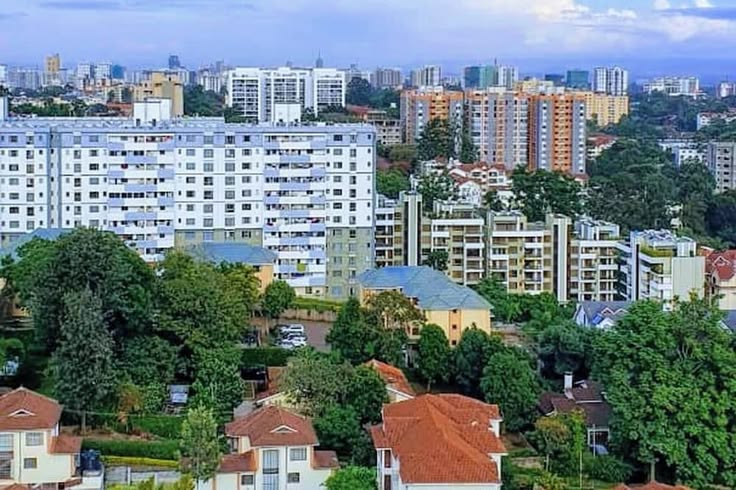


Diaspora Money and Kenya Property Market has become one of the most important relationships shaping real estate investment in Kenya.
Every month, billions of shillings are transferred into Kenya by people living and working abroad. Some of that money supports families, education, healthcare and everyday household expenses. Some goes into businesses, savings, construction and investment. A smaller but important share also flows directly into land, apartments, houses and property development.
The scale matters.
Central Bank of Kenya data shows diaspora remittances reached approximately USD 5.04 billion in 2025, up from USD 4.95 billion in 2024. CBK’s August 2026 data shows another USD 451.8 million entered Kenya during that month alone.
From January to August 2026, monthly CBK figures add up to approximately USD 3.33 billion in remittance inflows.
North America remains one of the largest sources. In August 2026, approximately USD 227.3 million came from North America, USD 97.2 million from Europe and USD 127.3 million from the rest of the world.
Investors can monitor the latest official figures through Central Bank of Kenya Diaspora Remittances.
At Realty Boris, we see the effect directly.
Diaspora buyers are increasingly asking about:
Apartments for investment
Off-plan developments
Rental yield
Property management
Developer track record
Completion risk
Resale potential
Furnished rentals
Family homes
Retirement property
Long-term wealth creation
But an important distinction must be made.
Not all diaspora money goes into property.
The CBK 2025 Remittances Household Survey found that household consumption, education and healthcare remain major uses of remittance income. Only 2.2% of surveyed recipients reported using cash remittances specifically for real-estate investment, while 2.6% reported construction expenditure.
That means property is not the destination of most remittance money.
Yet even a relatively small share of billions of dollars can represent substantial capital flowing into real estate.
This is why diaspora money continues to influence Kenya’s property market.
Diaspora Money and Kenya Property Market: Why the Relationship Matters

Diaspora Money and Kenya Property Market matters because remittances have become a major component of Kenya’s economy.
The World Bank’s latest available country data shows personal remittances received were equivalent to about 4.2% of Kenya’s GDP in 2024.
World Bank Kenya Economic Data
Few individual sources of external household capital operate at that scale.
The impact extends beyond direct property purchases.
Diaspora money can influence:
Family construction
Mortgage repayments
Land acquisition
Developer sales
Apartment reservations
Rental-property investment
Home improvements
Construction activity
Property management
Housing consumption
The CBK’s earlier diaspora remittance research also found that real estate, mortgage payments and household spending were important destinations for remitted funds, showing that property has had a long-standing relationship with diaspora capital.
The relationship therefore deserves to be understood as a structural part of Kenya’s property market rather than a temporary trend.
1. Diaspora Remittances Have Reached a Scale That Property Developers Cannot Ignore
The first reason Diaspora Money and Kenya Property Market remains important is simply scale.
CBK figures show total annual remittances increased from:
USD 3.09 billion in 2020
USD 3.72 billion in 2021
USD 4.03 billion in 2022
USD 4.19 billion in 2023
USD 4.95 billion in 2024
USD 5.04 billion in 2025
CBK projected approximately USD 5.07 billion for 2026 in its August 2026 Monetary Policy Committee background data.
That is a substantial pool of capital.
Again, most of this money does not go directly into property.
But if even a small fraction enters:
Apartments
Land
Construction
Mortgages
Family homes
Rental investments
the effect can be meaningful.
Developers understand this.
That is why many new developments now market directly to Kenyans living in:
United States
United Kingdom
Canada
Germany
Qatar
UAE
Saudi Arabia
Australia
Other European markets
Diaspora buyers have become too important to treat as an afterthought.
They are increasingly a defined property-market segment.
2. Diaspora Buyers Often Have a Long-Term Relationship With Kenya
Property is different from many other investments because it can satisfy both financial and personal goals.
A Kenyan living in Dallas, London, Toronto, Doha or Berlin may purchase property for investment.
But they may also be thinking about:
Eventually returning to Kenya
Providing a home for parents
Building a retirement home
Creating family wealth
Owning something tangible in Kenya
Giving children a connection to Kenya
Generating rental income
Diversifying assets geographically
That creates a different investment motivation from purely speculative buying.
The CBK’s 2025 Remittances Household Survey found that first-generation Kenyans in the diaspora were by far the largest contributors among the generations measured, accounting for approximately KSh 797.5 billion in cash and in-kind remittances during the survey period.
First-generation migrants often maintain strong financial, family and emotional connections with Kenya.
That connection can translate into property ownership.
A buyer may ask:
“What return will this apartment generate?”
But they may also ask:
“Could I live here when I come back?”
The strongest diaspora property decisions often satisfy both questions.
3. Off-Plan Property Fits the Diaspora Income Model
One major reason Diaspora Money and Kenya Property Market continues to grow is the way off-plan property is financed.
Many Nairobi developers offer payment structures such as:
20% deposit
Balance over 24 months
Balance over 30 months
Balance over 36 months
Construction-linked instalments
Monthly or quarterly payments
For a salaried professional earning abroad, this structure can be easier than paying the entire purchase price at once.
Consider a KSh 12 million apartment.
A buyer might pay:
Deposit: KSh 2.4 million
Then spread the remaining KSh 9.6 million over construction.
Over 30 months, that works out to approximately:
KSh 320,000 per month
A diaspora professional may therefore treat the apartment like a structured long-term savings plan.
Instead of sending money informally and hoping to accumulate enough later, the buyer is gradually converting income into an asset.
However, this creates risk as well.
Diaspora buyers should never assume a flexible payment plan makes a project safe.
They should still verify:
Land ownership
Development approvals
NCA registration
Developer track record
Contractor
Sale agreement
Completion timeline
Payment milestones
Flexible payment is useful.
Due diligence remains essential.
4. Foreign-Currency Earnings Can Change Property Affordability
Another important relationship between Diaspora Money and Kenya Property Market involves currency.
A property may be priced in Kenyan shillings, while the buyer earns:
US dollars
British pounds
Euros
Canadian dollars
Qatari riyals
UAE dirhams
Changes in the exchange rate can therefore affect affordability.
When foreign earnings convert favourably into Kenyan shillings, a property may feel considerably more affordable to a diaspora buyer than to someone earning locally.
Conversely, exchange-rate movements can make instalments more expensive.
Diaspora investors should therefore avoid calculating affordability only once.
Monitor:
Exchange rate
Remaining payment balance
Completion schedule
Transfer costs
Furnishing costs
Legal fees
CBK publishes daily exchange-rate information alongside its wider monetary and financial data.
Central Bank of Kenya Exchange and Economic Data
Currency can create opportunity.
But it also creates uncertainty.
A sensible diaspora property investor should leave room for exchange-rate changes rather than structuring payments at the limit of affordability.
5. Diaspora Buyers Are Changing How Developers Sell Property

The influence of Diaspora Money and Kenya Property Market is not limited to prices or transactions.
It has changed the property sales process itself.
A buyer in New York cannot simply drive to Kilimani every Saturday to inspect projects.
Developers and agents increasingly need to support remote decision-making.
This has encouraged:
Virtual property tours
WhatsApp communication
Drone footage
Construction-update videos
Digital brochures
Online reservation
Video consultations
Electronic documentation
Remote legal review
Digital payment confirmations
This has changed expectations.
A serious diaspora buyer now expects to be able to evaluate a development from thousands of kilometres away.
At Realty Boris, we believe this is positive when used correctly.
Technology makes discovery easier.
But it should not replace verification.
A video tour cannot confirm title ownership.
A drone shot cannot verify approvals.
A WhatsApp message cannot replace a properly drafted sale agreement.
Digital convenience must be combined with traditional due diligence.
6. Diaspora Buyers Help Support Nairobi’s Investment Apartment Market
Nairobi has experienced substantial apartment development over the last several years.
The KNBS Economic Survey 2026 reported that Kenya’s construction sector rebounded strongly in 2025, growing by 6.8% after contracting in 2024.
Government housing, infrastructure, commercial development and private residential construction all contribute to this activity.
Diaspora demand forms one part of the private residential market.
This is particularly visible in areas such as:
Kilimani
Westlands
Kileleshwa
Riverside
Lavington
where many new projects are marketed as investment properties.
Developers often design:
Studios
One-bedroom apartments
1.5-bedroom apartments
Compact two-bedroom units
specifically around investor demand.
Diaspora buyers can contribute to absorption of these projects, particularly when developers offer long payment plans.
But investors need to be careful.
Strong diaspora demand does not mean every apartment development will appreciate.
Diaspora Money and Kenya Property Market: Not Every Apartment Benefits Equally
This point is critical.
Diaspora Money and Kenya Property Market does not mean diaspora capital automatically pushes all property prices upward.
Official KNBS data shows different residential segments can perform very differently.
The 2026 Economic Survey shows that apartment price indices in Nairobi Middle and Nairobi Upper generally trended downward between 2022 and 2025, while indices for stand-alone houses showed stronger increases in several Nairobi strata.
Investors can monitor official property-market movements through the KNBS Residential Property Price Index.
This should be a warning to diaspora investors.
Do not buy because:
“Nairobi property always appreciates.”
That statement is too broad.
Property performance depends on:
Purchase price
Location
Unit type
Supply
Rental demand
Developer
Building quality
Service charge
Resale competition
Diaspora capital supports the market.
It does not remove market risk.
7. Rental Income Is a Major Attraction for Diaspora Investors
Many diaspora buyers are not purchasing property simply to leave it empty.
They want income.
The typical investment conversation includes questions such as:
What rent can this apartment achieve?
Who is the target tenant?
Is furnished rental better?
Can I use Airbnb?
What is the service charge?
What is the expected yield?
Who will manage the property?
How long will it take to find a tenant?
This is why Nairobi’s premium rental corridors are attractive.
Areas such as:
Westlands
Kilimani
Kileleshwa
Riverside
Lavington
offer access to professional, corporate and expatriate tenant demand.
But diaspora investors need to calculate net yield, not advertised rent.
Suppose an apartment costs KSh 15 million.
Expected rent:
KSh 100,000 per month
Annual gross rent:
KSh 1.2 million
Headline gross yield:
8%
That may look attractive.
But subtract:
Vacancy
Service charge
Management
Repairs
Furnishing
Taxes
Insurance
and the actual return becomes lower.
Diaspora investors should therefore demand realistic rental calculations before purchasing.
8. Diaspora Investors Can Influence What Developers Build
Developers respond to buyers.
If the buyers keep asking for investment apartments, developers build more investment apartments.
This is one of the more subtle effects of Diaspora Money and Kenya Property Market.
A developer planning a project may consider whether diaspora investors prefer:
Smaller entry price
Longer payment plans
Furnished units
Rooftop amenities
Swimming pools
Gyms
Co-working spaces
Property management
Short-stay potential
The result can be an apartment market increasingly shaped around investor expectations rather than only owner-occupier needs.
This creates both opportunity and risk.
The opportunity is a wider range of investment products.
The risk is oversupply.
If multiple developers all identify the same diaspora investor and build the same:
Studio
One-bedroom
Compact two-bedroom
in the same neighbourhood, investors can eventually find themselves competing against hundreds of similar landlords.
Diaspora demand can therefore support construction while simultaneously encouraging oversupply if development is not aligned with genuine tenant demand.
9. Property Gives Diaspora Investors a Tangible Store of Wealth
For many diaspora investors, property has one important psychological advantage.
It is tangible.
You can:
See it
Visit it
Rent it
Live in it
Leave it to children
Sell it
Improve it
This can make real estate attractive for people trying to convert income earned abroad into long-term Kenyan assets.
The alternative may be keeping savings entirely overseas or transferring money into consumption.
Property offers the possibility of turning earned income into something permanent.
This is particularly important for people who eventually intend to return to Kenya.
Instead of arriving after 15 or 20 years abroad and beginning a property search from zero, they may gradually build a portfolio while still working overseas.
That could include:
Investment apartment
Family home
Land
Retirement home
Commercial property
Property therefore becomes part of a long-term return strategy rather than simply a short-term investment.
Diaspora Money and Kenya Property Market: Why Nairobi Attracts So Much Attention
Nairobi naturally receives significant attention from diaspora property investors.
The city combines:
Employment
Corporate headquarters
International organisations
Diplomats
Universities
Hospitals
Retail
Infrastructure
International schools
Professional tenant demand
This creates both rental and resale markets.
Within Nairobi, areas appeal to different diaspora strategies.
Kilimani

Popular for:
Studios
One-bedroom apartments
Two-bedroom apartments
Off-plan investment
Westlands

Popular for:
Corporate tenants
Furnished rentals
Mixed-use developments
Hotel-style apartments
Kileleshwa
Popular for:
Family apartments
Larger units
Owner-occupier demand
Riverside
Popular for:
Corporate tenants
Expatriates
Premium apartments
Lavington

Popular for:
Larger family apartments
Townhouses
Villas
Premium residential living
Karen and Runda
More relevant to buyers looking for:
Family homes
Villas
Retirement homes
Larger land parcels
Long-term residence
The right location therefore depends on the investor’s objective.
Diaspora Buyers Are Becoming More Sophisticated
One of the biggest changes we see is the quality of questions diaspora buyers now ask.
Previously, a buyer might ask:
“How much is the apartment?”
Today, more investors ask:
Who is the developer?
What have they completed?
What is the unit size?
How many apartments are there?
What rent is realistic?
What is the service charge?
What will compete with this property?
What happens if completion delays?
What is the resale market?
This is healthy.
Kenya’s property market benefits when buyers become more analytical.
Developers are forced to compete on:
Documentation
Delivery
Quality
Transparency
Investment fundamentals
rather than simply selling a dream.
The Biggest Risks Facing Diaspora Property Investors
Distance creates unique risks.
Diaspora buyers should be particularly careful about:
Fake listings
Fake agents
False developer claims
Paying personal accounts
Unverified land ownership
Missing approvals
Construction delays
Overstated rental returns
Poor property management
Oversupply
Weak resale demand
Never allow distance to weaken due diligence.
Request:
Title information
Official search
Development approvals
NCA registration
Sale agreement
Payment schedule
Construction updates
Official receipts
Developer information
Use an independent advocate.
When possible, appoint someone to inspect the site physically.
A professional video tour is useful.
Independent verification is better.
What the Latest Remittance Data Really Tells Property Investors
The latest data also provides an important lesson.
Diaspora remittances are resilient, but they do not increase every month.
CBK reported approximately USD 5.04 billion for 2025 and projected around USD 5.07 billion for 2026. However, inflows during the first six months of 2026 were around 3% below the first six months of 2025.
Monthly performance subsequently improved, with August 2026 inflows reaching approximately USD 451.8 million, compared with USD 426.1 million in August 2025.
This means property developers should not assume diaspora money is an unlimited source of demand.
Like any investor group, diaspora buyers are influenced by:
Global employment conditions
Exchange rates
Interest rates
Family expenses
Economic uncertainty
Investment alternatives
Confidence in Kenya’s property market
The diaspora market is powerful.
It is not guaranteed.
Frequently Asked Questions
How Much Money Does the Kenyan Diaspora Send Home?
CBK reported approximately USD 5.04 billion in remittances in 2025. Monthly inflows during 2026 remained substantial, reaching around USD 451.8 million in August alone.
Does Most Diaspora Money Go Into Property?
No.
CBK’s 2025 household survey shows the largest reported uses of cash remittances were food and household goods, education and medical expenses. Real-estate investment was reported by 2.2% of recipients, while construction for recipients was reported by 2.6%.
Property is therefore an important use of diaspora money, but it is not the dominant use.
Why Do Diaspora Kenyans Invest in Property?
Common reasons include:
Rental income
Retirement
Family housing
Wealth preservation
Diversification
Long-term ownership
Future return to Kenya
Which Nairobi Areas Attract Diaspora Property Buyers?
Common areas include Kilimani, Westlands, Kileleshwa, Riverside, Lavington, Karen and Runda depending on budget and investment objective.
Is Off-Plan Property Good for Diaspora Buyers?
It can be because payment plans allow buyers to spread the purchase cost over construction.
However, buyers should verify land ownership, approvals, developer credibility, contracts and construction progress before committing.
Realty Boris Expert View on Diaspora Money and Kenya Property Market
At Realty Boris, we believe Diaspora Money and Kenya Property Market will remain closely connected.
But the market is becoming more sophisticated.
The future diaspora investor will not simply ask:
“Where can I buy an apartment?”
They will ask:
“Which property makes sense?”
That distinction is important.
Strong diaspora investment should be based on:
Location
Price
Rental demand
Developer
Documentation
Unit size
Competing supply
Payment plan
Resale potential
Property management
Diaspora money can support Nairobi real estate.
But diaspora buyers should not become the market’s easiest customers.
They should become some of its most informed investors.
The buyer earning dollars or pounds still needs to negotiate.
The buyer purchasing remotely still needs to inspect.
The buyer planning to hold for ten years still needs to understand supply.
And the buyer purchasing emotionally still needs to check the numbers.
That is how diaspora capital can create sustainable property wealth rather than expensive mistakes.
Final Thoughts
Diaspora Money and Kenya Property Market continues to matter because the relationship is built on more than remittance statistics.
It is driven by:
Family
Investment
Retirement
Wealth creation
Rental income
Long-term connection to Kenya
CBK data shows that diaspora remittances have grown into a multi-billion-dollar annual flow.
That capital supports households first.
But it also contributes to investment, construction and property ownership.
For Kenya’s property market, the diaspora represents a buyer group with global income, long-term connections to Kenya and increasing interest in converting earnings abroad into tangible assets at home.
But the opportunity needs discipline.
Do not buy because a project is advertised to diaspora buyers.
Do not buy because the payment plan looks easy.
Do not buy because someone promises guaranteed appreciation.
Study the market.
Verify the project.
Calculate the yield.
Understand the supply.
Check the developer.
Then make the investment decision.
As Kenya’s diaspora community continues sending billions of dollars home each year, property will likely remain one of the ways some of that wealth is transformed into long-term Kenyan assets.
Call to Action
Thinking of buying or investing in property in Kenya from abroad?
Contact Realty Boris for expert property guidance and carefully selected opportunities.