
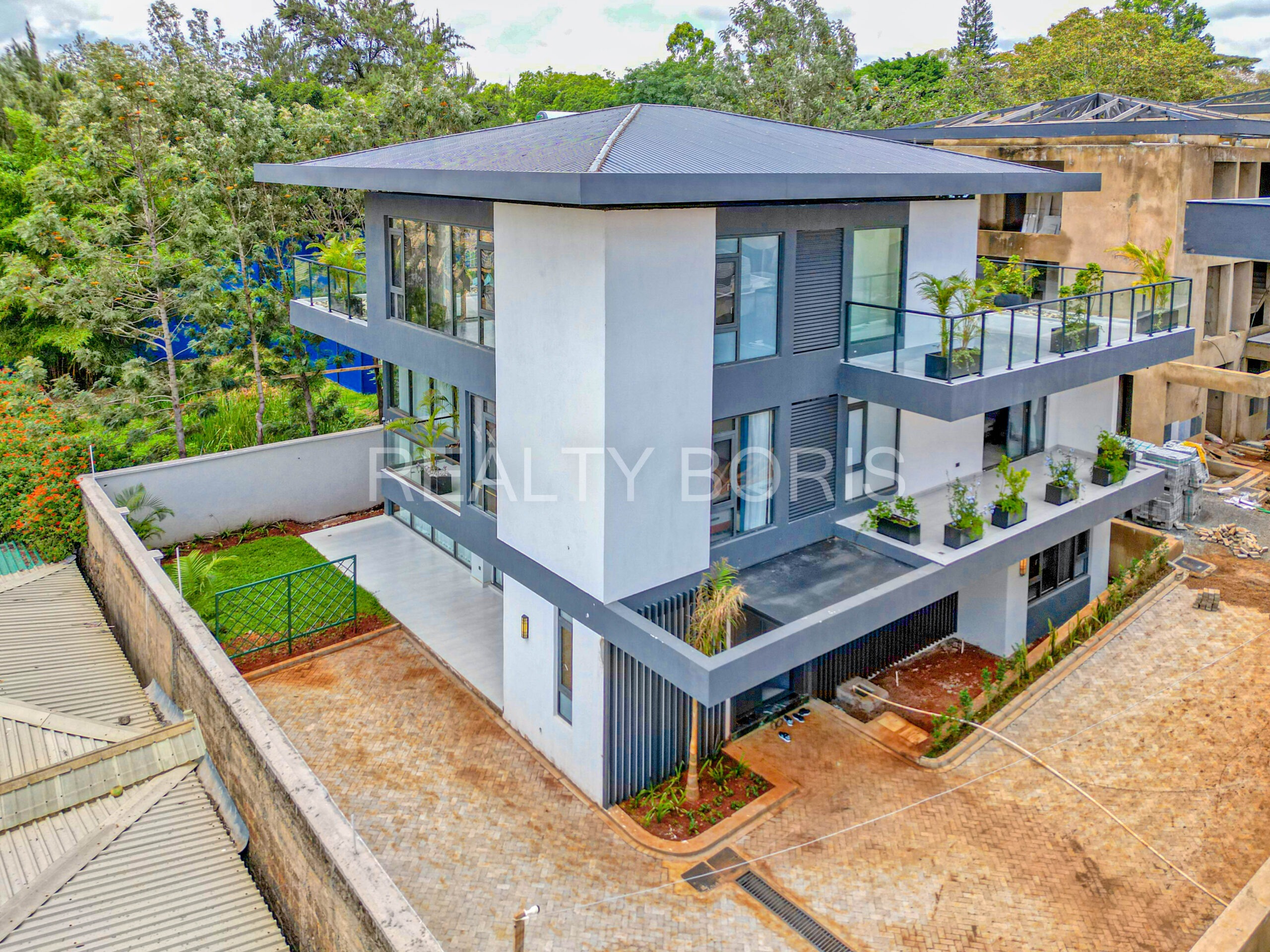

Legitimate Off-Plan Development is one of the most important things every buyer should confirm before paying a deposit, signing a sale agreement or committing to a payment plan. Off-plan property can be a smart way to buy into Nairobi’s real estate market, especially when the project is in a strong location, the developer is credible and the payment plan is manageable. However, it can also expose buyers to serious risk when documentation, approvals, construction progress or developer credibility are unclear.
Many buyers are attracted to off-plan developments because of flexible instalments, early-buyer prices, modern amenities and the possibility of value growth before completion. These benefits are real, but they should never replace due diligence. A beautiful brochure, showroom, render or social media advert does not automatically make a project legitimate.
At Realty Boris, we advise buyers to verify first and pay later. Whether you are buying in Kilimani, Kileleshwa, Westlands, Riverside, Lavington, Parklands, Upper Hill or any other Nairobi apartment market, a legitimate off-plan development should have clear documents, a verifiable developer, proper approvals, realistic timelines and a safe payment structure.
This guide explains how to know whether an off-plan development is legitimate and what buyers should check before committing their money.
Legitimate Off-Plan Development: What Does It Mean?
Legitimate Off-Plan Development means a project is properly documented, legally grounded, professionally managed and capable of being delivered according to the agreed terms. It does not mean the project is risk-free. All off-plan purchases carry some level of risk because the property is not yet complete. However, a legitimate project gives buyers enough confidence that the development is real, the land is verifiable, the developer is identifiable, the approvals are available and the purchase process is structured.
A legitimate off-plan development should have:
- A known developer
- A verifiable project location
- A mother title
- Clear ownership documents
- Approved building plans
- County approvals
- NCA project registration where applicable
- NEMA approvals where applicable
- Written sale agreement
- Clear payment plan
- Construction timeline
- Unit allocation process
- Parking allocation details
- Handover terms
- Refund and delay clauses
- Professional documentation
- Proper receipts for payments
At Realty Boris, we advise buyers to be careful when a project relies only on marketing. A legitimate project should stand up to legal, physical and financial verification.
1. Verify the Developer Behind the Project
The first step in confirming a Legitimate Off-Plan Development is checking the developer.
A buyer should know who is building the project, what they have built before and whether they have the capacity to deliver.
Before paying, ask for:
- Developer company name
- Company registration details
- KRA PIN
- Developer profile
- Previous completed projects
- Current active projects
- Office location
- Authorized sales contacts
- Official payment accounts
- Project consultants
- Contractor details
- Construction timeline
- Handover history
At Realty Boris, we advise buyers to take developer track record seriously. A developer who has completed similar projects successfully gives buyers more confidence than one with no visible history.
This does not mean new developers should automatically be rejected. It means buyers should ask more questions, verify documents more carefully and understand who is accountable if the project delays or fails.
A serious developer should not hesitate to provide company details, project documents and official contacts.
If the developer is vague, invisible, defensive or unwilling to be verified, that is a warning sign.
2. Confirm the Project Location Physically

A Legitimate Off-Plan Development should have a real, verifiable site.
Before buying, confirm:
- Exact project location
- Google Maps pin
- Plot number or title number
- Access road
- Neighbouring developments
- Construction status
- Site signage
- Security at site
- Developer presence
- Site office where applicable
- Road condition
- Surrounding environment
At Realty Boris, we advise buyers not to rely only on renders and brochures. Visit the site physically where possible. If you are abroad, request a real-time video walkthrough or appoint a trusted representative to visit on your behalf.
A proper site visit should show the land, access road, surrounding buildings, construction progress, project board and activity on site.
For off-plan projects that are still at early stages, the buyer should at least confirm that the land exists and that the advertised location matches the actual site.
If the seller cannot show you the site or avoids sharing the exact location, pause.
A legitimate project should be physically traceable.
3. Check the Mother Title
The mother title is one of the most important documents in any off-plan purchase.
For apartment developments, the mother title is the main title under which the project is being built before individual units are transferred or registered.
A buyer should ask:
- Who owns the land?
- Does the developer own the land?
- If not, does the developer have legal authority to develop and sell?
- Is the mother title clean?
- Is there a charge, caution or restriction?
- Does the land use support the proposed development?
- Does the title number match the project location?
At Realty Boris, we advise buyers not to accept a title copy without verification. A title copy can be outdated or incomplete. The buyer’s advocate should conduct an official search.
Buyers can use official platforms such as Ardhisasa for land information services where applicable. The State Department for Lands search certificate page also provides information on official land searches and ownership verification.
A Legitimate Off-Plan Development should have a land ownership position that can be explained clearly.
If the title has a charge, caution or restriction, the buyer’s advocate should investigate before any payment is made.
4. Confirm County Building Approvals
A Legitimate Off-Plan Development should have planning and building approvals from the relevant county authority.
For Nairobi projects, buyers should ask whether the development has approved plans and whether the approval matches what is being marketed.
Important documents may include:
- Approved architectural plans
- County development approval
- Building permit
- Change of user where applicable
- Occupation certificate at completion stage
- Planning conditions where applicable
- Approved number of floors
- Approved land use
- Approved parking provisions
At Realty Boris, we advise buyers not to buy a project only because the building design looks impressive. The proposed design must be supported by approval documents.
For Nairobi projects, buyers can refer to NairobiPlan, which supports Nairobi County physical planning services, including building permits and occupation certificate services. Buyers can also review the Nairobi City County Built Environment and Urban Planning Sector for broader planning context.
If a project is marketed as a high-rise apartment but approvals are unclear, the buyer should proceed cautiously.
Approvals are not decoration. They are part of project legitimacy.
5. Check NCA and NEMA Requirements Where Applicable
Construction projects may require additional regulatory documentation depending on the nature, size and risk profile of the project.
A buyer should ask whether the project has:
- NCA project registration where applicable
- Contractor registration details
- Consultant details
- NEMA approval or EIA licence where applicable
- Environmental compliance documents
- Site safety records
- Construction supervision structure
The National Construction Authority provides information on project registration, while the National Environment Management Authority provides information on Environmental Impact Assessment licensing for qualifying projects.
At Realty Boris, we advise buyers not to become technical experts, but to ask the right questions and let qualified professionals review the documents.
A legitimate developer should know the compliance status of the project and should be able to explain which approvals apply.
If a sales representative cannot explain the project’s approval position or says “those documents are not important,” that is a red flag.
For off-plan buying, documentation matters because the buyer is investing before completion.
6. Review the Sale Agreement Before Paying
A Legitimate Off-Plan Development should have a clear and professionally prepared sale agreement.
The sale agreement should explain:
- Buyer details
- Developer or seller details
- Project details
- Unit number
- Floor level
- Apartment size
- Purchase price
- Deposit amount
- Payment schedule
- Completion date
- Delay clauses
- Refund terms
- Default clauses
- Parking allocation
- Finishing specifications
- Handover conditions
- Defect liability period
- Transfer process
- Service charge details
- Dispute resolution process
At Realty Boris, we advise buyers not to sign an agreement they do not understand. A qualified advocate should review the sale agreement before the buyer signs or pays a substantial amount.
If the brochure promises a heated pool, gym, rooftop lounge, business centre, concierge or children’s play area, ask whether those amenities are reflected in the agreement, approved plans or management documents.
If the developer promises completion by a certain date, the agreement should explain what happens if completion delays.
A strong agreement protects both the buyer and developer by making expectations clear.
Verbal promises are not enough in off-plan property.
7. Confirm the Payment Structure and Bank Account
A Legitimate Off-Plan Development should have a safe and traceable payment structure.
Before sending money, confirm:
- Official payment account name
- Whether the account belongs to the developer, seller or advocate
- Whether payments go through a client account
- Deposit amount
- Instalment schedule
- Payment reference
- Receipt process
- Currency rules for diaspora buyers
- Refund terms
- Penalties for late payment
- Construction milestone payments
- Balance on completion
- Documentation for every payment
At Realty Boris, we advise buyers to avoid sending money to unrelated personal accounts. Every payment should be traceable and receipted.
A legitimate developer should issue formal receipts and maintain payment records.
For diaspora buyers, payment verification is especially important. Do not send money because someone sends urgency messages on WhatsApp. Verify the account, agreement and documentation before payment.
A safe payment plan should support the project, but also protect the buyer.
If payment instructions are unclear or keep changing, pause and verify.
8. Study the Construction Timeline and Progress
A Legitimate Off-Plan Development should have a realistic construction timeline.
Buyers should ask:
- When did construction start?
- What stage is the project currently in?
- What is the expected completion date?
- What milestones have been achieved?
- Are there regular construction updates?
- Are site photos and videos available?
- Has the developer completed similar projects on time?
- What happens if the project delays?
- Are there penalties or remedies for delay?
- When will handover happen?
At Realty Boris, we advise buyers to be cautious of timelines that sound too good to be true. Construction takes time, and delays can happen due to approvals, financing, supply issues, weather, contractor challenges or market conditions.
A delay is not always proof that a project is illegitimate. However, a serious developer should communicate delays clearly and provide updates.
Buyers should ask for construction updates throughout the payment period.
A project that shows no visible progress for a long time should be reviewed carefully.
Off-plan buying requires patience, but not blind patience.
9. Check the Developer’s Pricing and Market Logic
A Legitimate Off-Plan Development should also make financial sense.
A project may have documents, but buyers should still ask whether the price is reasonable for the location, size and market.
Before buying, compare:
- Price per square metre
- Similar projects nearby
- Ready apartment prices
- Off-plan prices in the same area
- Expected completion value
- Rental demand
- Service charge estimate
- Parking allocation
- Amenities
- Developer reputation
- Resale potential
- Nearby apartment supply
At Realty Boris, we advise buyers to be careful with projects that are either unusually cheap or unjustifiably expensive.
A very cheap project may have hidden risks. A very expensive project may reduce investment returns if the market cannot support the price.
A good off-plan investment should have value logic. The location, unit size, payment plan, developer credibility and expected demand should all support the price.
Do not buy because of hype. Buy because the numbers and documents make sense.
Legitimate Off-Plan Development for Diaspora Buyers
Diaspora buyers should be especially careful when assessing a Legitimate Off-Plan Development because they may not be physically present in Kenya.
Before paying from abroad, diaspora buyers should request:
- Developer profile
- Project location video
- Site visit video
- Mother title information
- Official search
- Approved plans
- Sale agreement
- Payment schedule
- Official bank details
- Receipts
- Construction updates
- Handover terms
- Property management plan
- Advocate review
At Realty Boris, we advise diaspora buyers not to rely only on relatives, agents or online advertisements. A trusted person can help view the site, but legal verification should be handled by a qualified advocate.
A diaspora buyer should also ask for structured updates during construction. These may include monthly photos, videos, milestone reports and payment reminders tied to the agreement.
Buying off-plan from abroad can work well when the process is documented and professional.
Distance should not mean lack of control.
Legitimate Off-Plan Development for Investors
Investors should evaluate off-plan developments based on both legitimacy and performance.
A project may be legitimate but still not be the best investment.
Before buying, investors should ask:
- Who is the target tenant?
- What rent is realistic after completion?
- How many similar units will enter the market?
- What is the estimated service charge?
- Will the unit be easy to furnish?
- Is short-term rental allowed?
- Is the building suitable for long-term tenants?
- What is the resale market?
- Is the purchase price fair?
- What is the expected net yield?
- What is the expected capital appreciation?
At Realty Boris, we advise investors to avoid buying only because the payment plan looks comfortable.
An off-plan investment should have strong fundamentals: location, demand, price, layout, parking, management, legal clarity and credible delivery.
If the project is legitimate but overpriced, the investor may still struggle with returns.
Good due diligence must check both safety and profitability.
Legitimate Off-Plan Development for First-Time Buyers

First-time buyers are often attracted to off-plan property because the payment plan feels easier than paying for a ready unit.
This can be a good entry point, but first-time buyers must move carefully.
Before committing, first-time buyers should understand:
- Total purchase price
- Deposit requirement
- Monthly instalments
- Completion balance
- Legal fees
- Stamp duty
- Service charge
- Handover costs
- Furnishing costs
- Delay risk
- Refund terms
- Transfer process
At Realty Boris, we advise first-time buyers not to stretch beyond their financial capacity.
A payment plan may look manageable at the beginning, but the buyer must also prepare for completion costs and ownership costs.
The safest first off-plan purchase is one that is affordable, well documented and backed by a credible developer.
A legitimate project should not pressure buyers into decisions they do not understand.
Red Flags That an Off-Plan Development May Not Be Legitimate

Buyers should be cautious if they notice:
- Developer refuses to share documents
- No clear project location
- No mother title information
- No official search
- No approved plans
- No written sale agreement
- Payment requested to unrelated personal accounts
- No formal receipts
- Completion date keeps changing without explanation
- Developer has no visible track record
- Construction progress is unclear
- Sales team uses excessive pressure
- Price is far below market without reason
- Unit allocation is vague
- Parking allocation is not documented
- Approval documents cannot be reviewed
- Refund terms are unclear
- Agreement does not match brochure promises
- No advocate involvement is allowed
At Realty Boris, our advice is simple: if the developer wants your money but resists verification, pause.
A legitimate off-plan development should be able to withstand questions.
Do not allow urgency to replace due diligence.
What Buyers Should Ask Before Reserving an Off-Plan Unit
Before reserving a unit, ask:
- Who is the developer?
- What projects have they completed?
- Where exactly is the site?
- Is the mother title available for verification?
- Has an official search been conducted?
- Are approvals available?
- Is the project registered where applicable?
- What is the construction stage?
- What is the completion date?
- What happens if completion delays?
- What is the payment plan?
- Which account receives payments?
- Is a receipt issued?
- Is parking allocated?
- What amenities are included?
- What is the estimated service charge?
- Who will manage the building?
- When will ownership documents be processed?
- Can my advocate review everything first?
At Realty Boris, we advise buyers to ask these questions before paying a reservation fee.
A reservation should not be treated casually. Even a small payment can create pressure to continue with a weak transaction.
Ask first. Pay later.
Common Mistakes Off-Plan Buyers Should Avoid
Off-plan buyers should avoid these mistakes:
- Buying only because the project looks beautiful
- Trusting renders without checking documents
- Ignoring the mother title
- Not conducting an official search
- Not verifying the developer
- Not checking approvals
- Paying before advocate review
- Ignoring completion timelines
- Not checking delay clauses
- Not confirming parking
- Forgetting service charge
- Not checking nearby supply
- Overestimating rental income
- Assuming all off-plan projects appreciate
- Sending money to personal accounts
- Not keeping receipts
- Buying under pressure
At Realty Boris, we advise buyers to slow down and verify.
Off-plan property can be rewarding when done correctly, but risky when handled casually.
A smart buyer does not only ask, “How much is the deposit?” A smart buyer asks, “What proves this project is safe?”Realty Boris Expert View on Legitimate Off-Plan Development
Our view is that a Legitimate Off-Plan Development must be verified from several angles before a buyer commits.
For legal safety, check the mother title, official search, seller authority, sale agreement and transfer path.
For project safety, check county approvals, NCA registration where applicable, NEMA approvals where applicable, construction progress and professional consultants.
For financial safety, check pricing, payment plan, refund terms, delay clauses, service charge and expected ownership costs.
For investment performance, check rental demand, resale value, nearby supply, location strength and tenant profile.
For diaspora buyers, insist on virtual site verification, advocate review, documented payments and regular construction updates.
At Realty Boris, we help buyers compare off-plan developments carefully, focusing on verified listings, credible developers, proper documentation and long-term value.
A legitimate off-plan project should be clear, verifiable and professionally structured.
Final Thoughts
Legitimate Off-Plan Development should be verified before any buyer sends money, signs an agreement or commits to a payment plan.
Off-plan property can be a strong investment in Nairobi when the developer is credible, the land is properly documented, approvals are available, construction is progressing and the agreement protects the buyer. However, buyers must avoid making decisions based only on brochures, renders, discounts or sales pressure.
At Realty Boris, we advise buyers to verify the developer, confirm the site, check the mother title, review approvals, examine the sale agreement, confirm payment channels and monitor construction progress.
A genuine project should not fear due diligence.
The best off-plan investment is not the one with the loudest marketing. It is the one with the strongest documentation, realistic pricing and credible delivery plan.
Call to Action
Thinking of buying an off-plan apartment in Nairobi?
Contact Realty Boris for verified listings, developer checks and expert guidance before you reserve or pay.