
Kileleshwa vs Kilimani is one of the most important neighbourhood comparisons for anyone considering buying or settling in Nairobi’s rapidly changing apartment market.
Located next to each other, Kilimani and Kileleshwa are two of Nairobi’s most established residential addresses. Both offer modern apartment developments, access to shopping centres, schools, hospitals and major business districts. However, the residential character of the two areas is increasingly different.
In 2026, the question is no longer simply, Which neighbourhood has better apartments?
Buyers should also be asking:
- How fast is the neighbourhood developing?
- How much residential density is being introduced?
- Can the existing roads, water and sewer infrastructure support that growth?
- Which area offers a better environment for families?
- Which location makes more sense for an individual professional?
- How could future developments affect the property’s long-term desirability?
Nairobi’s Development Control Policy 2026 has made these questions even more relevant. The policy seeks to align new development with the capacity of roads, water, sewer systems and other infrastructure while introducing clearer controls around density, building height and environmental protection.
When viewed from a settlement perspective, Kileleshwa currently offers some advantages over Kilimani, particularly for families. Kilimani, however, remains extremely attractive for professionals and buyers who prioritise convenience, connectivity and an active urban lifestyle.
1. Kileleshwa vs Kilimani: Kileleshwa Retains a More Residential Feel
The first major difference between the two neighbourhoods is their character.
Kilimani has developed into one of Nairobi’s strongest mixed residential and commercial districts. Residential buildings coexist with restaurants, cafés, hotels, offices, supermarkets, entertainment establishments and short-stay apartments.
For residents who enjoy having almost everything close to home, this is a significant advantage.
Kileleshwa has historically had a stronger residential identity.
That identity is changing.
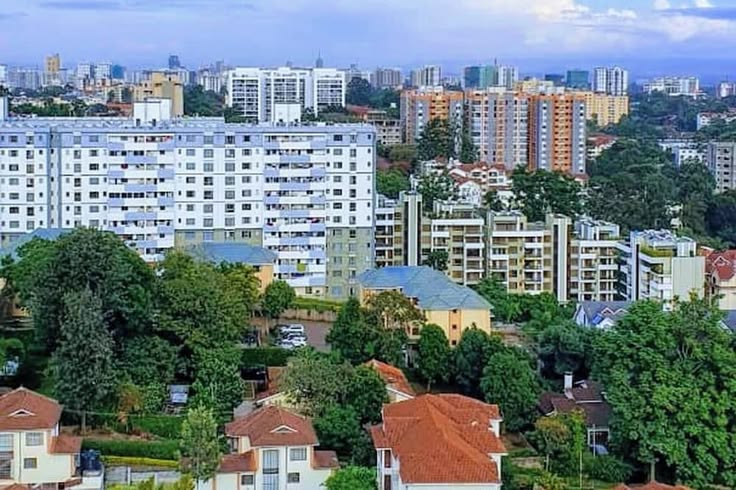
A 2026 Business Daily report highlighted how the neighbourhood has been transformed by high-rise development, with older homes and low-rise buildings increasingly being replaced by apartment towers. The report also noted growing pressure on roads, water supply and sewer infrastructure as population density increases.
Kileleshwa should therefore no longer be described as a purely low-density leafy suburb.
However, many sections still provide a stronger sense of residential separation than some of Kilimani’s busiest corridors.
For families, that distinction can matter.
A home is not only what happens inside the apartment. The surrounding traffic, commercial activity, construction, noise and population density also influence the everyday living experience.
Advantage: Kileleshwa for family settlement.
Advantage: Kilimani for buyers who enjoy an active urban environment.
2. Kileleshwa Offers a Strong Balance Between Residential Living and Accessibility
One of Kileleshwa’s strongest advantages is that residents do not necessarily have to sacrifice accessibility for a more residential environment.
From Kileleshwa, residents can conveniently access:
- Westlands
- Riverside
- Lavington
- Kilimani
- Waiyaki Way
- Nairobi CBD
- Upper Hill
This positioning is particularly useful for households where family members commute to different parts of Nairobi.
Kilimani is equally well positioned but operates differently.
Its location around major routes such as Ngong Road, Argwings Kodhek Road, Ring Road Kilimani, Lenana Road, Dennis Pritt Road and surrounding connectors has helped turn it into a major residential and lifestyle hub.
Infrastructure improvements are also continuing.
Wood Avenue, for example, reopened in April 2026 after major rehabilitation. The approximately 1.5-kilometre project included drainage improvements intended to address flooding and road deterioration in an area experiencing significant development.
The improvement is positive for Kilimani, but it also illustrates the wider challenge facing both areas: development density is growing faster than the neighbourhoods were originally designed to accommodate.
For someone choosing where to settle rather than simply where to invest, Kileleshwa’s combination of connectivity and relative residential separation gives it a slight advantage.
3. Kileleshwa vs Kilimani Residential Growth Is Changing Both Neighbourhoods
The biggest story affecting Kileleshwa vs Kilimani in 2026 is vertical residential growth.
Older standalone homes and low-rise apartments are increasingly being replaced by high-rise residential developments.
This makes economic sense for developers. Land in both neighbourhoods is highly valuable, and taller buildings allow more units to be developed on a single plot.
But growth also brings new considerations.
Imagine a road where five developments containing several hundred apartments are completed within three years.
The buyer should consider more than the appearance of those buildings.
They should ask:
- How many additional vehicles will use the road?
- Will water supply remain adequate?
- Can the sewer system support additional households?
- How many developments are still under construction?
- Are pedestrian facilities improving?
- How could future buildings affect views and natural lighting?
- Could additional supply affect rental competition?
These questions are becoming central to Nairobi property buying.
Nairobi County’s 2026 Development Control Policy specifically emphasises connecting building density with available water, sewer and road infrastructure.
Both Kilimani and Kileleshwa therefore face development pressure.
The difference is that Kilimani is already more intensely urbanised, while Kileleshwa is moving rapidly in that direction.
For buyers, this means today’s quiet street should not automatically be assumed to remain unchanged for the next decade.
4. Kileleshwa Is Generally Better Suited to Long-Term Family Settlement
Families and individual buyers usually evaluate property differently.
An individual professional may prioritise:
- proximity to work;
- restaurants and cafés;
- nightlife;
- shopping;
- gym access;
- convenient transport;
- smaller modern apartments; and
- the ability to reach everyday services quickly.
A family purchasing a long-term residence is more likely to consider:
- bedroom sizes;
- schools;
- children’s recreation;
- traffic;
- noise;
- parking;
- storage;
- DSQ availability;
- security;
- neighbourhood density;
- access to healthcare; and
- the long-term character of the surrounding area.
This changes the Kileleshwa vs Kilimani decision.
Kilimani’s urban intensity can be an advantage for young professionals but may be less important to a household whose primary goal is long-term residential comfort.
Kileleshwa still has sections where family-oriented residential living is more noticeable.
Larger three- and four-bedroom configurations are also commonly associated with the area’s owner-occupier market, although compact investment units and short-stay apartments are increasingly entering Kileleshwa as well.
For a family, the important question is therefore not simply whether the building has a swimming pool or gym.
It is whether the entire environment functions as a long-term home.
5. Kileleshwa Can Offer More Separation From Commercial Activity

This is one of the clearest lifestyle distinctions.
Kilimani’s commercial growth has created enormous convenience.
Shopping centres, restaurants, professional offices, hotels, cafés, hospitals, gyms and entertainment facilities are distributed throughout the wider area.
That makes Kilimani particularly attractive to someone who wants to live close to everyday activity.
The disadvantage is that commercialisation also increases movement.
More businesses can mean:
- more daytime traffic;
- more deliveries;
- increased pedestrian activity;
- more short-stay residents;
- more evening activity; and
- greater pressure on parking.
Kileleshwa certainly has restaurants, supermarkets and commercial establishments of its own, but many parts remain less commercially intensive.
For households that want proximity to Nairobi’s major lifestyle hubs without necessarily living directly inside them, this can be valuable.
You can still reach Kilimani, Westlands, Riverside and Lavington relatively easily while returning to a neighbourhood that may feel more residential.
Family advantage: Kileleshwa.
Convenience advantage: Kilimani.
6. Infrastructure Improvements Are Supporting Growth — But Buyers Must Watch Density
Residential expansion in both neighbourhoods has been accompanied by road infrastructure improvements.
Nairobi County previously reported upgrades affecting both wards, including Muthangari Gardens Road in Kilimani and Suguta Road, Mugoiri Road, Muhia Road and Hamisi Road in Kileleshwa.
The Wood Avenue rehabilitation in Kilimani in 2026 provides another recent example of infrastructure responding to development pressure.
However, upgrading one road does not automatically solve the challenges created by high-density development.
Property buyers should investigate the immediate micro-location of any development.
Before buying, consider:
| Infrastructure Question | Why It Matters |
|---|---|
| What is the main access road? | Determines daily traffic experience |
| Are other developments under construction nearby? | Indicates future population density |
| What is the project’s water arrangement? | Important in high-density developments |
| Is there adequate water storage? | Provides resilience during supply interruptions |
| How is sewerage handled? | Critical as apartment populations increase |
| Is backup electricity available? | Important for lifts, lighting and security |
| How many parking spaces are allocated? | Prevents congestion within the development |
| Are there alternative access routes? | Valuable during peak traffic periods |
This type of neighbourhood-level due diligence is becoming just as important as inspecting the apartment itself.
7. Kileleshwa vs Kilimani: Which Area Is Better for a Family or Individual?
This is where the comparison becomes clearest.
Choose Kileleshwa if you are:
- buying primarily for family settlement;
- seeking a three- or four-bedroom home;
- looking for a comparatively residential environment;
- planning to stay in the property for several years;
- prioritising privacy and residential character;
- seeking access to Westlands, Riverside and Lavington; or
- looking for urban convenience without being in the centre of intense commercial activity.
Choose Kilimani if you are:
- a young professional;
- an individual buyer;
- an investor targeting urban tenants;
- looking for a studio, one-bedroom or compact two-bedroom property;
- prioritising restaurants, shopping and entertainment;
- working around Upper Hill or central Nairobi; or
- comfortable with a busier and more urban neighbourhood.
Neither profile makes one area inherently superior.
They simply serve different buyer priorities.
Advantages and Disadvantages of Kileleshwa
Advantages
- More residential character in many locations
- Attractive for long-term family settlement
- Strategic access to Westlands, Riverside, Lavington and Kilimani
- Strong selection of larger apartment configurations
- Less commercially intensive than central Kilimani
- Good appeal to owner-occupiers
- Continued infrastructure and residential development
Disadvantages
- Rapid high-rise development is changing the area’s character
- Traffic is increasing
- Infrastructure is under growing pressure
- Construction activity can affect quieter streets
- Short-stay accommodation is becoming more common
Advantages and Disadvantages of Kilimani
Advantages
- Excellent central location
- Strong retail and restaurant ecosystem
- Convenient for young professionals
- Wide range of apartment types
- Strong rental market appeal
- Access to major roads and commercial districts
- Continued road and infrastructure investment
Disadvantages
- Higher residential density in many sections
- More commercial activity
- Significant construction in several corridors
- Traffic can be heavy during peak periods
- Some streets may be less attractive to buyers prioritising quiet family living
Kileleshwa vs Kilimani: The 2026 Verdict
The Kileleshwa vs Kilimani comparison ultimately comes down to what the buyer expects from the neighbourhood.
For an individual professional who wants restaurants, shopping, entertainment, offices and everyday convenience close by, Kilimani remains one of Nairobi’s strongest urban residential locations.
For a family buying with the intention of settling for several years, Kileleshwa has the stronger overall proposition.
It combines good accessibility with a comparatively residential character and strong family-oriented housing options.
However, buyers should recognise that Kileleshwa itself is undergoing substantial transformation. High-rise development is increasing, infrastructure is being tested and some quieter pockets may look very different several years from now. Recent reporting on the neighbourhood confirms how significantly apartment development is already changing its traditional low-density character.
The smartest decision is therefore not simply to choose Kileleshwa or Kilimani.
It is to choose the right development on the right street in the right neighbourhood for your intended use.
A good investment apartment, a convenient home for a young professional and a long-term family residence do not necessarily need to satisfy the same criteria.
Looking for a Home in Kileleshwa or Kilimani?
Realty Boris can help you compare available developments in Kileleshwa and Kilimani based on your lifestyle, family needs and investment goals. Contact us today to identify the right property for you.