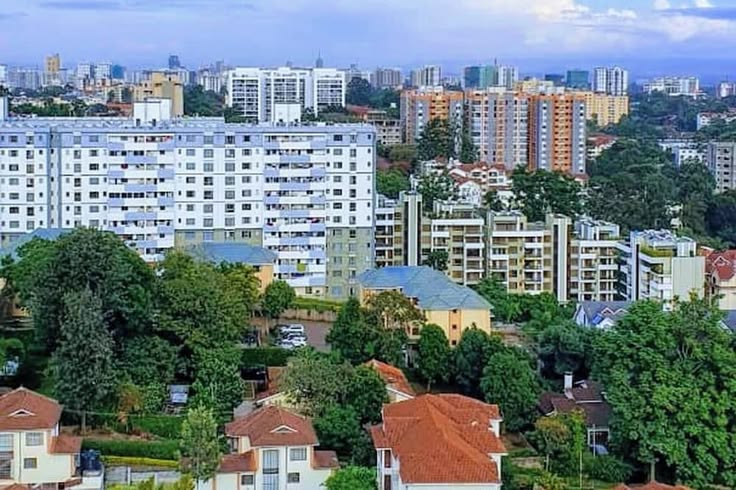


Global Market and Kenya Real Estate are more connected than many buyers, investors and developers realize. A property in Kilimani, Westlands, Kileleshwa, Lavington, Riverside, Karen or Runda may feel local, but the forces shaping its price, construction cost, buyer demand and rental performance are often global.
When global oil prices rise, construction and transport costs can increase. When global interest rates remain high, financing becomes more expensive and investor appetite becomes cautious. When the Kenya shilling moves against major currencies, diaspora buyers may gain or lose purchasing advantage. When remittance flows slow, some buyer segments become more careful. When international uncertainty increases, developers, lenders and investors may become more conservative.
At Realty Boris, we advise buyers not to view real estate in isolation. Nairobi property is influenced by local demand, but it is also affected by global capital, energy prices, exchange rates, trade flows, construction inputs, diaspora income and investor sentiment.
This guide explains how the global market is impacting Kenya’s real estate and what buyers should watch before making a property decision in 2026.
Global Market and Kenya Real Estate: Why the Connection Matters

Global Market and Kenya Real Estate matter because real estate is a capital-heavy sector. Property development depends on financing, imported materials, construction inputs, investor confidence and buyer affordability. Property buying depends on income, mortgage costs, savings, diaspora remittances and currency strength.
A buyer may think they are only comparing apartments, townhouses or villas. In reality, the property price may be affected by:
- Global fuel prices
- Exchange rates
- Imported finishing materials
- Steel and cement costs
- Interest rates
- Diaspora remittance flows
- Investor confidence
- Inflation
- Global uncertainty
- Foreign direct investment
- Supply chain disruptions
- Demand from expatriates and international organizations
At Realty Boris, we advise buyers to understand these forces because they affect when to buy, what to buy and how to negotiate.
A smart property decision should consider both local fundamentals and broader market conditions.
1. Global Interest Rates Affect Financing and Buyer Demand

Interest rates are one of the biggest ways the global market affects Kenya real estate.
When global interest rates are high, capital becomes more expensive. Banks become more careful. Borrowers become more cautious. Investors may delay large purchases because financing costs are higher.
In Kenya, local lending conditions are also influenced by monetary policy and broader financial market conditions. The Central Bank of Kenya provides monetary policy updates and Central Bank Rate information through its official monetary policy resources.
At Realty Boris, we advise buyers to watch interest rates because they affect affordability.
Higher borrowing costs can affect:
- Mortgage affordability
- Developer financing
- Construction timelines
- Buyer purchasing power
- Investor appetite
- Property absorption rates
- Rental yield expectations
For cash buyers, high interest periods can sometimes create negotiation opportunities because financed buyers may become fewer. For mortgage buyers, the same environment can reduce affordability and increase monthly repayment pressure.
A buyer should not only ask, “Can I afford the deposit?” The buyer should also ask, “Can I afford the full financing cost under current conditions?”
2. Global Inflation Affects Construction Costs

Construction costs are one of the clearest links between the global market and Kenya real estate.
Many construction inputs are affected by fuel, transport, energy, imported materials, global supply chains and currency movements. When construction becomes more expensive, developers may adjust prices to protect margins.
This can affect:
- Off-plan pricing
- Completion costs
- Developer margins
- Construction timelines
- Finishing quality
- Service charge projections
- Buyer affordability
- New project launches
At Realty Boris, we advise buyers to pay attention to construction cost trends, especially when buying off-plan. A developer facing rising costs may delay, adjust specifications or become more cautious with new projects.
The Kenya National Bureau of Statistics publishes Construction Input Price Indices, which help track changes in construction input prices.
For buyers, this matters because a project that looked profitable at launch may face cost pressure during construction. That is why off-plan buyers should check developer credibility, project funding, approvals and timelines before paying.
A strong off-plan investment should be able to survive cost changes.
3. Exchange Rates Affect Diaspora Buying Power

Diaspora buyers are a major part of Kenya’s real estate market, especially in Nairobi’s apartment, land, townhouse and villa segments.
When the Kenya shilling weakens against major currencies, some diaspora buyers earning in dollars, pounds, euros or dirhams may gain more purchasing power in Kenya. When the shilling strengthens or foreign incomes face pressure, diaspora buyers may become more cautious.
This means exchange rates can affect:
- Diaspora demand
- Property payment timing
- Instalment affordability
- Developer sales from overseas buyers
- Demand for apartments and land
- Foreign-currency budgeting
- Investment decisions
At Realty Boris, we advise diaspora buyers to plan carefully. A favourable exchange rate can create an opportunity, but buyers should still verify documents before sending money.
Diaspora buyers should check:
- Property ownership documents
- Developer credibility
- Sale agreement
- Official payment accounts
- Currency conversion costs
- Transfer charges
- Receipts
- Handover terms
- Property management plan
The Central Bank of Kenya publishes foreign exchange information through its forex resources, which buyers can use for general market awareness.
A strong currency position should not replace due diligence.
4. Diaspora Remittances Influence Real Estate Demand
Diaspora remittances are important because many Kenyans abroad use part of their income to buy property, support family housing, invest in land or pay instalments for off-plan apartments.
When remittances are strong, they can support demand in the property market. When remittances slow, some buyers may delay purchases, reduce budgets or become more careful with payment commitments.
At Realty Boris, we advise developers and sellers to understand that diaspora buyers are serious, but they are also becoming more cautious. Many overseas buyers now want verified listings, virtual viewings, title checks, structured payment plans and professional communication before sending money.
The Central Bank of Kenya publishes monthly diaspora remittance data, which can help investors understand the broader flow of overseas income into the country.
For real estate, remittances can support:
- Apartment purchases
- Land purchases
- Off-plan instalments
- Construction of family homes
- Mortgage deposits
- Rental investment
- Retirement planning
- Property management funding
Diaspora money is powerful in Kenya real estate, but the buyer still needs a safe process.
5. Global Oil Prices Affect Transport, Materials and Living Costs

Oil prices affect real estate indirectly but strongly.
Higher global oil prices can increase transport costs, construction logistics, building material delivery, generator costs and general living expenses. This can affect both developers and tenants.
For developers, higher fuel and transport costs may increase the cost of construction. For tenants, higher living costs can reduce disposable income and make rental affordability more sensitive.
At Realty Boris, we advise investors to understand that a tenant’s ability to pay rent is affected by broader cost-of-living conditions.
If transport, food, electricity and fuel costs rise, tenants may become more price-sensitive. This can affect rental demand, especially in highly competitive apartment markets.
For landlords, this means rent should be set realistically. A vacant unit earning nothing is weaker than a fairly priced unit with a reliable tenant.
For buyers, this means rental projections should be conservative. Do not assume tenants will always accept aggressive rent increases.
The global energy market can affect local property performance.
6. Global Investor Confidence Affects Capital Flow

Real estate depends on confidence. When global investors feel confident, capital moves more freely. When global uncertainty increases, investors may become cautious, delay projects or demand higher returns.
Foreign direct investment, private equity, institutional funding and infrastructure-linked capital can all influence real estate indirectly. Global investors may look at Kenya for opportunities in housing, logistics, hospitality, offices, retail, industrial parks and mixed-use developments.
UN Trade and Development provides global investment context through its World Investment Report, which helps show how international investment flows are shifting.
At Realty Boris, we advise local buyers to understand that global capital can affect supply. When more capital enters a market, new developments may increase. When capital becomes cautious, fewer projects may launch, and existing projects may take longer to complete.
This affects:
- Apartment supply
- Commercial development
- Office space
- Retail projects
- Industrial property
- Luxury developments
- Infrastructure-linked growth
- Pricing expectations
Investor confidence does not only affect big institutions. It eventually affects buyers, tenants and landlords.
7. Global Market and Kenya Real Estate in the Off-Plan Segment

Global Market and Kenya Real Estate are especially connected in off-plan developments.
Off-plan projects are exposed to global and local market changes because they take time to complete. A project launched today may face different construction costs, financing costs and buyer demand before handover.
Off-plan buyers should check:
- Developer track record
- Mother title
- Approved plans
- Construction progress
- Funding structure
- Completion timeline
- Delay clauses
- Refund terms
- Service charge estimates
- Imported finishing specifications
- Payment schedule
- Currency risks for diaspora buyers
At Realty Boris, we advise buyers not to buy off-plan only because the payment plan is flexible.
A payment plan is useful, but the project must be able to withstand market changes. Rising material costs, financing pressure or weaker buyer demand can affect delivery.
For Nairobi projects, buyers can review planning services through NairobiPlan and broader county planning context through the Nairobi City County Built Environment and Urban Planning Sector.
A good off-plan investment should have both strong documents and strong market logic.
8. Global Market and Kenya Real Estate in the Rental Market

Global Market and Kenya Real Estate also meet in the rental market.
Rental demand in Nairobi is affected by employment, expatriate movement, business confidence, corporate hiring, NGO activity, tourism, diaspora visits, inflation and tenant purchasing power.
For example:
- Westlands may benefit from corporate and executive tenant demand.
- Kilimani may benefit from young professionals and furnished rental activity.
- Riverside may attract executive tenants who value privacy and access.
- Gigiri may benefit from diplomatic and international organization demand.
- Karen and Runda may attract expatriate families and premium tenants.
- Kileleshwa and Lavington may attract families and long-term tenants.
At Realty Boris, we advise landlords to track the target tenant. If the tenant base is affected by global uncertainty, rent expectations may need adjustment.
For furnished rentals, global movement matters even more. Business travel, diaspora visits, tourism and corporate relocation can affect occupancy.
A furnished apartment should therefore be priced and managed professionally.
Rental income is local, but tenant behaviour can be shaped by global conditions.
9. Global Market and Kenya Real Estate for Buyers in 2026
For buyers, the biggest lesson is that real estate decisions should be more analytical in 2026.
The global market can affect Kenya real estate through:
- Interest rates
- Inflation
- Exchange rates
- Remittances
- Oil prices
- Construction costs
- Investor confidence
- Tenant demand
- Mortgage affordability
- Off-plan delivery risk
At Realty Boris, we advise buyers to focus on fundamentals.
Before buying, check:
- Location strength
- Property price
- Rental demand
- Service charge
- Building management
- Developer credibility
- Title documents
- Payment structure
- Completion timeline
- Construction quality
- Resale value
- Property management plan
Buyers should also refer to official data sources such as the Kenya National Bureau of Statistics Residential Property Price Index for broader property price context.
A smart buyer does not panic because of global uncertainty. A smart buyer uses uncertainty to ask better questions.
How Global Conditions Affect Nairobi Neighbourhoods Differently

Not every Nairobi neighbourhood is affected in the same way.
Kilimani
Kilimani may feel global market pressure through apartment supply, furnished rental competition, diaspora demand and buyer price sensitivity.
Westlands
Westlands may be influenced by corporate activity, expatriate demand, office-linked tenants and furnished executive rentals.
Kileleshwa
Kileleshwa may be more linked to long-term residential demand, family tenants and professional renters seeking calmer central living.
Riverside
Riverside may be affected by executive tenant demand, premium apartment pricing and corporate rental behaviour.
Lavington
Lavington may be shaped by family demand, townhouse demand and long-term residential value.
Karen and Runda
Karen and Runda may be more influenced by high-net-worth buyers, expatriate families, diplomatic tenants and long-term land-backed value.
Gigiri
Gigiri may be influenced by international organizations, diplomatic presence and foreign-linked rental demand.
At Realty Boris, we advise buyers to analyse neighbourhoods separately. Global forces affect each area differently depending on tenant profile, buyer profile and property type.
What Buyers Should Do Before Investing
Before investing in Kenya real estate under changing global conditions, buyers should:
- Compare prices carefully
- Calculate total ownership cost
- Use conservative rental projections
- Check construction progress for off-plan projects
- Verify title and approvals
- Understand service charge
- Confirm payment terms
- Review mortgage affordability
- Consider currency timing if buying from abroad
- Work with qualified professionals
- Avoid rushed decisions
- Focus on long-term value
At Realty Boris, we advise investors to avoid speculation without fundamentals.
A property should make sense even if market conditions become tougher. If the investment only works under perfect assumptions, it may be too risky.
A strong property should remain attractive to tenants and buyers because of location, quality, legal safety and practical value.
Common Mistakes Buyers Should Avoid
When thinking about Global Market and Kenya Real Estate, buyers should avoid:
- Ignoring construction cost changes
- Assuming all property prices will rise automatically
- Buying off-plan without checking developer capacity
- Overestimating rental income
- Ignoring currency conversion costs
- Sending diaspora funds without verification
- Failing to budget for service charge
- Not checking mortgage affordability
- Ignoring imported material cost pressure
- Buying because of hype
- Ignoring vacancy risk
- Not reviewing title documents
- Forgetting property management
- Assuming global uncertainty affects all locations equally
- Making decisions based only on social media marketing
At Realty Boris, our advice is simple: buy based on evidence, not excitement.
The stronger your due diligence, the safer your decision.
Realty Boris Expert View on Global Market and Kenya Real Estate
Our view is that Global Market and Kenya Real Estate will remain closely connected because property is affected by capital, construction inputs, financing, remittances, exchange rates and investor confidence.
For off-plan buyers, we recommend checking developer strength, documentation, construction progress and delay clauses.
For diaspora buyers, we recommend watching exchange rates, verifying payment channels and using qualified advocates before sending money.
For rental investors, we recommend calculating net returns after service charge, vacancy, management costs and tax.
For luxury buyers, we recommend focusing on land value, security, privacy, scarcity and long-term preservation.
For commercial investors, we recommend watching business confidence, office demand, parking, accessibility and lease strength.
For apartment buyers, we recommend checking nearby supply, rental demand, building management and resale value.
At Realty Boris, we help buyers make decisions that are grounded in market reality, not speculation.
The best real estate decisions in 2026 will come from buyers who understand both local property fundamentals and global economic pressure.
Final Thoughts
Global Market and Kenya Real Estate are deeply connected. Global interest rates, inflation, energy prices, exchange rates, remittances, construction costs and investor confidence all affect how property is priced, developed, bought, rented and resold in Kenya.
This does not mean buyers should avoid the market. It means buyers should be more informed.
At Realty Boris, we advise buyers to focus on quality, location, documentation, realistic pricing and long-term value. A strong property can still perform even when the market is uncertain, but weak properties become riskier when global pressure rises.
The smartest buyers in 2026 will not buy blindly. They will compare, verify, calculate and choose properties that can remain valuable under changing conditions.
Kenya real estate remains attractive, but the buying process must be disciplined.
Call to Action
Trying to understand how global market changes affect your next property decision in Kenya?
Contact Realty Boris for verified listings, market guidance and expert support before you buy.