UN Expansion in Nairobi: 7 Powerful Ways It Could Boost Gigiri, Runda and Westlands Property
UN expansion in Nairobi is becoming one of the most interesting developments to watch in the city’s premium property market.
The United Nations is expanding its Nairobi headquarters in Gigiri, international organisations are strengthening their presence in Kenya, and the Kenyan Government is investing heavily in infrastructure intended to reinforce Nairobi’s position as a global diplomatic and conferencing hub.
That raises an obvious property question:
Could Gigiri, Runda and Westlands become some of the biggest property-market beneficiaries?
Possibly.
But an important distinction must be made from the beginning.
The institutional expansion is real.
A significant increase in residential property prices or rents caused specifically by that expansion has not yet been conclusively established.
Investors should therefore treat increased diplomatic and institutional activity as a potential demand driver—not as proof that property values will automatically surge.
Still, the scale of what is happening makes the trend difficult to ignore.
In May 2026, the United Nations Office at Nairobi announced a USD 340 million expansion of its Gigiri headquarters.
The project includes new office facilities and a major conference facility, strengthening Nairobi’s role as the only United Nations Secretariat headquarters in the Global South.
At the same time, some UN functions have already shifted toward Nairobi.
Official UN budget documents state that UNICEF began relocating some staff performing global functions from New York to Nairobi, UNOPS relocated its Regional Office for Africa from Copenhagen to Nairobi, and the Office of the High Commissioner for Human Rights strengthened its Nairobi presence.
UNFPA also undertook a major relocation that would leave 177 posts based in Nairobi once completed.
So the question for property investors is no longer whether Nairobi is gaining international institutional importance.
It is:
What could that mean for the neighbourhoods where international staff, diplomats, consultants and executives are most likely to live?
Here are seven possible effects of the UN expansion in Nairobi on Gigiri, Runda and Westlands.
1. UN Expansion in Nairobi Could Increase Demand for Premium Rental Housing
The most immediate property effect may not be higher sale prices.
It may be rental demand.
International organisations bring people.
Those people need housing.
Potential residents can include:
- UN staff
- Diplomats
- International consultants
- NGO executives
- Development professionals
- International contractors
- Visiting delegations
- Families accompanying international employees
These households often have specific housing requirements.
They may prioritise:
- Strong security
- Proximity to work
- Reliable electricity
- Backup power
- Water
- Parking
- Larger living spaces
- Professional property management
- Access to international schools
That creates a natural advantage for established premium neighbourhoods near Gigiri.
The strongest demand impact would likely be seen first in rental markets because international employees do not necessarily purchase property immediately after moving to Kenya.
Many will rent.
Some may remain for:
- Two years
- Three years
- Five years
Others may rotate between duty stations.
For landlords, this type of demand can be particularly attractive because institutional and professional tenants often prioritise property quality and reliability over simply finding the cheapest rent.
2. Gigiri Could Be the Most Direct Beneficiary

Gigiri has the clearest geographical connection to the UN expansion.
The UNON campus itself is located there.
The neighbourhood is already associated with:
- Diplomatic missions
- International organisations
- Embassies
- Premium residential property
- Security
- International schools and amenities nearby
This makes Gigiri an obvious location for people who value living close to their place of work.
The UN’s expansion programme includes the construction of major conference infrastructure and additional office facilities.
The UN officially launched the USD 340 million expansion in May 2026, describing it as the largest investment made by the UN Secretariat in Africa in its history.
For a Gigiri landlord, the potential impact is straightforward.
If the number of staff, delegates, consultants and international professionals working around the campus rises over time, proximity could become even more valuable.
A resident living nearby may benefit from:
- Shorter commute
- Easier access to UNON
- Established security
- Familiar diplomatic environment
However, buyers should not automatically assume:
“Gigiri property must now increase by 20%.”
There is no credible evidence supporting a fixed appreciation figure.
The stronger investment thesis is:
institutional expansion may deepen the tenant and buyer pool for a neighbourhood that already has strong diplomatic demand.
3. Runda Could Benefit From Family Housing Demand

Gigiri may be closest to UNON.
But not every international employee wants to live in an apartment close to the office.
Senior executives and families may prioritise:
- Larger homes
- Gardens
- Privacy
- Security
- Quiet residential streets
- Space for children
That brings Runda into the conversation.
Runda can offer a very different product from Gigiri or Westlands.
Instead of compact urban apartment living, buyers and tenants can find:
- Detached homes
- Gated compounds
- Larger plots
- Family-oriented housing
For an international household relocating with children, this can be attractive.
The property decision may not simply be:
“How close am I to the UN?”
It may be:
“Where can my family live comfortably while still remaining reasonably close to Gigiri?”
That distinction matters.
If Nairobi attracts additional international staff at senior levels, Runda could potentially benefit from increased demand for:
- Four-bedroom houses
- Five-bedroom houses
- Furnished villas
- Secure compounds
This would particularly matter in the rental market.
However, landlords should still be realistic.
A large Runda house has higher operating costs.
Tenants may expect:
- Excellent maintenance
- Reliable security
- Backup power
- Water
- Landscaping
The house must meet the expectations of the market it is targeting.
4. Westlands Could Gain From Professionals Who Want Urban Convenience
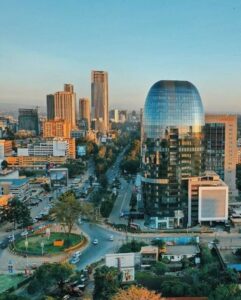
Westlands offers a different proposition again.
Someone working with an international organisation may not necessarily have children or want a large suburban home.
A younger professional, consultant or executive might instead prioritise:
- Restaurants
- Offices
- Shopping
- Entertainment
- Modern apartment living
- Shorter access to central Nairobi
That creates a potential role for Westlands.
Modern developments there can offer:
- One-bedroom apartments
- Two-bedroom apartments
- Three-bedroom apartments
- Furnished units
- Serviced apartments
Many also include amenities such as:
- Gyms
- Swimming pools
- Backup power
- Concierge services
- Co-working spaces
This can appeal strongly to international professionals.
Westlands also has an advantage that Gigiri and Runda do not have at the same scale:
commercial depth.
The neighbourhood functions simultaneously as:
- Business district
- Residential area
- Hotel market
- Restaurant district
- Entertainment centre
For international staff who want a more urban Nairobi lifestyle, that combination may be highly attractive.
5. Nairobi Is Becoming a Larger Global Institutional Hub
The UN expansion should not be viewed in isolation.
Kenya has also been actively strengthening Nairobi’s position as a base for international organisations.
In February 2025, Cabinet approved host-country agreements relating to ten international organisations and institutions whose regional, continental or global operations are based in Nairobi.
These included organisations such as:
- Shelter Afrique Development Bank
- World Vision International
- Oxfam International
- Save the Children International
- Norwegian Refugee Council
- International IDEA
The official Cabinet Despatch of 11 February 2025 said the agreements were intended to reinforce Nairobi’s growing diplomatic stature.
This is important because international housing demand is not created by the UN alone.
It comes from an ecosystem that includes:
- NGOs
- Development institutions
- Embassies
- International organisations
- Regional headquarters
- Global corporations
When several institutions cluster within the same city, they can reinforce one another.
They attract:
- Professionals
- Conferences
- Contractors
- Consultants
- International schools
- Hotels
- Supporting businesses
That broader ecosystem can influence property demand more meaningfully than any single organisation.
6. UN Expansion in Nairobi Could Strengthen the Furnished and Executive Rental Market

Not every incoming international worker signs a conventional 12-month lease immediately.
Some need accommodation for:
- Several weeks
- Three months
- Six months
- One year
That creates potential demand for:
- Furnished apartments
- Serviced residences
- Executive rentals
- Medium-term accommodation
This could particularly benefit Westlands and parts of Gigiri.
A landlord targeting this market may need to provide more than furniture.
International professional tenants may expect:
- High-speed internet
- Backup power
- Reliable water
- Security
- Quality beds
- Proper workspaces
- Professional cleaning
- Responsive management
This market can generate higher gross rent than a normal unfurnished lease.
But it also involves higher operating costs.
Investors should calculate:
net income
rather than being attracted only by headline monthly rent.
7. Property Prices Could Rise—but Supply Still Matters
This is where property analysis needs discipline.
It is tempting to conclude:
More international organisations = more demand = higher property prices.
But property markets are not that simple.
Prices depend on both:
demand
and
supply.
Suppose diplomatic and international employment demand increases.
That can support rent.
But if developers simultaneously build thousands of new apartments, supply may absorb much of that additional demand.
Westlands in particular has a substantial development pipeline.
So investors should not treat the UN expansion as a guarantee of price appreciation.
The better question is:
Will demand for this specific type of property grow faster than competing supply?
That is more useful.
Why Is the UN Expanding in Nairobi?
Nairobi already holds a unique position in the international system.
It hosts:
- United Nations Environment Programme
- UN-Habitat
- United Nations Office at Nairobi
It is also the only United Nations headquarters location in the Global South.
Recent expansion reflects a wider effort to increase the importance of Nairobi in international operations.
UN budget documents confirm that in 2024:
- UNICEF initiated relocation of some staff with global functions from New York to Nairobi.
- UNOPS moved its Regional Office for Africa from Copenhagen to Nairobi.
- OHCHR strengthened its Nairobi presence.
UNFPA separately relocated significant global programme functions to Nairobi.
This is therefore more than an office-construction project.
It is also about institutional functions moving toward Nairobi.
What Is Being Built at UNON?
The UN’s expansion programme involves roughly:
USD 340 million
of investment.
It includes:
- New office buildings
- Major conference facilities
- Expanded operational capacity
UN Secretary-General António Guterres and President William Ruto inaugurated new office blocks and broke ground on the expanded conference facility in May 2026.
The Presidency stated that the planned modern conference facility will be capable of hosting approximately 9,000 people and is expected to strengthen Nairobi’s ability to host major international meetings.
Read the Presidency’s official announcement.
The implications extend beyond permanent employees.
Major conferences can also support demand for:
- Hotels
- Serviced apartments
- Furnished rentals
- Restaurants
- Transport
That creates another potential property-market channel.
The Government’s KSh143 Billion Nairobi Infrastructure Programme
The Government has also linked the UN expansion to wider infrastructure investment.
In May 2026, President Ruto said Kenya was investing approximately:
USD 1.1 billion, or about KSh143 billion
in Nairobi infrastructure supporting the city’s development as an international hub.
The programme includes areas such as:
- Roads
- Street lighting
- Nairobi River regeneration
- ICT infrastructure
- Security
- UN-related service infrastructure
Read the official Presidency announcement.
This matters for property because infrastructure can influence:
- Accessibility
- Travel time
- Neighbourhood attractiveness
- Development potential
But again, investors should distinguish between:
announced investment
and
completed infrastructure.
Property buyers should monitor actual implementation.
Gigiri vs Runda vs Westlands: Which Could Benefit Most?
There is no universal winner.
Each area targets a different segment.
Gigiri
Most direct UN connection
Strong for:
- Diplomats
- International staff
- Executives
- Proximity to UNON
Potential advantage:
location scarcity
There are only so many premium homes immediately surrounding Gigiri.
Runda
Strongest family-living proposition
Strong for:
- Senior executives
- Families
- Large homes
- Privacy
- Gardens
Potential advantage:
space and residential character
Westlands
Strongest urban-apartment proposition
Strong for:
- Young professionals
- Consultants
- Corporate tenants
- Furnished rentals
- International business travellers
Potential advantage:
commercial and lifestyle convenience
Could Gigiri Property Prices Increase?
Potentially.
But buyers should not treat the UN expansion as sufficient evidence by itself.
Property values could be supported by:
- Limited land
- Diplomatic demand
- Security
- International institutions
- Scarcity
But prices still depend on:
- Current asking values
- Transaction activity
- Property condition
- Size
- Location
- Market supply
An investor who overpays because of the UN story can still make a poor investment.
Could Runda Rents Rise?
Again, potentially.
The strongest segment may be high-quality family homes that satisfy international professional requirements.
A poorly maintained large house will not automatically benefit.
The properties most likely to compete successfully may offer:
- Strong security
- Modern kitchens
- Reliable utilities
- Gardens
- Quality finishes
- Professional management
Rental demand rewards the correct product.
Not simply the correct postcode.
Could Westlands Apartments Benefit More Than Houses?
Possibly.
Westlands is already dominated by modern apartment development.
The UN and international-organisations story could strengthen demand from:
- Professionals
- Consultants
- Short-term international visitors
- Corporate tenants
One- and two-bedroom units may be particularly relevant for individual professionals and couples.
Three-bedroom units may appeal more to families.
But investors should still examine the supply pipeline.
A neighbourhood can have strong demand and still produce disappointing investment returns if too many similar units enter the market.
What Should Property Investors Watch Next?
If you are investing based partly on UN expansion in Nairobi, monitor these indicators:
- Actual staff relocations to Nairobi
- Completion of new UNON facilities
- International organisation relocations
- Conference volumes
- Infrastructure implementation
- Rental vacancy
- New residential supply
- Achieved rents rather than asking rents
These indicators will tell us whether the institutional expansion is translating into real housing demand.
Investors Should Avoid the “UN Premium” Trap
This is worth emphasising.
A seller may begin marketing a property by saying:
“The UN is expanding, therefore this house will double in value.”
That is speculation.
The UN expansion strengthens the demand story.
It does not remove the need to evaluate:
- Purchase price
- Rent
- Service charge
- Maintenance
- Vacancy
- Location
- Future supply
A strong investment is still purchased at the right price.
Could Nairobi Become Africa’s Strongest Diplomatic Property Market?
Nairobi already has one of Africa’s most significant international diplomatic ecosystems.
The current UN investment could deepen that position.
The United Nations describes its USD 340 million Nairobi programme as a significant expansion of the organisation’s operational footprint in Africa.
Meanwhile, the Kenyan Government continues positioning Nairobi for:
- International conferences
- Regional headquarters
- Diplomacy
- Development institutions
If this strategy succeeds, Nairobi’s international professional population may expand.
That could support premium housing demand.
But the effect will not be evenly distributed across the city.
Neighbourhoods offering the strongest combination of:
- Security
- Access
- International schools
- Housing quality
- Lifestyle
- Proximity to institutions
are likely to be better positioned.
Gigiri, Runda and Westlands all satisfy parts of that equation.
Final Thoughts: What Could UN Expansion in Nairobi Mean for Property?
UN expansion in Nairobi is a genuine institutional development with potentially important implications for the city’s premium real-estate market.
The underlying facts are substantial.
The UN is investing about USD 340 million in expanding its Nairobi headquarters.
Global and regional functions from several UN entities have already moved or strengthened their presence in Nairobi.
Kenya has approved host-country arrangements intended to deepen the presence of international organisations.
And the Government has announced major supporting infrastructure investment.
What has not yet been proven is that these developments have already caused a broad increase in residential property prices across Gigiri, Runda or Westlands.
That distinction matters.
For investors, the strongest thesis is therefore not:
“The UN is expanding, so prices will definitely rise.”
It is:
“The expansion could deepen a premium tenant and buyer base that already exists around Nairobi’s international and diplomatic districts.”
Gigiri may benefit most directly from proximity.
Runda may benefit from family and executive demand.
Westlands may benefit from professionals seeking urban apartments, furnished accommodation and commercial convenience.
The opportunity is real enough to monitor.
But investors should still buy based on:
location + price + rent + supply + management + property quality.
Institutional expansion can strengthen a property investment.
It should never be the only reason for making one.
Considering an Investment Apartment or Premium Home in Nairobi?
Contact Realty Boris to explore carefully selected properties across Westlands, Riverside, Runda, Gigiri, Kileleshwa, Kilimani, Lavington and Nairobi’s other premium locations—and compare real rental demand, location, competing supply, purchase price, management requirements and proper legal due diligence before committing to a property or making substantial payments.