

Karen Nairobi infrastructure development could become an increasingly important factor for property buyers and investors following renewed plans to improve major road connections around Karen, Bomas, Kiserian, Ngong and Kona Baridi.
A report published on 29 October 2026 highlighted the Bomas–Kiserian–Kona Baridi–Ngong–Karen road network among infrastructure projects being prepared for possible private-sector participation.
The proposed network covers approximately 45 kilometres across Nairobi and Kajiado counties and forms part of a wider pipeline of transport projects being evaluated under Kenya’s Public Private Partnership framework.
This does not mean construction is guaranteed to start immediately.
Several major infrastructure projects remain at preparatory stages involving feasibility studies, transaction advisers, financing structures, approvals and procurement.
However, the inclusion of the Karen corridor in the infrastructure pipeline raises an important property-market question:
Could better road connectivity change where people want to live, buy and invest around Karen?
Possibly.
Transport infrastructure can influence property demand because accessibility affects almost every aspect of residential life—from commuting and schools to shopping, employment and future development.
But investors should also avoid assuming that every proposed road automatically makes surrounding property more valuable.
Here are seven ways Karen Nairobi infrastructure development could influence the property market—and the risks investors should consider before buying based on infrastructure expectations.
1. Karen Nairobi Infrastructure Development Could Improve Accessibility

Accessibility is one of the most important factors affecting residential property demand.
Karen is already one of Nairobi’s best-known premium residential neighbourhoods.
Its appeal is built around:
- Larger homes
- Larger plots
- Green surroundings
- Privacy
- Premium schools
- Shopping and lifestyle amenities
- Lower-density residential living
But one of the trade-offs has always been commuting.
For a family living in Karen but working in Westlands, Upper Hill, Kilimani or another major business district, road congestion can materially affect the daily experience of living there.
This is why proposed improvements to routes connecting Karen, Bomas, Kiserian, Ngong and surrounding areas matter.
The Kenya National Highways Authority officially lists the proposed dualling of Dagoreti Market–Karen–Bomas–Kiserian–Kona Baridi among its planned national integration and accessibility improvements.
View KeNHA’s official planned road projects
If implemented successfully, improved roads could:
- Reduce congestion
- Improve journey reliability
- Increase road capacity
- Improve access to Karen
- Strengthen connections between Nairobi and Kajiado residential areas
- Make daily commuting easier
For property buyers, reduced travel friction can make an area more attractive.
A home that feels too far from the city under current traffic conditions may become more viable if access improves substantially.
2. Better Roads Could Expand Karen’s Effective Residential Catchment
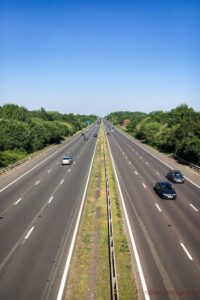
Infrastructure does not only affect the properties sitting directly beside a road.
It can change the geography of an entire residential market.
Today, buyers comparing Karen may also consider areas such as:
- Ngong
- Kiserian
- Hardy
- Lang’ata
- Miotoni
- Bogani
- Lower Karen
- Areas toward Kona Baridi
Poor road connections can make neighbouring areas feel farther apart than they actually are.
Improved transport corridors can reduce that effect.
KeNHA’s current strategic plan specifically identifies capacity enhancement around Bomas–Ongata Rongai–Kiserian–Kona Baridi as infrastructure intended to improve accessibility and support housing and settlement opportunities.
That is important for property investors because transport infrastructure can effectively expand the area people consider acceptable for daily commuting.
Someone who previously insisted on living inside Karen may become willing to consider a property slightly farther out if journey times become more predictable.
That could broaden residential demand across the southern and south-western Nairobi metropolitan area.
3. Improved Connectivity Could Increase Demand for Karen Family Homes
Karen’s property market is fundamentally different from highly apartment-oriented areas such as Kilimani or Westlands.
Its core appeal remains family living.
Buyers often choose Karen because they want:
- Four- or five-bedroom houses
- Gardens
- Larger compounds
- Privacy
- Children’s outdoor space
- Home offices
- Proximity to schools
Infrastructure can reinforce that appeal.
A family may love Karen’s lifestyle but reject it because one parent works too far away.
If transport improvements reduce commuting difficulty, that objection becomes less significant.
This can be particularly relevant for professionals who now combine:
- Office work
- Remote work
- Flexible schedules
A household may be willing to live farther from the central business districts if it only needs to commute several times a week rather than every day.
Better infrastructure could therefore support demand for larger homes and gated communities around Karen.
But this should be interpreted carefully.
Infrastructure improves accessibility; it does not guarantee higher house prices.
Property demand will still depend on:
- Household income
- Mortgage costs
- Land prices
- Housing supply
- Security
- Schools
- Water
- Local services
The road is one demand driver, not the entire market.
4. Karen Nairobi Infrastructure Development Could Affect Land Values

Road infrastructure can have particularly important implications for land.
Karen contains substantial low-density residential property where land represents a significant percentage of overall value.
Improved roads can increase the attractiveness of certain parcels by changing:
- Accessibility
- Development potential
- Commercial visibility
- Travel times
- Connectivity
However, investors need to distinguish between residential value and development speculation.
A plot close to a major upgraded road may become more valuable for certain uses.
But it may also become less attractive to buyers seeking:
- Privacy
- Quiet
- Low traffic
- Traditional residential character
This creates an interesting property-market tension.
A road improvement can be positive for accessibility but negative for someone who bought specifically because their home was on a quiet road.
Investors should therefore avoid assuming:
Closer to the new road = automatically more valuable.
Location relative to the infrastructure matters.
For some properties, the optimal position may be:
close enough to benefit from access but far enough away to avoid traffic, noise and commercial pressure.
5. Road Improvements Could Encourage More Development
Improved infrastructure often attracts additional property development.
Developers look for areas where residents can:
- Reach employment centres
- Access schools
- Reach shopping
- Travel efficiently
- Connect to larger road networks
If the Karen–Bomas–Kiserian corridor is significantly improved, surrounding areas could become more attractive for:
- Gated communities
- Townhouses
- Residential estates
- Commercial centres
- Schools
- Hospitality developments
This can benefit property owners by increasing investment and amenities.
But it also creates another issue:
supply.
A location becoming more attractive does not automatically mean every property appreciates dramatically.
If road infrastructure encourages large amounts of new housing construction, buyers may gain more choices.
That can increase competition between developments.
An investor should therefore ask two questions:
- Could infrastructure increase demand?
- Could infrastructure also increase supply?
Both can happen simultaneously.
6. Private-Sector Participation Could Speed Up Infrastructure—but It Is Not Guaranteed

The 29 October report is important because the road network appears within projects being prepared for possible Public Private Partnership participation.
Kenya’s PPP framework allows government infrastructure projects to involve private-sector financing and expertise.
The official PPP Directorate explains that Kenya’s PPP programme covers sectors including transport, housing, water, energy and other major infrastructure.
Read about Kenya’s official PPP programme
Private-sector participation can potentially help governments deliver infrastructure where conventional budget financing is constrained.
But inclusion in a PPP pipeline does not mean a road is guaranteed to proceed.
Projects may still require:
- Feasibility studies
- Financial modelling
- Environmental assessment
- Procurement
- Transaction advisers
- Investor interest
- Government approval
- Financing
- Land acquisition
- Final contractual agreements
The official PPP Directorate currently publishes pipeline-status reports showing projects at many different stages—from concept development to procurement, construction and operation.
See Kenya’s current PPP pipeline reports
This distinction is extremely important for property investors.
Do not buy land at an inflated price because someone tells you:
“The new highway is coming.”
Instead ask:
- Has the concept been approved?
- Has a feasibility study been completed?
- Has financing been secured?
- Has procurement started?
- Has a contractor or concessionaire been selected?
- Has construction actually begun?
Infrastructure speculation can make investors overpay years before the benefit arrives.
7. Better Infrastructure Could Strengthen Karen’s Long-Term Competitiveness
Karen competes with several other premium Nairobi residential areas.
A buyer seeking a luxury home might also consider:
- Runda
- Kyuna
- Lavington
- Riverside
- Spring Valley
- Gigiri
Each area offers different advantages.
Karen’s strengths are traditionally:
- Land
- Space
- Privacy
- Green environment
- Family lifestyle
Its weakness can be the distance from some major commercial centres.
If Karen Nairobi infrastructure development improves access significantly, it could reduce one of the neighbourhood’s major disadvantages without removing its core lifestyle benefits.
That could strengthen Karen’s competitiveness among buyers deciding between:
central convenience
and
space and privacy.
Could Infrastructure Make Karen Property Prices Rise?
Possibly—but investors should avoid simplistic conclusions.
Road improvements can increase property demand by:
- Reducing commute times
- Improving access
- Attracting businesses
- Supporting housing development
- Increasing land utility
But prices also depend on:
- Interest rates
- Buyer incomes
- Construction costs
- Land supply
- Property taxes
- Mortgage affordability
- Development density
- Wider economic conditions
An infrastructure announcement alone does not justify a higher property price.
The more useful investment question is:
How does this project change the practical value of this specific property?
For example:
Does the road reduce travel time?
Does it create better access?
Does it increase traffic outside the property?
Does it create commercial-development pressure?
Does it affect privacy?
Does it increase future supply?
Those questions provide a much better investment framework.
Could Karen Become More Attractive to Diaspora Buyers?
Potentially.
Returning diaspora families frequently prioritise:
- Space
- Security
- International schools
- Larger homes
- Gardens
- Lifestyle
- Access to the city
Karen already performs strongly on many of those criteria.
The major challenge is often accessibility.
A returning family accustomed to predictable commuting overseas may be particularly sensitive to Nairobi traffic.
Improved roads could therefore strengthen Karen’s appeal to households relocating back to Kenya.
However, buyers purchasing before infrastructure completion should remain conservative.
A project planned today can:
- Change design
- Change financing
- Experience delays
- Be rescheduled
- Take years to complete
Buy based on the neighbourhood’s current fundamentals first.
Treat future infrastructure as potential upside.
What Could Road Expansion Mean for Commercial Property Around Karen?
Residential property is not the only segment that could be affected.
Improved road traffic and accessibility can create opportunities for:
- Retail
- Restaurants
- Offices
- Schools
- Healthcare
- Hospitality
But increased commercial development can also change neighbourhood character.
Parts of Karen valued today for quiet residential living could become more commercially active.
For landowners, that may create opportunities.
For homeowners seeking privacy, it may create concerns.
This is another reason infrastructure effects should be evaluated property by property.
What About Ngong, Kiserian and Kona Baridi?
The proposed corridor extends beyond Karen.
This means the largest proportional property impact may not necessarily occur inside established Karen.
Emerging or lower-priced locations can sometimes experience a greater change because improved infrastructure alters their accessibility more dramatically.
For example, if journey reliability between Kiserian and Nairobi improves substantially, buyers who previously considered Kiserian too distant may reassess it.
The same principle could apply to areas around Ngong and Kona Baridi.
But investors should again distinguish between:
potential
and
confirmed demand.
Land speculation can push asking prices higher before real economic activity catches up.
Could Tolling Change the Property Impact?
Where a road is structured through a PPP, tolling can sometimes be considered as part of the commercial model.
That does not mean this particular Karen network will necessarily be tolled.
Investors should therefore avoid assuming either way until the final structure is published.
If tolls are introduced on any future corridor, the property impact would depend partly on:
- Toll cost
- Travel-time savings
- Alternative routes
- Frequency of use
A faster road can improve accessibility, but commuters will also consider the daily cost of using it.
What Should Karen Property Buyers Watch Next?
If you are investing based partly on infrastructure expectations, monitor actual project milestones.
1. Feasibility Studies
These establish whether the project is technically and financially viable.
2. PPP Directorate Updates
The Directorate regularly publishes project-status and pipeline reports.
3. KeNHA Announcements
Because the corridor falls within Kenya’s national-road planning framework, KeNHA updates are especially important.
4. Procurement
Expressions of interest, requests for proposals and tender documents indicate movement from planning toward implementation.
5. Environmental and Land Processes
Large road projects may require environmental assessments and land acquisition.
6. Financing
A project without financing can remain on paper for years.
7. Construction Start
For property investment, actual construction is a much stronger signal than an early planning announcement.
Should You Buy Karen Property Because of the Proposed Roads?
Not solely because of them.
Buy because the property already makes sense based on:
- Location
- Land
- House quality
- Security
- Accessibility today
- Schools
- Amenities
- Legal status
- Purchase price
- Long-term demand
Then treat infrastructure as potential additional upside.
That approach is much safer than buying an overpriced property based entirely on expectations of a future road.
Karen Nairobi Infrastructure Development: What Could Change?
If the proposed road improvements are eventually delivered successfully, the property-market effects could include:
- Better accessibility into and out of Karen
- Greater demand from commuters and families
- Stronger connections with Ngong and Kiserian
- More residential development
- Changes in land values
- Increased commercial activity along major corridors
- Greater competition between Karen and other premium Nairobi neighbourhoods
But there could also be disadvantages:
- More traffic
- More development pressure
- Noise
- Commercialisation
- Higher land prices
- Reduced privacy along certain roads
Infrastructure creates winners and losers depending on location.
Final Thoughts on Karen Nairobi Infrastructure Development
Karen Nairobi infrastructure development could become an important factor shaping property demand over the coming years.
The proposed Bomas–Kiserian–Kona Baridi–Ngong–Karen road network is significant because it addresses one of the most important issues influencing property demand in southern Nairobi:
connectivity.
Official KeNHA planning already identifies the broader Karen–Bomas–Kiserian–Kona Baridi corridor for capacity improvement, while Kenya’s PPP framework is increasingly being used to explore private participation in major infrastructure.
However, investors should distinguish between:
a planned project
and
a completed road.
Property decisions should not depend on infrastructure speculation alone.
Before buying, ask:
- What stage is the project actually at?
- Has financing been secured?
- Is construction confirmed?
- How will the road affect this exact property?
- Will access improve?
- Will traffic increase?
- Could development density change?
- Am I already paying a premium for infrastructure that does not yet exist?
The strongest investment is one that makes sense today, while still having the potential to benefit from tomorrow’s infrastructure.
Considering an Off-Plan or Newly Completed Apartment or Home in Nairobi?
Contact Realty Boris to explore carefully selected developments across Karen, Westlands, Kilimani, Kileleshwa, Riverside, Lavington and Nairobi’s other premium locations—and assess current accessibility, planned infrastructure, purchase price, developer credibility, legal documentation and long-term investment potential before committing to a property or making substantial payments.