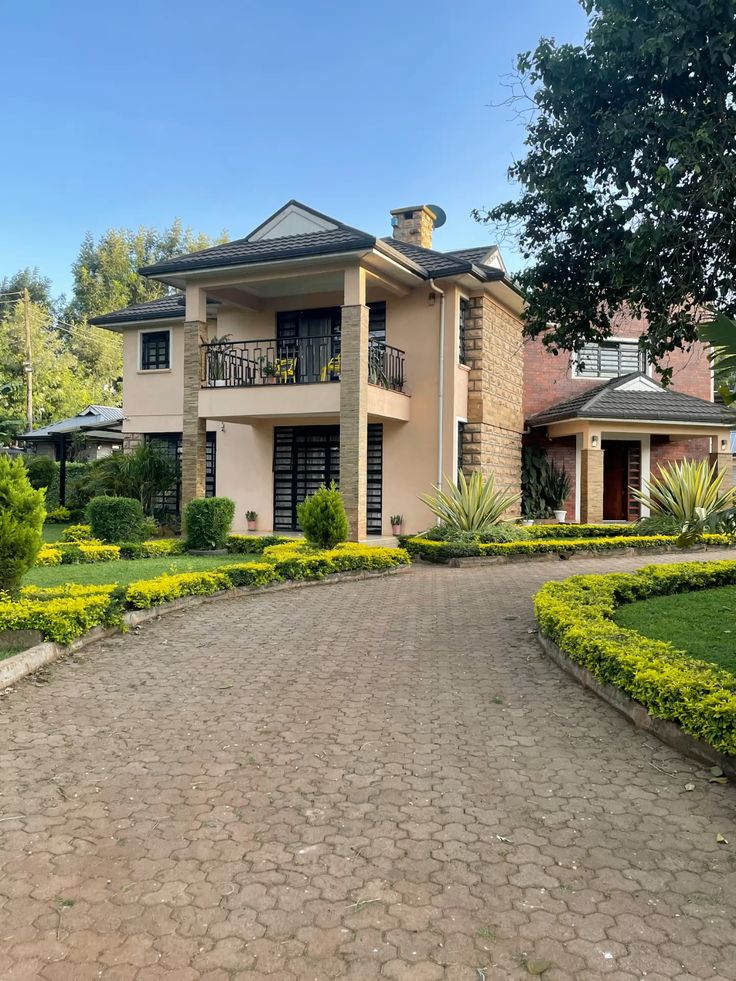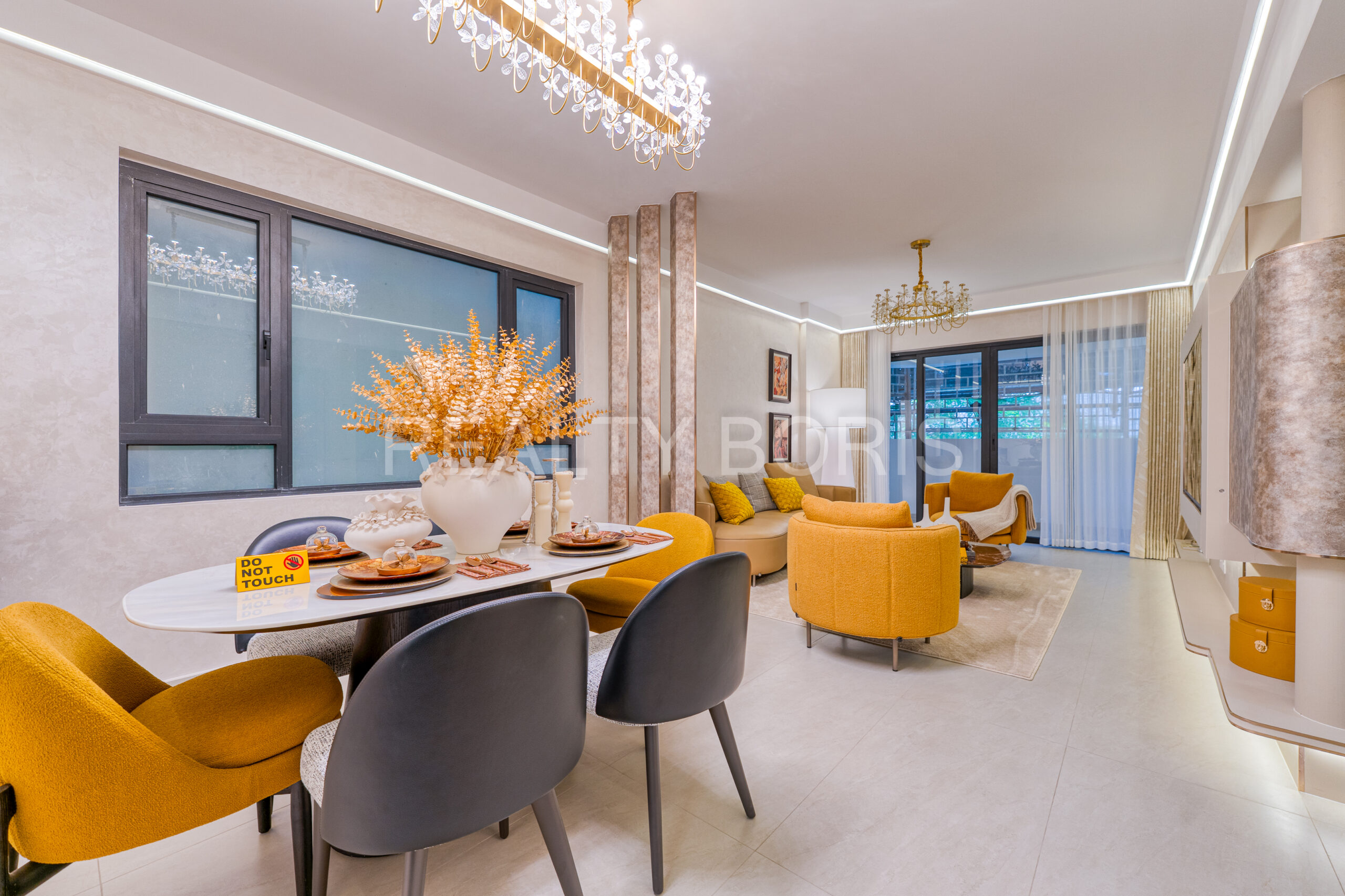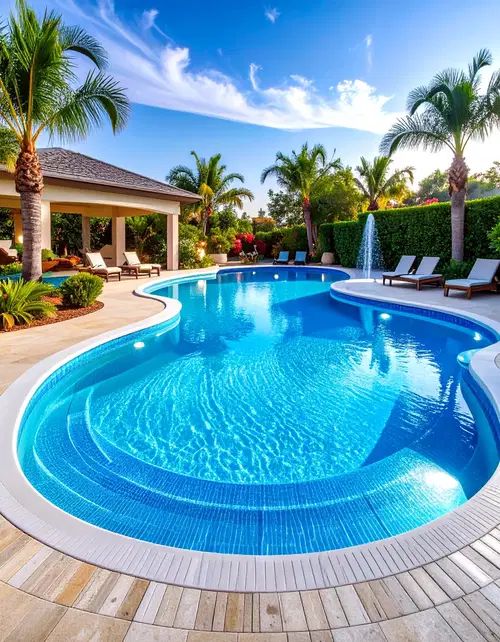
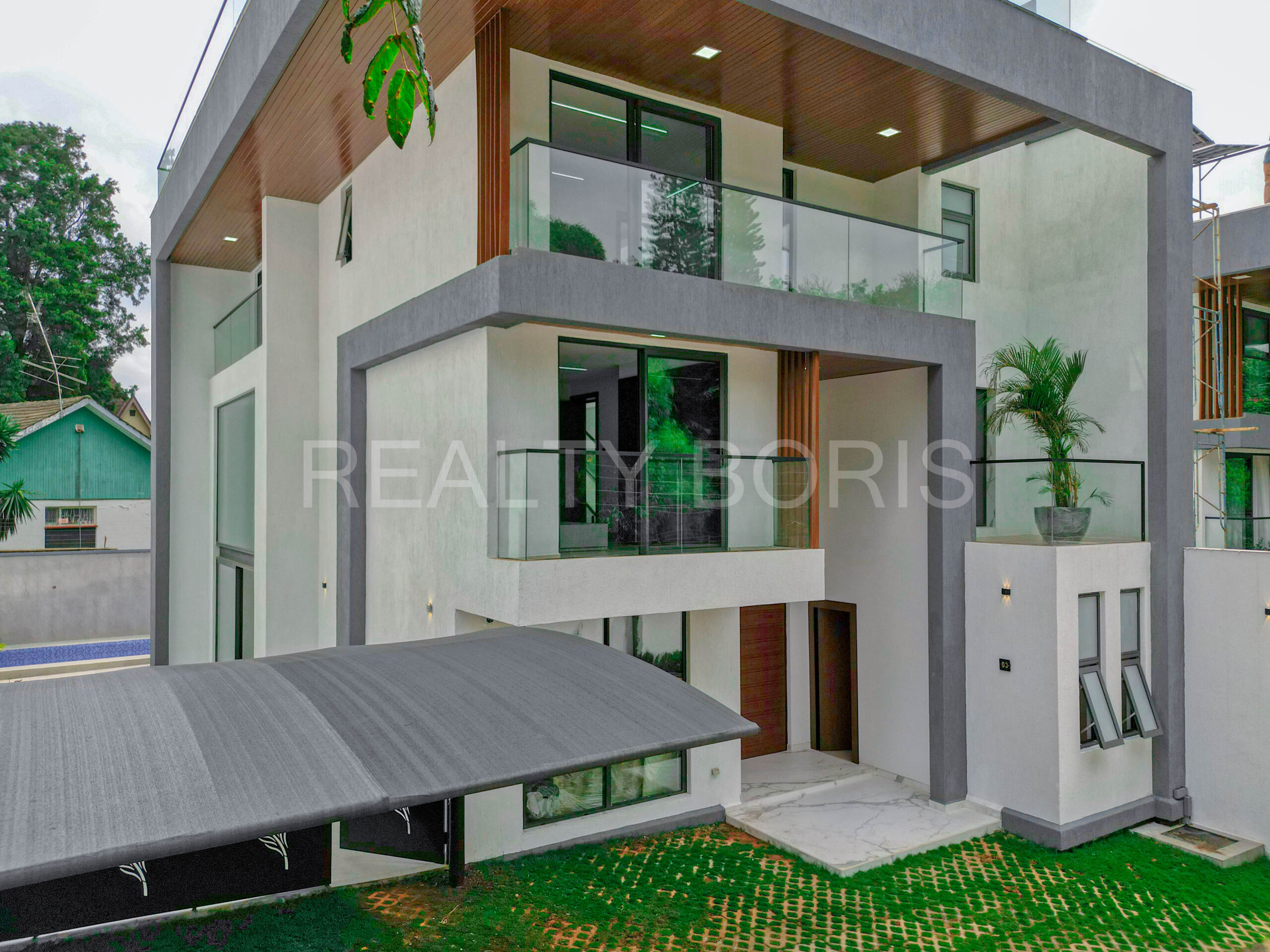

Buy a Villa in Nairobi now, or wait another two or three years?
For families, executives, investors and diaspora buyers considering Nairobi’s premium residential market, this is becoming a much more important question.
Apartments have dominated much of Nairobi’s recent development story.
Kilimani is becoming more vertical.
Kileleshwa continues adding apartment towers.
Westlands is increasingly mixed-use and high-rise.
But at the same time, neighbourhoods such as:
- Runda
- Karen
- Kitisuru
- Loresho
- Kyuna
- Muthaiga
- selected parts of Lavington
still offer something fundamentally different:
land, privacy, gardens, larger homes and lower residential density.
And those qualities are becoming harder to reproduce.
The current property data is also interesting.
The Kenya National Bureau of Statistics reported that overall residential property prices increased by 4.8% year-on-year in Q1 2026.
More importantly for villa buyers, prices for standalone houses—which KNBS defines to include villas, townhouses, maisonettes and bungalows—rose by 8.5% year-on-year.
KNBS Residential Property Price Index Q1 2026
That does not mean every Nairobi villa increased by 8.5%.
It does not mean prices will continue rising at that rate.
And it certainly does not mean any villa at any price is a good investment.
But it does suggest that larger standalone homes are currently experiencing stronger price momentum than many buyers may realise.
At the same time, financing conditions have improved from where they were in 2025, while construction costs continue rising.
Those forces create an interesting window.
At Realty Boris, we would frame the argument this way:
2026 may be a particularly attractive time to buy the right villa before quality low-density property becomes more expensive to reproduce—but only if the property, price and financing make sense.
Here is why.
Buy a Villa in Nairobi: What the 2026 Property Data Is Saying
There is one statistic every potential villa buyer should understand.
KNBS’s Q1 2026 Residential Property Price Index separates the market into:
Apartments
and
Standalone houses, including villas, maisonettes, townhouses and bungalows.
The overall market increased 4.8% year-on-year.
But standalone houses increased by 8.5%.
This matters because it suggests the market is not moving uniformly.
A Nairobi apartment and a large family villa are increasingly different products serving different buyers.
KNBS also places areas such as Lavington, Riverside, Runda, Karen, Kitisuru and Gigiri within its “Nairobi Upper” residential-market classification.
That group contains many of Nairobi’s most important villa markets.
The data does not tell you which individual villa to buy.
But it gives the broader market conversation context.
1. Standalone House Prices Are Already Showing Stronger Momentum
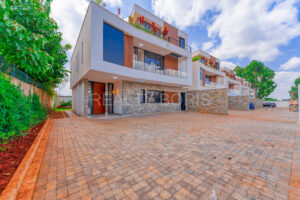
The first reason to consider whether now is the time to Buy a Villa in Nairobi is straightforward:
The category is already recording meaningful price growth.
KNBS reported an 8.5% annual increase in standalone-house prices in Q1 2026.
Compare that with Nairobi’s apartment market.
Large numbers of apartments can be added to the market relatively quickly.
One development may contain:
- 150 apartments
- 300 apartments
- 500 apartments
A villa market behaves differently.
If you want:
- Half-acre plot
- Private garden
- Five bedrooms
- DSQ
- Mature trees
- Quiet road
- Lower-density surroundings
a developer cannot simply reproduce hundreds of identical properties on the same parcel.
This limited replicability can matter.
Scarcity does not guarantee appreciation.
But where affluent families continue wanting large private homes and supply remains constrained, the economics can be very different from a high-volume apartment market.
2. Financing Conditions Are Better Than They Were
The second reason the timing is interesting is credit.
Kenya’s borrowing environment remains expensive.
Nobody should describe mortgages as “cheap.”
However, the direction of travel has improved.
The Central Bank Rate stood at 10.0% in April 2025.
By October 2025 it had fallen to 9.25%.
And on 7 October 2026, the Central Bank of Kenya retained the rate at 8.75%.
Central Bank of Kenya – Central Bank Rate
Mortgage data also shows improvement.
CBK’s 2025 Bank Supervision Annual Report states that average mortgage interest rates declined from 15.2% in 2024 to 13.5% in 2025.
Outstanding mortgage lending increased by 10% to approximately KSh 307.2 billion, while the average outstanding mortgage size increased to about KSh 10 million.
CBK 2025 Bank Supervision Annual Report
That does not suddenly make a KSh 100 million villa easy to finance.
But for buyers combining:
- Cash
- Mortgage
- Asset-backed lending
the financing backdrop is more supportive than it was when policy rates were significantly higher.
For financially qualified buyers, waiting for “perfect” borrowing conditions may also mean waiting while the underlying property becomes more expensive.
3. Building a Comparable Villa Is Becoming More Expensive
Imagine you have two choices.
Option A
Buy an already completed premium villa.
Option B
Buy land and build your own.
Building gives you control.
But 2026 construction economics have become more challenging.
KNBS reported that construction input prices increased 5.52% year-on-year in Q2 2026.
Between Q1 and Q2 alone, the Construction Input Price Index increased by 5.73%.
The building-cost index itself rose by 5.25% quarter-on-quarter.
KNBS Construction Input Price Indices Q2 2026
Important increases included:
- Cement
- Paint
- Electrical fittings
- Ballast
- Labour
- Transport
- Fuel
This matters for villa values.
A completed high-quality five-bedroom villa contains an enormous amount of:
- Concrete
- Steel
- Finishes
- Electrical work
- Landscaping
- Labour
- Infrastructure
If those replacement costs continue increasing, recreating today’s villa several years from now may cost substantially more.
That does not automatically mean today’s asking price is fair.
But buyers should compare:
purchase price
against
land value + replacement construction cost.
That comparison can reveal opportunities.
Buy a Villa in Nairobi Before Low-Density Property Becomes Harder to Replicate?
This is where the investment argument becomes particularly interesting.
Nairobi is becoming a denser city.
The 2026 Nairobi City County Development Control Policy formally establishes different density, plot-ratio and land-use rules across the city. The policy was approved by the County Assembly in June 2026.
Nairobi City County Development Control Policy 2026
Mapping of the policy identifies areas including Runda Residential, Karen, Nyari and Kitisuru as low-density residential zones with relatively large minimum parcel requirements.
This matters because Nairobi can build thousands of additional apartments.
It cannot easily create thousands of new large plots in Runda, Karen or Kitisuru.
Land is finite.
4. Prime Villa Land Has a Scarcity Advantage

Consider what buyers are actually paying for when they purchase a villa.
It is not only the building.
They are buying:
land.
A large compound.
Space between neighbours.
Outdoor areas.
Parking.
Gardens.
Mature trees.
In selected neighbourhoods, those attributes may become increasingly scarce.
A developer can demolish a bungalow in Kilimani and build hundreds of apartments.
But large parts of Nairobi’s established villa market remain deliberately more controlled.
That can preserve the character that attracted the buyer in the first place.
This is one reason villas should not be valued using only:
price per bedroom.
A five-bedroom apartment and five-bedroom villa are fundamentally different assets.
The villa contains a land component that may become increasingly important over time.
5. Nairobi’s Apartment Boom Could Make Privacy More Valuable
Luxury is changing.
Ten years ago, a new high-rise with:
- Infinity pool
- Gym
- Rooftop lounge
felt extremely differentiated.
Today those amenities are increasingly standard in premium apartment developments.
The villa offers something an apartment tower cannot easily copy:
privacy.
Imagine two KSh 80 million properties.
Property A
A large four-bedroom apartment inside a 200-unit development.
Property B
A villa with:
- Private garden
- Private entrance
- DSQ
- Multiple parking spaces
- Greater separation from neighbours
The two homes serve different lifestyles.
For executives, diplomats and larger families, privacy can become more valuable as Nairobi becomes denser.
That does not mean apartments will lose demand.
It means villas occupy a different luxury niche.
6. Buyers Still Have Meaningful Choice Today
One reason 2026 may be attractive is that buyers still have meaningful choice across multiple villa markets.
Current Realty Boris stock illustrates how different the market can be.
Depending on development and specification, buyers can find examples around:
Runda: townhouse-style family stock from approximately the KSh 55M level.
Lavington: villa opportunities spanning approximately KSh 69M and KSh 85M at one end, with ultra-premium projects rising significantly higher.
Karen: premium villas can start around the KSh 100M+ level and climb considerably depending on plot, architecture, location and finishes.
These are examples from individual listings, not neighbourhood averages.
But they illustrate an important point.
“Villa in Nairobi” does not mean one price category.
The buyer can choose between:
- Gated community
- Standalone residence
- Boutique villa development
- Older renovation opportunity
- New luxury construction
The investment case changes with each one.
7. A Villa Gives You Something Investments Usually Cannot: Utility

Real estate is unusual because it can provide:
financial value
and
personal value.
A villa can be:
- Your home
- Your children’s home
- A rental investment
- A future retirement property
- A family asset
That makes the timing decision different from buying shares.
Suppose a family expects to rent a large Nairobi home for the next 10 years.
At a sufficiently high monthly rent, a purchase may begin making strategic sense even if appreciation is moderate.
The family gains:
- Stability
- Control
- Ability to renovate
- Long-term use
An end user does not need the villa to deliver the highest possible rental yield.
Part of the return is the lifestyle itself.
8. Premium Family Rental Demand Has Not Disappeared
Villas also serve tenant segments that apartments cannot always accommodate.
These include:
- Diplomatic families
- Senior executives
- Expatriate households
- Large Kenyan families
- International-organisation staff
These tenants may need:
- Four to six bedrooms
- Garden
- DSQ
- Home office
- Guest rooms
- Secure parking
- Backup utilities
Runda is particularly relevant because of its relationship with the wider Gigiri diplomatic district.
Karen serves another premium family market focused on:
- Space
- Privacy
- Schools
- Lifestyle
Kitisuru and Loresho can serve families wanting lower-density living while retaining access toward Westlands.
A villa investor therefore targets a narrower tenant pool than an apartment investor.
But that tenant pool can also be less exposed to competition from the thousands of smaller apartments being added elsewhere.
9. The Long-Term Buyer Has an Advantage
Property timing becomes dangerous when people expect:
“Buy today, flip next year.”
Villas are usually better suited to a longer horizon.
Why?
Transaction costs are significant.
The buyer needs time to benefit from:
- Land appreciation
- Rental income
- Property improvements
- Scarcity
A family purchasing for seven, ten or fifteen years can look beyond short-term market fluctuations.
The central question becomes:
Will this type of property still be desirable ten years from now?
For a well-located villa with:
- Clean title
- Good access
- Strong neighbourhood
- Functional layout
- Quality construction
the answer may be more important than what the market does over the next twelve months.
Where Should You Buy a Villa in Nairobi?
There is no universal winner.
Different neighbourhoods serve different buyers.
Runda
Best suited to buyers prioritising:
- Gigiri access
- Diplomatic environment
- Large family homes
- Gardens
- Privacy
Particularly relevant for executives and international households.
Karen
Best suited to buyers wanting:
- Larger plots
- Green surroundings
- Family lifestyle
- Schools
- Lower-density living
Karen can feel significantly more suburban than central Nairobi.
Kitisuru
Strong for buyers who want:
- Low density
- Privacy
- Westlands access
- Northern Nairobi schools
Loresho
Can provide a useful balance between:
- Large homes
- Quiet residential environment
- Proximity to Westlands
Kyuna
Particularly attractive for families and executives wanting low-density living relatively close to Westlands.
Lavington
A different villa proposition.
It offers more central access than Runda or Karen while still retaining selected premium townhouse and villa developments.
For a family needing access to:
- Kilimani
- Westlands
- Riverside
- Upper Hill
that centrality can justify a premium.
Buy a Villa in Nairobi for Investment or for Yourself?
The analysis should change depending on the purpose.
End User
Focus heavily on:
- School
- Commute
- Garden
- Room sizes
- Privacy
- Security
- Maintenance
Investor
Focus heavily on:
- Tenant profile
- Achievable rent
- Vacancy
- Maintenance
- Purchase price
- Exit market
Diaspora Buyer
Add:
- Property management
- Documentation
- Remote monitoring
- Security
- Maintenance systems
A villa can be a good investment and a poor home.
Or an excellent home and only an average income investment.
Know which one you are buying.
When Now Is NOT the Best Time to Buy
Despite the headline, 2026 is not automatically the best time for everyone.
Do Not Buy If You Have to Over-Leverage
CBK data shows financing conditions have improved, but mortgages remain expensive by international standards.
A villa that consumes nearly all household income is not a good investment simply because interest rates declined.
Do Not Buy Without an Emergency Reserve
Large houses have large expenses.
You may need to repair:
- Roof
- Plumbing
- Generator
- Pool
- Garden
- Security systems
Do Not Buy Simply Because Prices Are Rising
An 8.5% increase in the broader standalone-house index is not permission to overpay for an individual property.
Do Not Buy a Poorly Located Villa
Large does not automatically mean valuable.
Road access and neighbourhood quality matter enormously.
Do Not Buy Without Checking the Title
This is non-negotiable.
The State Department for Lands describes an official search as an essential due-diligence document that confirms ownership and identifies encumbrances such as charges, restrictions and cautions.
State Department for Lands – Official Search Certificate
Villa Due-Diligence Checklist
Buying a villa requires more investigation than admiring the kitchen.
Ownership
Confirm:
- Registered proprietor
- Title
- Charges
- Restrictions
- Cautions
Land
Verify:
- Plot size
- Boundaries
- Survey records
- Easements
- Wayleaves
The State Department for Lands also provides official survey-search services for checking boundaries, beacons and survey records.
Planning
Understand the applicable planning zone.
Do not assume because neighbouring properties are villas that the land has no planning restrictions.
House Condition
Inspect:
- Roof
- Plumbing
- Electrical system
- Drainage
- Foundation
- Windows
- Pool
- Generator
Water
Ask:
- Is there a borehole?
- How much water storage exists?
- What happens during supply interruptions?
Security
Check:
- Perimeter
- CCTV
- Alarm
- Gatehouse
- Estate security
Management
For gated communities, understand:
- Service charge
- Common-area responsibilities
- Estate rules
The bigger the property, the more expensive a mistake can become.
Buy Completed or Build Your Own Villa?
This deserves serious consideration.
Building Gives You:
- Design control
- Material choice
- Custom layout
But brings:
- Construction risk
- Cost escalation
- Contractor management
- Approval timelines
With construction-input inflation running at 5.52% year-on-year in Q2 2026, buyers should budget carefully.
Buying Completed Gives You:
- Certainty
- Immediate occupation
- Visible quality
- Existing infrastructure
But you may pay a premium for that certainty.
The correct comparison is not:
“Buying is expensive.”
versus
“Building is cheap.”
Calculate the complete cost of both.
Frequently Asked Questions
Is 2026 a Good Time to Buy a Villa in Nairobi?
It can be for financially prepared long-term buyers.
Standalone-house prices increased 8.5% year-on-year in Q1 2026, financing conditions have improved from 2025 levels, and construction costs are rising.
Those factors strengthen the case for quality existing villas, although they do not guarantee future appreciation.
Where Is the Best Place to Buy a Villa in Nairobi?
Strong premium options include:
- Runda
- Karen
- Kitisuru
- Loresho
- Kyuna
- Lavington
- Muthaiga
The best area depends on your school, workplace, budget and lifestyle.
Are Villas Better Investments Than Apartments?
Not automatically.
Apartments can offer:
- Lower entry price
- Larger tenant pool
- Easier maintenance
Villas can provide:
- Land
- Privacy
- Scarcity
- Premium family demand
The investment strategy is different.
Are Villa Prices Rising in Kenya?
KNBS reported that standalone-house prices, including villas, increased 8.5% year-on-year in Q1 2026.
That is a broad index and does not mean every villa increased by the same percentage.
Is It Better to Buy or Build a Villa?
It depends on land cost, construction cost, design needs, available time and risk tolerance.
Current increases in construction costs should be included in the calculation.
Can I Finance a Nairobi Villa With a Mortgage?
Yes, subject to lender requirements and affordability.
CBK reported an average mortgage interest rate of 13.5% in 2025, compared with 15.2% in 2024.
What Should I Check Before Buying a Villa?
At minimum investigate:
- Title
- Survey
- Zoning
- Approvals
- Structural condition
- Utilities
- Security
- Access
- Maintenance requirements
Realty Boris Expert View: Why 2026 Is an Interesting Villa-Buying Window
At Realty Boris, we believe the strongest argument to Buy a Villa in Nairobi now is not simply that prices are rising.
It is the convergence of several factors.
Standalone homes are showing stronger price momentum.
Borrowing conditions have improved.
Replacement costs are rising.
Nairobi is becoming denser.
And established low-density neighbourhoods remain difficult to replicate.
That creates a particularly interesting market for buyers who value:
land + privacy + space.
But we would still advise against rushing.
The wrong villa at KSh 80 million can be a much worse investment than the right villa at KSh 100 million.
Look at:
micro-location.
A beautiful home on a poor access road may be difficult to resell.
Look at:
plot size.
Land is a major component of villa value.
Look at:
layout.
Six bedrooms do not help if the house is badly planned.
Look at:
maintenance.
A private pool, enormous garden and large roof all require money.
Look at:
the future buyer.
If you decide to sell in ten years, who will want this property?
That last question is especially important.
The strongest villas are rarely just large.
They are:
well located, well designed and difficult to replace.
Conclusion
Buy a Villa in Nairobi in 2026?
For the right buyer, the case is increasingly compelling.
Official KNBS data shows standalone-house prices rising faster than the overall residential market.
CBK data shows financing conditions have improved compared with 2024–2025.
Construction costs are rising, making high-quality homes increasingly expensive to reproduce.
And Nairobi’s continued densification makes large plots, private gardens and low-density residential environments increasingly distinctive.
None of these factors guarantees a profit.
But together they create a reasonable argument that waiting indefinitely may carry its own cost.
A family waiting for rates to fall further may later face a higher purchase price.
A buyer waiting for construction costs to decline may find that rebuilding the same standard of villa becomes more expensive.
An investor waiting for low-density land to become abundant may discover that scarcity was precisely what created the value.
The strongest approach is therefore not:
“Buy now because property prices always rise.”
They do not.
The stronger approach is:
Buy when the right property, right location, right price and right financing align.
For financially prepared buyers planning to hold a home for the long term, 2026 may offer exactly that opportunity.
Especially in neighbourhoods where the qualities buyers value most—
land, space, privacy and greenery—
are becoming increasingly difficult to reproduce.
Call to Action
Thinking of buying a villa in Runda, Karen, Kitisuru, Loresho, Kyuna or Lavington?
Contact Realty Boris to compare current Nairobi villas based on your budget, family requirements, investment goals and preferred location.