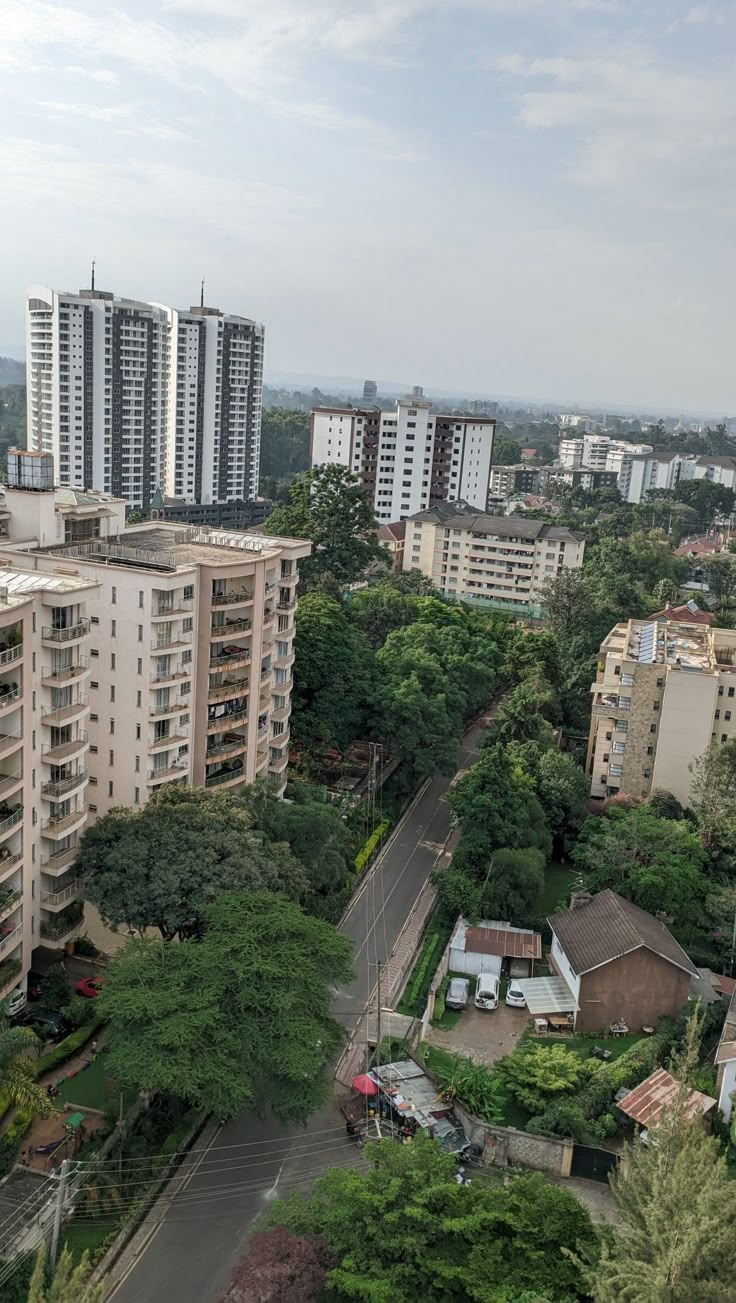


Airbnb vs long-term rental in Nairobi is one of the most important decisions facing apartment investors today.
On paper, Airbnb often appears to win.
A one-bedroom apartment that might attract KSh 80,000 per month from a long-term tenant could potentially earn KSh 6,000, KSh 8,000 or more per night as a short-stay unit.
Multiply that daily rate by 30 days and the numbers can look extremely attractive.
But that comparison is usually incomplete.
An Airbnb does not automatically stay occupied every night.
It also comes with costs that traditional landlords may not face at the same level, including:
- Furnishing
- Cleaning
- Laundry
- Electricity
- Internet
- Guest supplies
- Booking-platform charges
- Higher management intensity
- More frequent repairs and replacement
- Tourism-sector compliance where applicable
A long-term rental may generate less gross revenue every month, but the landlord may receive more predictable income with substantially less work.
So the real question is not:
“Which one charges more?”
It is:
“Which one leaves the investor with more money after realistic costs, vacancy, tax and management?”
The answer depends on the property.
Here are seven major differences investors should understand when comparing Airbnb vs long-term rental in Nairobi.
1. Airbnb Can Produce Higher Gross Revenue—but Only With Strong Occupancy

The biggest attraction of Airbnb is the potential daily rate.
Consider a hypothetical one-bedroom apartment in Nairobi.
Long-Term Rental
Monthly rent:
KSh 90,000
Annual gross rent:
KSh 1,080,000
Airbnb
Average nightly rate:
KSh 7,000
At 70% occupancy, the apartment is occupied for roughly 21 nights in a 30-day month.
Approximate monthly gross bookings:
KSh 147,000
Annualised, that can appear significantly stronger than the traditional rental.
This is why Airbnb attracts so many investors.
But the important words are:
at 70% occupancy.
If occupancy falls to 40%, the same apartment earns approximately:
12 nights × KSh 7,000 = KSh 84,000
Suddenly it is producing less gross revenue than the long-term tenant.
This is why occupancy is arguably the most important Airbnb metric.
A high nightly rate means very little if the apartment sits empty.
2. Airbnb vs Long-Term Rental in Nairobi: Occupancy Risk Is Completely Different

Traditional rentals and Airbnb experience vacancy differently.
Long-Term Rental
Once a good tenant signs a 12-month lease, the landlord may receive relatively predictable monthly income.
The key vacancy risk normally occurs between tenants.
Airbnb
Every night is technically another opportunity for vacancy.
One month may perform extremely well because of:
- Conferences
- Holidays
- Business travel
- Events
- Tourism
The next month may be weaker.
This creates revenue volatility.
A short-term rental investor therefore needs to think about:
- Weekday occupancy
- Weekend occupancy
- Seasonal changes
- Business travel
- Local events
- Competing listings
- Guest reviews
By contrast, the long-term landlord is primarily concerned with:
- Finding a suitable tenant
- Tenant retention
- Rent collection
- Lease renewal
Neither model eliminates vacancy.
They simply experience it differently.
3. Airbnb Has Much Higher Operating Costs

This is where gross-revenue comparisons often become misleading.
Suppose an Airbnb generates:
KSh 150,000 in monthly bookings.
That does not mean the owner keeps KSh 150,000.
The investor may still pay for:
- Cleaning
- Laundry
- Electricity
- Water
- Internet
- Toiletries
- Guest supplies
- Platform charges
- Management
- Repairs
- Furniture replacement
- Linen replacement
- Service charge
A traditional tenant may pay some of these costs directly.
For example, a long-term tenant will often pay their own:
- Electricity
- Internet
- Household supplies
That means the long-term landlord’s gross rent can be much closer to the amount available before tax and building expenses.
This is why investors must compare:
Airbnb net income
against
long-term rental net income.
Comparing Airbnb gross bookings with normal rent will almost always make the Airbnb appear stronger than it really is.
4. Furnishing Can Change the Airbnb Investment Return
A normal long-term rental can often be leased unfurnished.
An Airbnb generally cannot.
The owner may need to purchase:
- Beds
- Mattresses
- Sofas
- Dining furniture
- Television
- Refrigerator
- Cooker
- Microwave
- Washing machine
- Curtains
- Bedding
- Towels
- Kitchenware
- Décor
A well-furnished premium apartment can require a substantial additional investment.
Suppose:
Apartment purchase price:
KSh 10 million
Furnishing:
KSh 1.5 million
Your actual investment is no longer just KSh 10 million.
It is at least:
KSh 11.5 million
before transaction costs.
If you calculate Airbnb yield using only the KSh 10 million purchase price, you are overstating your return.
Furniture also wears out.
Guests may damage:
- Towels
- Bedding
- Glassware
- Appliances
- Sofas
- Mattresses
Replacement should therefore be treated as a recurring operating expense rather than an unexpected emergency.
5. Long-Term Rental Usually Wins on Predictability
This is the biggest advantage of a traditional lease.
A strong tenant can give the landlord:
- Predictable rent
- Lower turnover
- Fewer cleaning costs
- Lower operational involvement
- Reduced management complexity
Kenya is fundamentally a large rental market.
The 2023/24 Kenya Housing Survey by the Kenya National Bureau of Statistics found that 72.3% of urban households were renting or leasing, compared with urban home ownership of 22.8%.
That does not mean every Nairobi long-term rental is automatically profitable.
But it demonstrates that traditional rental housing serves a very large underlying urban market.
For an investor who values:
- Stability
- Predictable cash flow
- Less management
- Fewer operational headaches
long-term rental can be extremely attractive.
6. Airbnb Can Require Much More Active Management
A traditional apartment might require landlord attention when:
- Rent is due
- Something breaks
- The lease needs renewal
- A tenant moves out
Airbnb is closer to operating a hospitality business.
The owner or manager may need to deal with:
- Guest enquiries
- Check-in
- Check-out
- Cleaning
- Reviews
- Pricing
- Calendar management
- Complaints
- Late arrivals
- Damaged items
- Security
- Constant listing optimisation
That means investors have two choices.
Manage It Yourself
You keep more of the revenue but spend more time running the property.
Hire a Manager
You save time but pay management fees.
This matters when someone says:
“My Airbnb earns KSh 200,000 per month.”
The next question should be:
“Before or after management?”
There is a major difference.
7. Regulation and Tax Can Differ Between the Two Models
This is an area investors should handle carefully.
Long-Term Residential Rental
For qualifying resident landlords under Kenya’s Residential Rental Income Tax regime, KRA currently charges 7.5% of gross residential rent received. Expenses and capital deductions are not deductible under that simplified regime.
KRA Residential Rental Income Tax guidance
The regime generally applies to qualifying residential rental income above KSh 288,000 and up to KSh 15 million annually, subject to the statutory conditions.
Airbnb and Short-Stay Accommodation
Short-term accommodation can fall into a different regulatory and tax context from an ordinary residential lease.
The Tourism Regulatory Authority is responsible for licensing regulated tourism activities and accommodation enterprises. TRA’s 2026 licensing notice states that tourism enterprises falling within the Tourism Act framework are required to maintain valid tourism licences.
Tourism Regulatory Authority official website
The regulatory framework has also been evolving specifically because digital platforms such as Airbnb have changed how tourist accommodation is marketed and operated.
This means an Airbnb operator should not simply assume:
“It is residential property, therefore all the same rules as a normal tenant automatically apply.”
Before operating short-term accommodation, confirm current:
- KRA tax obligations
- Tourism Regulatory Authority requirements
- County requirements
- Building-management rules
This is particularly important in professionally managed apartment developments.
What About Building Rules?
This can completely destroy an Airbnb investment strategy.
A buyer may purchase an apartment specifically for short-term letting, furnish it beautifully and prepare the listing.
Then discover that the building’s management rules prohibit or restrict short-term accommodation.
Before purchasing, ask:
- Are Airbnb or short-term guests permitted?
- Is there a minimum tenancy period?
- What identification requirements exist?
- Can guests access the gym or pool?
- Are there additional charges for short-stay guests?
- Are there restrictions on frequent guest turnover?
Do not rely solely on a salesperson saying:
“Other people are doing Airbnb here.”
Ask to see the relevant management or lease rules.
A strong Airbnb location inside a building that prohibits Airbnb is a poor Airbnb investment.
Airbnb vs Long-Term Rental in Nairobi: A Practical Example
Consider a one-bedroom apartment purchased for:
KSh 10 million
Option A: Long-Term Rental
Monthly rent:
KSh 90,000
Annual gross rent:
KSh 1,080,000
Assume simplified annual costs:
- Residential rental tax: KSh 81,000
- Service charge: KSh 120,000
- Maintenance: KSh 30,000
- Vacancy provision: KSh 45,000
Approximate income remaining:
KSh 804,000
before financing and other expenses.
Option B: Airbnb
Assume:
Average nightly rate:
KSh 7,000
Average occupancy:
65%
Approximately 19.5 occupied nights per month.
Approximate monthly gross bookings:
KSh 136,500
Annual gross bookings:
KSh 1,638,000
That looks substantially better.
But now include illustrative costs:
- Cleaning and laundry
- Utilities
- Internet
- Guest supplies
- Management
- Repairs
- Furniture replacement
- Service charge
- Applicable tax and regulatory costs
If these consume KSh 600,000–KSh 800,000 over the year, the final difference between the two strategies becomes dramatically smaller.
These figures are examples, not Nairobi market averages.
Their purpose is to demonstrate why gross income alone does not answer the question.
Which Nairobi Areas Can Suit Airbnb Better?
Short-term accommodation generally performs best where there is a reason for temporary visitors to stay.
In premium Nairobi, this can include areas such as:
Westlands
Strong potential guest drivers include:
- Corporate travel
- Business meetings
- Restaurants
- Shopping
- Entertainment
Kilimani
Can appeal to:
- Business visitors
- Longer-stay guests
- Returning diaspora
- Tourists wanting central access
Kileleshwa
Can appeal to visitors who want a quieter residential setting while remaining close to Kilimani, Riverside and Westlands.
Riverside
Can suit:
- Corporate visitors
- Executives
- Medium-term professional stays
But location alone does not guarantee Airbnb performance.
The exact property still matters.
Which Areas Suit Long-Term Rental Better?
The answer is broader because long-term housing demand exists across Nairobi.
Areas such as:
- Westlands
- Kilimani
- Kileleshwa
- Riverside
- Lavington
- Parklands
can all support long-term rentals depending on:
- Unit type
- Rent
- Family profile
- Employment access
- Schools
- Parking
Larger two- and three-bedroom apartments may particularly benefit from stable family tenants, while studios and one-bedrooms can attract more mobile professional tenants.
Airbnb Can Earn More—but It Can Also Lose More
This is an important psychological difference.
A long-term landlord usually knows roughly what income to expect.
The Airbnb operator can experience months where revenue significantly exceeds expectations.
But they can also experience weak months.
Suppose you budget based on:
75% occupancy
but achieve:
45%.
That changes everything.
Your fixed costs remain.
You may still pay:
- Mortgage
- Service charge
- Internet
- Management
- Maintenance
This is why Airbnb should be treated like a business rather than simply a different type of tenant.
Pricing Strategy Matters Much More for Airbnb
Traditional rent may remain unchanged for a year.
Airbnb prices can change daily.
The operator may need different rates for:
- Weekends
- Weekdays
- Holidays
- High season
- Low season
- Major events
Pricing too high can destroy occupancy.
Pricing too low can fill the calendar while reducing profit.
Successful Airbnb management therefore requires active revenue management.
The investor who buys the apartment and assumes they can simply post one nightly rate for the entire year may underperform.
Reviews Become Part of the Asset
A long-term rental apartment does not usually depend on online guest reviews.
Airbnb does.
Bad reviews can materially reduce demand.
Guests may complain about:
- Cleanliness
- Wi-Fi
- Noise
- Security
- Slow check-in
- Water problems
- Broken appliances
- Poor communication
That means the performance of the investment depends partly on hospitality quality, not just property quality.
Two identical apartments in the same building can generate completely different Airbnb results because one host manages the guest experience better.
Long-Term Rental Has Its Own Risks
The traditional lease is not risk-free.
Landlords can face:
- Non-payment
- Property damage
- Difficult tenants
- Long eviction disputes
- Vacancy between leases
One tenant can also cause substantial damage after occupying the property for several years.
So the long-term model should not be treated as effortless.
The difference is that management events are generally less frequent.
What About Property Management?
This is one of the most important costs to compare.
A professional Airbnb manager may handle:
- Listing
- Pricing
- Cleaning
- Guest communication
- Check-in
- Maintenance
But they will take a portion of revenue.
A traditional property manager may charge substantially less because operational intensity is lower.
When comparing returns, use:
income after management
not income before management.
If your Airbnb only produces a small additional return after the manager is paid, you need to decide whether the extra operational risk is worthwhile.
Which Strategy Is Better for a Diaspora Investor?
For a Kenyan living abroad, management becomes especially important.
Airbnb can be difficult to operate remotely unless there is:
- A reliable manager
- Strong cleaning team
- Responsive maintenance
- Good building management
A long-term tenant may be much easier.
The diaspora investor should therefore ask:
Am I buying the highest gross-income strategy or the easiest investment to manage from overseas?
Those may not be the same thing.
What If You Want Flexibility?
Airbnb has one significant lifestyle advantage.
You can block dates and use the apartment yourself.
This can be attractive for diaspora investors who return to Nairobi several times per year.
They can potentially:
- Rent the apartment when abroad
- Occupy it when visiting Kenya
That flexibility is difficult with a 12-month tenant.
For some investors, this alone can justify the short-term model even if the financial returns are similar.
Airbnb vs Long-Term Rental in Nairobi: Which Makes More Money?
The answer is:
Airbnb can make more gross revenue.
But it does not automatically make more profit.
Airbnb becomes more attractive when:
- The property is in a strong short-stay location
- Occupancy is consistently high
- Nightly rates are strong
- Management is efficient
- Furnishing costs are controlled
- The building permits short stays
- Operating expenses remain reasonable
Long-term rental becomes attractive when:
- Tenant demand is strong
- Rent is competitive
- Occupancy is stable
- The investor values predictability
- The property requires minimal management
- The investor wants lower operating complexity
The right answer is property-specific.
A Better Way to Compare the Two Strategies
Before buying, build two financial models.
Airbnb Model
Include:
- Purchase price
- Furnishing
- Average nightly rate
- Realistic occupancy
- Platform costs
- Cleaning
- Laundry
- Utilities
- Internet
- Management
- Maintenance
- Tax
- Licensing/compliance costs
- Service charge
Long-Term Rental Model
Include:
- Purchase price
- Monthly rent
- Vacancy allowance
- Rental income tax
- Management
- Maintenance
- Service charge
- Insurance
Then calculate:
net annual income
for each.
Do not choose based on gross revenue.
Run a Conservative Airbnb Scenario
This is especially important.
If your investment only makes sense at 85% occupancy, it is vulnerable.
Test the property at:
- 40% occupancy
- 55% occupancy
- 70% occupancy
Also test nightly rates below your optimistic estimate.
A resilient Airbnb investment should still survive a weaker month.
Likewise, for long-term rental, assume one month of vacancy rather than assuming perfect occupancy forever.
Final Thoughts on Airbnb vs Long-Term Rental in Nairobi
Airbnb vs long-term rental in Nairobi is not really a question of which model is universally better.
It is a question of what you want from the property.
Airbnb may offer:
- Higher gross revenue
- More flexibility
- Potentially stronger returns in prime short-stay locations
But it also brings:
- Higher operating costs
- Greater management intensity
- Revenue volatility
- Furnishing costs
- Regulatory considerations
Long-term rental may offer:
- Lower gross revenue
- More predictable income
- Lower management intensity
- A much larger underlying urban rental market
KNBS data showing that 72.3% of urban households rent or lease their homes helps explain why long-term residential demand remains so significant.
The strongest investment is therefore not the one with the highest nightly rate.
It is the one producing the highest sustainable net return for the level of work and risk you are willing to take.
Before purchasing an apartment for Airbnb, ask:
- What occupancy is realistic?
- Is short-term accommodation permitted in the building?
- What will furnishing cost?
- How much does management cost?
- What happens in a weak month?
- What licensing and tax obligations apply?
- What would the apartment earn with a normal tenant instead?
Run both numbers.
Then make the decision.
Considering an Airbnb or Investment Apartment in Nairobi?
Contact Realty Boris to explore carefully selected investment developments across Westlands, Kilimani, Kileleshwa, Riverside, Lavington and Nairobi’s other premium locations—and assess location, rental demand, competition, building rules, projected Airbnb and long-term rental returns, operating costs, developer credibility and legal due diligence before committing to a purchase.