

Buying Land in Kenya as an Investment: 7 Powerful Truths Before You Wait for Appreciation
Buying land in Kenya as an investment has traditionally followed a simple strategy:
Buy land.
Hold it.
Wait.
Sell it later for significantly more.
For decades, that strategy has created wealth for many Kenyan investors, particularly those who bought land before major roads, towns, commercial centres and residential developments expanded around them.
But does that strategy still work in 2026?
Yes—but the answer is increasingly:
only if you buy the right land at the right price for the right reason.
Land should no longer be treated as an asset that automatically becomes valuable simply because enough years have passed.
The Kenya National Bureau of Statistics notes that urbanisation, population growth, infrastructure and changing land use continue to reshape how land is used across the country. See the KNBS Kenya Land Natural Capital Account.
That creates opportunities.
But it also means investors need to understand what will actually create future demand for a specific parcel.
A piece of land beside a growing commercial centre can behave very differently from an isolated plot purchased only because a salesperson promised:
“This area will be the next big thing.”
Here are seven truths investors should understand about buying land in Kenya as an investment today.
1. Buying Land in Kenya as an Investment Still Works—But Location Matters More Than Time

One of the biggest myths in property investment is:
“Land never loses value.”
Land is finite.
But that does not mean every parcel produces a good investment return.
Imagine two plots purchased for:
KSh 5 million each.
Plot A
Located near:
- A growing residential area
- Good roads
- Schools
- Shops
- Employment centres
Plot B
Located in an area with:
- Poor access
- Little population growth
- Weak infrastructure
- Few economic drivers
Ten years later, the two plots may have performed completely differently.
The investor in Plot A may benefit from increasing demand.
The investor in Plot B may discover that the land is technically worth more than before but still difficult to sell.
That is why time alone does not create a good land investment.
Demand creates value.
The strongest land strategy asks:
Who will want this land from me later—and why?
2. Infrastructure Can Completely Change the Value of Land

Infrastructure is one of the strongest potential drivers of land appreciation.
New or improved:
- Roads
- Bypasses
- Sewerage
- Electricity
- Public transport
- Commercial centres
can change how accessible and developable an area becomes.
A parcel that once felt remote may become attractive when travel times improve.
That can bring:
- Residential development
- Retail
- Schools
- Warehousing
- Offices
- Increased population
But investors must be careful with infrastructure speculation.
There is a major difference between:
an announced road
and
a completed road.
Many land investors have bought property based on statements such as:
“The new highway will pass here.”
Sometimes that creates excellent returns.
Sometimes projects are:
- Delayed
- Redesigned
- Reprioritised
- Never completed as originally described
The safer strategy is to evaluate whether the land already has some economic logic today.
Treat future infrastructure as potential upside rather than the only reason the investment works.
3. Buying Land in Kenya as an Investment Produces No Automatic Cash Flow
This is the biggest weakness of pure land banking.
An apartment can produce rent.
A commercial building can generate income.
Land that is simply sitting unused usually generates:
nothing.
That creates an opportunity-cost problem.
Suppose you spend:
KSh 10 million
on a plot.
You hold it for:
10 years.
During that decade, the land generates no rent.
The investor is depending almost entirely on capital appreciation.
Compare that with a KSh 10 million rental apartment producing, for illustration:
KSh 70,000 per month.
That apartment produces:
KSh 840,000 gross annually
before tax and expenses.
Over ten years, the investor potentially receives substantial cash flow while still owning the asset.
That does not make the apartment automatically better.
Land may appreciate much faster in the right location.
But the land needs to outperform enough to compensate for the income you gave up.
This is called opportunity cost.
A serious investor should always compare:
What could this KSh 10 million earn elsewhere?
4. Zoning Can Create—or Destroy—Land Investment Value
Land value is heavily connected to what can legally be built on it.
A parcel zoned for:
- Low-density residential use
can have a very different value from land suitable for:
- Apartments
- Commercial development
- Warehousing
- Mixed-use development
This is why land investors should understand planning before buying.
Kenya’s physical-planning framework allows county governments to regulate matters including:
- Land use
- Density
- Development
- Subdivision
A plot may look perfect physically but still have limited commercial potential because of planning controls.
The reverse is also true.
A property can become significantly more valuable if future planning rules permit more intensive development.
Before buying land for future resale, ask:
- What is the current permitted use?
- What density is allowed?
- Can the land be subdivided?
- What development permissions would be required?
- What is happening on neighbouring plots?
Do not simply buy because someone says:
“Developers will want this later.”
Understand why they would want it.
5. Legal Due Diligence Is More Important Than the Expected Appreciation
A plot promising a 200% return is useless if you do not legally own it.
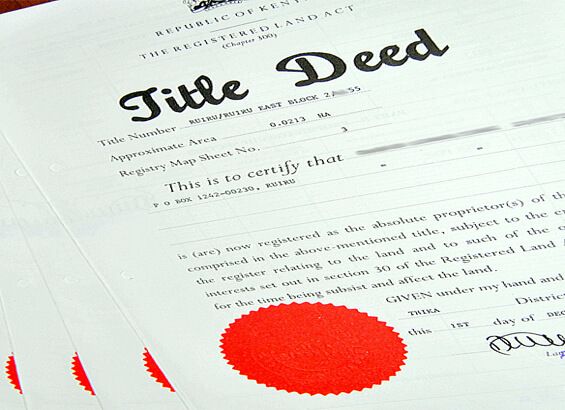
Before buying land in Kenya as an investment, proper due diligence should come before excitement about appreciation.
The State Department for Lands says an official search certificate is used to verify the registered ownership of property and identify encumbrances such as:
- Charges
- Cautions
- Restrictions
See the State Department for Lands guidance on official searches.
That should be a fundamental part of land due diligence.
Buyers should also verify survey information.
The State Department for Lands provides survey searches containing information such as:
- Boundary dimensions
- Beacons
- Survey numbers
- Historical changes
See official Land Survey Search guidance.
These checks matter because land fraud can involve:
- Wrong parcels
- Forged documents
- Double sales
- Boundary disputes
- Fake subdivisions
A buyer should therefore verify more than a title photocopy.
6. Liquidity Is the Hidden Risk of Land Banking
Land may appreciate substantially on paper and still be difficult to sell.
This is one of the least discussed risks.
Suppose you bought land for:
KSh 3 million.
Ten years later, comparable sellers are asking:
KSh 8 million.
You may conclude that your investment has nearly tripled.
But what happens if nobody is willing to pay KSh 8 million?
The real market value is determined when a willing buyer actually transacts.
Liquidity refers to how easily you can convert an asset into cash.
Land can sometimes be less liquid than:
- Smaller apartments
- Listed securities
- Cash investments
especially where the plot is expensive, remote or highly specialised.
KNBS real-estate data has previously shown that residential properties can already take substantial time to sell; its 2025 Economic Survey reported an overall average marketing-to-sale period of about 16 months for surveyed residential properties. See the KNBS Economic Survey.
Land can sometimes take even longer depending on demand.
So ask:
If I urgently needed this money in six months, how easily could I sell?
That is an investment question too.
7. The Best Land Investment Has a Clear Future User
The strongest land purchases usually have an identifiable future demand story.
For example:
Residential Demand
The land may eventually be attractive to:
- Homeowners
- Apartment developers
- Gated-community developers
Commercial Demand
It may suit:
- Shops
- Offices
- Restaurants
- Petrol stations
Industrial Demand
The land may appeal to:
- Warehouses
- Logistics companies
- Manufacturers
The key is to identify the likely eventual buyer.
If the investment thesis is simply:
“Someone will buy it later,”
that is weak.
A better thesis is:
“Population and development are moving toward this corridor, infrastructure is improving, and this property has characteristics future developers will need.”
That is much stronger.
Is Land Scarcity Enough to Guarantee Appreciation?
No.
Land is finite, but demand is not equal everywhere.
A hectare in central Nairobi is not equivalent to a hectare in an extremely remote location.
Value depends on usefulness.
Land becomes valuable because people want to:
- Live there
- Build there
- Farm there
- Trade there
- Operate businesses there
Scarcity only matters when there is demand for the scarce resource.
This is one of the biggest mistakes new investors make.
They hear:
“They are not making any more land.”
That statement is true.
But it does not tell you whether the specific parcel is a good investment.
Should You Buy Land Near Nairobi?
Buying near Nairobi can work well where urban growth is expanding outward.
But investors should avoid treating every location outside Nairobi as a guaranteed growth corridor.
Evaluate:
- Travel time
- Road quality
- Employment
- Schools
- Shopping
- Utilities
- Population growth
A parcel near Nairobi but difficult to access may underperform land farther away along a stronger infrastructure corridor.
Distance in kilometres matters less than practical accessibility.
Buying Land in Kenya as an Investment: How Infrastructure Changes the Numbers
Consider a hypothetical plot.
Purchase price today:
KSh 5 million
Without major changes, suppose it is worth:
KSh 7 million
after five years.
That is a gain of:
KSh 2 million
Now suppose a major infrastructure improvement dramatically increases residential demand.
The same land might be valued at:
KSh 10 million.
This is why infrastructure speculation can create exceptional returns.
But it creates risk too.
The investor may wait five years only to discover that expected infrastructure never materialised.
So ask:
Would I still be comfortable owning this land if the project is delayed by five years?
If the answer is no, the investment may be too dependent on speculation.
Should You Borrow Money to Buy Land and Wait?
This strategy deserves extreme caution.
Suppose land costs:
KSh 10 million
and the investor borrows heavily to acquire it.
The land produces no income.
But the loan still requires:
- Interest
- Monthly repayment
This creates negative cash flow.
The investor is effectively betting that appreciation will eventually exceed:
- Interest
- Fees
- Transaction costs
- Holding costs
That is possible.
But the risk is much greater than buying land with patient capital.
Debt works better where an asset produces cash flow to help service the loan.
Using expensive financing for non-income-producing land can place enormous pressure on the investor.
What Are the Holding Costs of Land?
Land is often described as an investment with “no expenses.”
That is not completely true.
Depending on the property, you may face:
- Land rates
- Fencing
- Security
- Clearing
- Survey costs
- Legal costs
- Management
There is also the cost of monitoring the property.
Unused land may be vulnerable to:
- Encroachment
- Boundary disputes
- Illegal occupation
So even land that generates no rent can require ongoing attention.
Could Kenya’s Land Digitisation Improve Land Investment?
Potentially.
Kenya is continuing to digitise land administration through ArdhiSasa and the new HOFLASI programme.
ArdhiSasa already provides digital services including:
- Searches
- Transfers
- Cautions
- Charges
- Survey and mapping-related processes
Better digital records could help improve:
- Ownership verification
- Transfer processes
- Transparency
- Fraud prevention
This could make legitimate land transactions easier over time.
But digitisation does not eliminate the need for independent due diligence.
Technology helps you verify property.
It should not make you careless.
Land Versus Apartment: Which Is the Better Investment?
There is no universal winner.
Land
Potential strengths:
- Low maintenance
- No tenants
- Potentially strong appreciation
- Development flexibility
Potential weaknesses:
- No automatic rental income
- Liquidity can be poor
- Appreciation is highly location-dependent
Apartment
Potential strengths:
- Rental income
- Easier valuation
- Potentially larger buyer pool
Potential weaknesses:
- Service charge
- Maintenance
- Tenants
- Building depreciation
- Apartment oversupply
Land can produce better capital growth.
Apartments can produce better cash flow.
The strongest option depends on your objective.
When Buying Land and Waiting Makes Sense
Land banking can still make strong investment sense when:
- You have patient capital.
- You do not need immediate rental income.
- The location has credible growth drivers.
- Infrastructure is improving.
- The legal title is clean.
- The purchase price is reasonable.
- You have a clear exit strategy.
That is very different from buying random land because it is cheap.
When Buying Land and Waiting May Be a Bad Strategy
Be cautious where:
The Main Selling Point Is “Prices Always Rise”
That is not an investment analysis.
Nobody Can Explain Future Demand
There should be an identifiable future buyer.
The Infrastructure Story Is Rumour
Verify official plans where possible.
The Title Is Unclear
Legal uncertainty can destroy an otherwise good investment.
You Need Cash Flow
Land banking may not suit your financial needs.
You Are Using Expensive Debt
Interest can eliminate appreciation gains.
How to Evaluate a Plot Before Buying
Score the property on:
1. Legal Status
Can ownership be verified?
2. Access
Is there a practical legal road?
3. Infrastructure
Water, power, sewerage and roads.
4. Planning
What can be built?
5. Demand
Who will want the land later?
6. Price
Are you buying below, at or above market?
7. Liquidity
How easy will it be to resell?
If several of these categories are weak, waiting longer may not fix the investment.
Buying Land in Kenya as an Investment: The Due-Diligence Checklist
Before paying, verify:
- Registered owner
- Official search
- Original title
- Survey records
- Boundaries and beacons
- Charges
- Cautions
- Restrictions
- Access road
- Current land use
- Applicable planning controls
- Outstanding rates where relevant
The State Department for Lands specifically describes an official search certificate as an essential due-diligence tool before land purchases, leases and financing.
Use it.
Should You Buy Land in 2026?
Possibly—but be more selective than investors were 15 or 20 years ago.
Kenya continues to urbanise.
Infrastructure continues expanding.
Land use continues changing.
KNBS’ October 2026 Land Natural Capital Account specifically notes that population growth, urbanisation and infrastructure development are driving rapid changes in land use and land cover.
Those trends can create significant land-investment opportunities.
But they do not create equal returns everywhere.
The strongest strategy is no longer:
Buy anything and wait.
It is:
Buy strategically and wait.
That is a major difference.
Final Thoughts: Is Buying Land and Waiting Still a Good Investment Strategy?
Buying land in Kenya as an investment can still be a powerful long-term wealth strategy.
But land banking works best when appreciation is supported by real economic drivers.
Those can include:
- Population growth
- Infrastructure
- Accessibility
- Development demand
- Planning changes
- Scarcity
The most important mistake to avoid is assuming that all land automatically produces attractive returns.
KNBS’ current property data shows that property prices themselves move at different rates over time, while its land-account work highlights how infrastructure, settlement and urbanisation are actively changing land use across Kenya.
Before buying land and waiting, ask:
- Why should this parcel become more valuable?
- Who will want it in future?
- What infrastructure supports the story?
- What can legally be built here?
- How easy will it be to sell?
- What am I giving up by locking my money here?
- Is the title clean?
If you cannot answer those questions, time alone is unlikely to rescue the investment.
Buying land and waiting still works.
But in 2026, the better strategy is:
buy the right land, verify it properly, understand its future use and then have the patience to wait.
Considering an Off-Plan, Newly Completed Apartment or Property Investment in Nairobi?
Contact Realty Boris to explore carefully selected investment opportunities across Westlands, Kilimani, Kileleshwa, Riverside, Lavington and Nairobi’s other premium locations—and compare land banking with income-producing property based on location, infrastructure, planning, cash flow, liquidity and proper legal due diligence before committing substantial capital.