
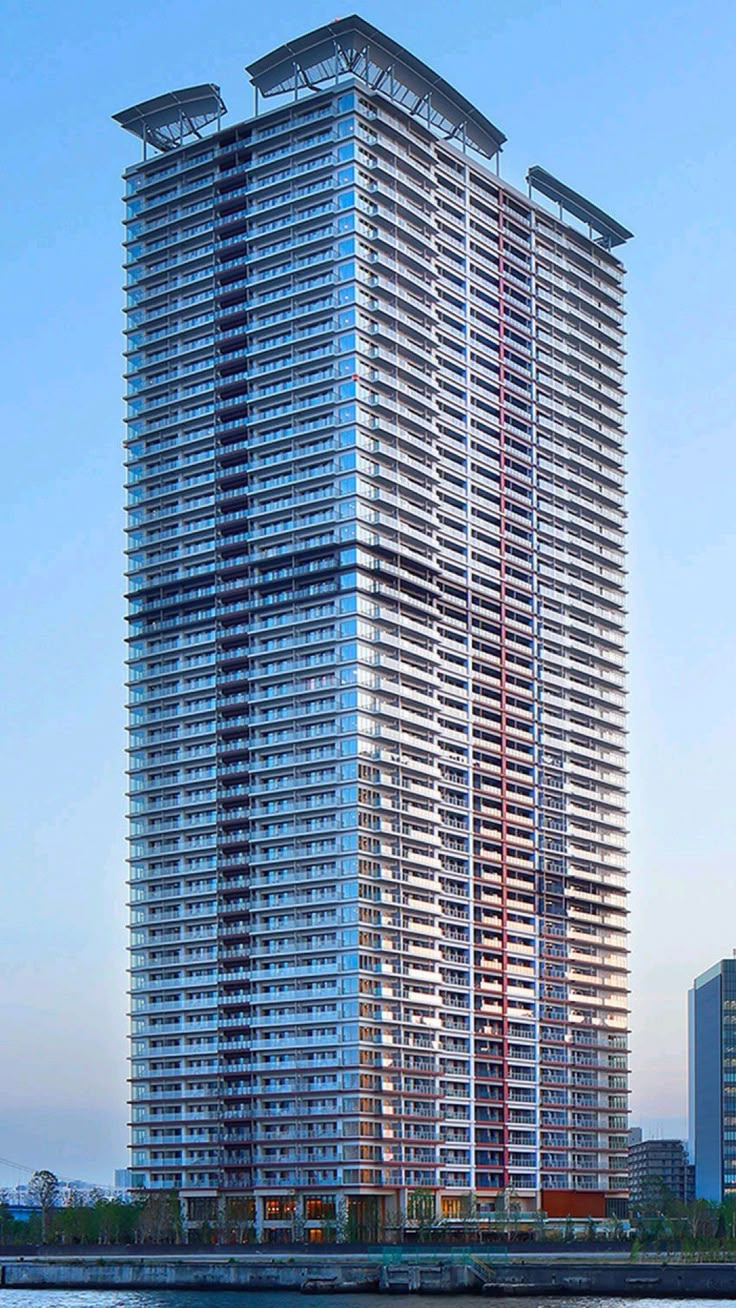
30-Storey Apartments in Nairobi: 8 Powerful Signs the Market May Not Be Ready
30-storey apartments in Nairobi are becoming a much bigger part of the city’s residential landscape.
In neighbourhoods such as Westlands, Kilimani, Kileleshwa and parts of Riverside, buyers are increasingly being presented with apartment developments that are not simply 10 or 15 floors high.
Some projects now rise 20, 25 or even 30 storeys and above.
That is changing Nairobi’s skyline.
It is also changing the economics of apartment development.
A developer who can build upward may create hundreds of units on a relatively small parcel of land.
For buyers, high-rise buildings can offer:
- Skyline views
- Modern amenities
- Security
- Central locations
- Smaller entry-level apartments
- Efficient use of expensive urban land
But there is a bigger question the property market needs to ask:
Is Nairobi ready for this many tall residential buildings?
The issue is not whether Nairobi can technically construct 30-storey towers.
It can.
The more important questions are:
- Can enough buyers afford the units?
- Can enough tenants absorb the rental supply?
- Can roads support the increased population?
- Can water and sewerage systems cope?
- Are buildings being properly approved and constructed?
- Can high service charges remain affordable?
- Will investors still make attractive returns?
The answer will differ by neighbourhood and project.
Official property data already suggests that Nairobi’s apartment market is not moving uniformly.
According to the Kenya National Bureau of Statistics Residential Property Price Index, apartment prices in Nairobi Upper strengthened between Q2 2025 and Q2 2026, while the apartment index for Nairobi Middle eased slightly over the same period.
Nairobi Middle includes major apartment markets such as:
- Westlands
- Kileleshwa
- Kilimani
- Parklands
That does not mean these neighbourhoods are collapsing.
It means buyers and developers cannot assume that simply building more towers guarantees stronger property values.
Here are eight issues that will determine whether the market for 30-storey apartments in Nairobi is genuinely ready.
1. 30-Storey Apartments in Nairobi Need Enough Buyers
The most basic property-market rule is:
Supply needs demand.
A developer may construct 300 apartments.
But someone still needs to buy them.
Modern Nairobi towers increasingly include combinations of:
- Studios
- One-bedroom apartments
- Two-bedroom apartments
- Three-bedroom apartments
- Penthouses
The smaller units can attract investors because they have lower entry prices.
But when many developments produce similar units at the same time, buyers have more options.
That creates competition between developers.
Developers may begin competing through:
- Discounts
- Longer payment plans
- Furniture packages
- Guaranteed-rent offers
- Lower deposits
These incentives can help sales.
But they can also signal that supply is increasing faster than demand.
A healthy market needs genuine end-users and long-term investors—not only speculators buying off-plan because they expect prices to rise before completion.
2. Nairobi’s Apartment Price Data Shows the Market Is Already Mixed
The latest official KNBS data provides an important warning against assuming every apartment market is performing strongly.
In Q2 2026, the apartment index for Nairobi Upper increased from 92.5 in Q2 2025 to 96.9.
Nairobi Upper includes:
- Riverside
- Lavington
- Karen
- Runda
- Kitisuru
However, the apartment index for Nairobi Middle moved from 87.4 to 86.4 over the same period.
Nairobi Middle includes:
- Westlands
- Kilimani
- Kileleshwa
- Parklands
- Hurlingham
KNBS describes this decline as an easing in apartment prices.
See the official KNBS Q2 2026 Residential Property Price Index.
That does not mean high-rise apartments are poor investments.
But it shows why buyers must distinguish between:
more construction
and
more value.
The two do not always move together.
3. Height Only Works When Infrastructure Can Support Density
A 30-storey building is not just a tall version of a 10-storey building.
It can contain substantially more households.
Imagine:
Building A
10 floors
4 apartments per floor
Approximate units:
40 apartments
Building B
30 floors
8 apartments per floor
Approximate units:
240 apartments
That is six times more households on a similar parcel.
Those residents need:
- Water
- Electricity
- Parking
- Road access
- Sewerage
- Waste collection
- Security
This is why density cannot be considered independently from infrastructure.
Kenya’s planning regulations define densification as a deliberate process of increasing the carrying capacity of land in terms of population and activities.
Read the Physical and Land Use Planning Regulations through Kenya Law.
That definition matters.
More floors mean more people.
More people mean more pressure on the urban system.
4. Roads Could Become One of the Biggest Constraints

Many of Nairobi’s premium apartment neighbourhoods were not originally designed for today’s density.
Kilimani and Kileleshwa, for example, historically contained far more:
- Detached homes
- Low-rise buildings
- Lower population density
Now imagine replacing one house with a tower containing 200 apartments.
The land has not become larger.
The road has not necessarily become wider.
But the number of potential vehicles can multiply dramatically.
This can create:
- Congestion
- Parking pressure
- Difficult access
- Longer commuting times
A 30-storey apartment development may therefore succeed internally while reducing the quality of the surrounding neighbourhood if infrastructure does not keep up.
This is why Nairobi City County’s ongoing planning programme is important.
The county is currently preparing detailed zonal plans for all 15 development zones, with the stated goal of creating enforceable local physical and land-use development plans.
See Nairobi City County’s official zonal planning project.
The exercise is still ongoing.
That means planning rules around future density remain an important issue to watch.
5. Water and Sewerage Matter More Than Rooftop Pools
Buyers can easily be distracted by amenities.
A brochure may advertise:
- Infinity pool
- Rooftop lounge
- Gym
- Cinema
- Spa
- Co-working space
But in a 30-storey building, basic infrastructure matters far more.
Ask:
- Where does the water come from?
- How much storage exists?
- Is there a borehole?
- What happens during supply interruptions?
- Is sewer capacity sufficient?
- How is wastewater managed?
A high-rise building can have beautiful amenities and still produce a poor resident experience if water systems are unreliable.
The higher the building, the more important:
- Pumping
- Water pressure
- storage
- Mechanical systems
become.
For buyers, engineering infrastructure should therefore receive as much attention as the finishes in the show house.
6. 30-Storey Apartments in Nairobi Depend Heavily on Reliable Lifts
This sounds obvious.
But many buyers do not think about lifts until they stop working.
In a six-storey building, a lift failure is inconvenient.
In a 30-storey building, it can become a major problem.
A high-rise development needs:
- Adequate number of lifts
- Reliable equipment
- Backup power
- Proper maintenance
Imagine 300 households trying to use two lifts during morning rush hour.
That creates a different resident experience from a low-density development.
Buyers should therefore ask:
- How many lifts are installed?
- How many units do they serve?
- Is there a service lift?
- Who maintains them?
- Does backup power operate the lifts?
These questions directly affect long-term livability.
7. Fire Safety and Building Standards Become More Important With Height
Kenya’s National Building Code 2024 defines a high-rise building as one where the uppermost floor exceeds 30 metres above the point of staircase discharge.
See the National Construction Authority’s National Building Code 2024.
A 30-storey apartment tower therefore clearly falls within high-rise building considerations.
As buildings get taller, safety systems become increasingly important.
These can include:
- Fire escape routes
- Staircases
- Fire detection
- Fire-fighting systems
- Emergency access
- Ventilation
- Structural design
The National Construction Authority states that the National Building Code 2024 now provides Kenya’s modern framework for building standards and safety.
This matters because buyers should not treat a high-rise apartment as simply another residential building with a better view.
It is a more complex engineered structure.
Before buying, especially off-plan, buyers should verify:
- County approvals
- NCA project registration
- Registered structural engineer
- Registered architect
- Contractor credentials
Height makes professional oversight more important, not less.
8. High-Rise Buildings Can Produce High Service Charges
This is one of the biggest financial risks buyers underestimate.
A tall residential tower can require:
- Multiple lifts
- Water pumps
- Backup generators
- Fire systems
- CCTV
- Security teams
- Common-area cleaning
- Swimming pool maintenance
- Gym maintenance
- Basement ventilation
- Lighting
All of these systems cost money.
That cost eventually reaches owners through:
service charge.
Suppose:
Building A
Service charge:
KSh 12,000 per month
Building B
Service charge:
KSh 28,000 per month
Difference:
KSh 16,000 monthly
Annual difference:
KSh 192,000
Over 10 years, before increases:
KSh 1.92 million
That can materially affect investment returns.
A tower with impressive amenities may therefore produce lower net yield than a simpler development with lower operating costs.
Why Are Developers Building So High?
The economics are understandable.
Urban land in areas such as:
- Westlands
- Kilimani
- Kileleshwa
- Riverside
can be expensive.
If a developer buys a costly parcel and builds only 20 apartments, the land cost per unit may become extremely high.
If the same land supports 200 apartments, the developer can spread land cost across more units.
This is the economic logic behind vertical development.
In simple terms:
expensive land encourages developers to build upward.
Density can make urban housing more efficient.
The problem comes when supply increases faster than real demand.
Are Buyers Ready for Smaller Units?
High-rise economics often encourage smaller apartments.
A developer may create more:
- Studios
- One-bedroom units
- Compact two-bedroom apartments
because more units can fit within the development.
This can work well where the tenant market consists of:
- Singles
- Professionals
- Couples
- Corporate tenants
But smaller is not automatically better.
Buyers should consider:
- Bedroom size
- Storage
- Kitchen usability
- Balcony
- Natural light
A compact apartment may work for an investor.
A family may find the same unit uncomfortable.
The market needs both affordability and livability.
Could Nairobi Face Apartment Oversupply?
In some micro-markets, yes.
But the word oversupply needs careful use.
Nairobi may have a broad housing shortage while simultaneously experiencing an oversupply of a particular property type.
For example, the city can have:
insufficient affordable housing
while also having:
too many premium one-bedroom apartments in one neighbourhood.
Both can be true.
This is why investors should analyse:
- Unit type
- Price band
- Location
- Tenant profile
rather than saying:
“Nairobi needs houses, so every apartment will rent.”
That is not how property markets work.
What Would Apartment Oversupply Look Like?
Investors should watch for signals such as:
- Longer vacancy periods
- Rent discounts
- Developers extending payment terms
- Furnished apartments competing aggressively
- High numbers of resale units
- Tenants negotiating lower rent
One sign alone does not prove oversupply.
But several together can signal increased competition.
Could 30-Storey Apartments Push Rents Down?
Potentially.
More rental units increase tenant choice.
Suppose an area previously had:
500 modern two-bedroom apartments
and several new towers add:
1,000 more.
If tenant demand does not increase at the same pace, landlords compete.
They may need to offer:
- Lower rent
- Furnished packages
- Flexible deposits
- Free internet
That can be positive for tenants.
But it can reduce landlord returns.
Could High-Rise Apartments Still Appreciate?
Absolutely.
A strong project can still appreciate if it has:
- Excellent location
- Good acquisition price
- Strong construction
- Quality management
- Limited direct competition
- Practical layouts
But investors should avoid assuming:
“It is off-plan, therefore it will appreciate by completion.”
The latest KNBS data itself shows that apartment price movements differ between Nairobi submarkets.
See KNBS Residential Property Price Index.
Appreciation should be an outcome of strong fundamentals, not an assumption.
Which Areas Can Handle High-Rise Development Better?
Generally, taller development works better where there is:
- Strong road access
- Sewer infrastructure
- Reliable water
- Employment nearby
- Commercial activity
Westlands has an advantage because it is already a major commercial district.
Riverside benefits from proximity to Westlands.
Kilimani and Kileleshwa remain attractive but face more questions around rapid densification and infrastructure pressure.
The exact road matters.
Two developments in the same neighbourhood can have very different access.
What Should Buyers Check Before Buying in a 30-Storey Tower?
Ask these questions:
- How many total apartments are there?
- How many lifts?
- What is the service charge?
- What is the parking ratio?
- How is water supplied?
- Is there backup power?
- Who is the structural engineer?
- Is the project registered with NCA?
- Are county approvals in place?
- What other towers are being built nearby?
- What is the realistic rent?
- How many similar apartments will enter the market before completion?
This gives a much clearer picture of risk.
What Developers Should Be Asking
Developers should also avoid focusing only on how many units can fit on a plot.
The real question should be:
How many units can the market absorb at the required selling price?
A financially sustainable development needs:
- Correct unit mix
- Realistic pricing
- Good infrastructure
- Strong design
- Proper management
Building the maximum permitted density is not always the best commercial decision.
30-Storey Apartments in Nairobi: What Investors Should Calculate
Before buying, calculate:
Purchase Price
How much capital are you committing?
Rental Income
Use realistic comparable rents.
Service Charge
This is especially important in towers.
Vacancy
Do not assume 100% occupancy.
Management
Particularly for furnished apartments.
Tax
Include current landlord obligations.
Then calculate:
net annual return.
A tower with better views but weaker net yield may not be the stronger investment.
Are 30-Storey Apartments Better Than Low-Rise Developments?
Not automatically.
High-Rise Advantages
- Views
- Amenities
- Efficient land use
- Central locations
High-Rise Disadvantages
- Higher density
- Lift dependence
- Potentially higher service charge
- More units competing for resale
Low-Rise Advantages
- Lower density
- Greater privacy
- Simpler maintenance
Low-Rise Disadvantages
- Fewer amenities
- Higher land cost per unit
The right choice depends on the buyer.
Nairobi Is Still Developing Its Future Zoning Framework
Another reason this topic matters is that Nairobi City County is currently preparing detailed zonal plans for its 15 development zones.
The project is intended to produce comprehensive and enforceable local physical and land-use plans governing how the city develops.
See Nairobi City County’s official zoning-plan programme.
That means future density is still an active planning issue.
Buyers should therefore avoid assuming that every neighbourhood will simply continue growing vertically without planning constraints.
Final Thoughts: Is Nairobi Ready for More 30-Storey Apartments?
30-storey apartments in Nairobi are not automatically a sign of overdevelopment.
Vertical construction can make sense in a growing city where land is expensive and demand for central housing remains strong.
But height itself is not a property-market strategy.
The real test is whether the market can support:
- The number of units
- The prices
- The rents
- The service charges
- The infrastructure
KNBS data already shows that Nairobi’s apartment market is mixed.
In Q2 2026, apartment prices strengthened in Nairobi Upper but eased slightly in Nairobi Middle, which includes some of the city’s most active high-rise markets.
That should make investors more selective.
A successful 30-storey development needs more than:
- A rooftop pool
- A skyline render
- Hundreds of apartments
It needs:
- Real buyer demand
- Real tenant demand
- Adequate infrastructure
- Strong engineering
- Manageable service charges
- Good property management
The future of Nairobi is almost certainly more vertical.
But the winners will not necessarily be the tallest buildings.
They will be the developments where:
density + infrastructure + affordability + demand + management
remain in balance.
Considering an Off-Plan or Newly Completed Apartment in Nairobi?
Contact Realty Boris to explore carefully selected developments across Westlands, Kilimani, Kileleshwa, Riverside, Lavington and Nairobi’s other premium locations—and compare unit density, infrastructure, realistic rental demand, service charges, developer quality, NCA compliance and legal due diligence before committing to a property or making substantial payments.