
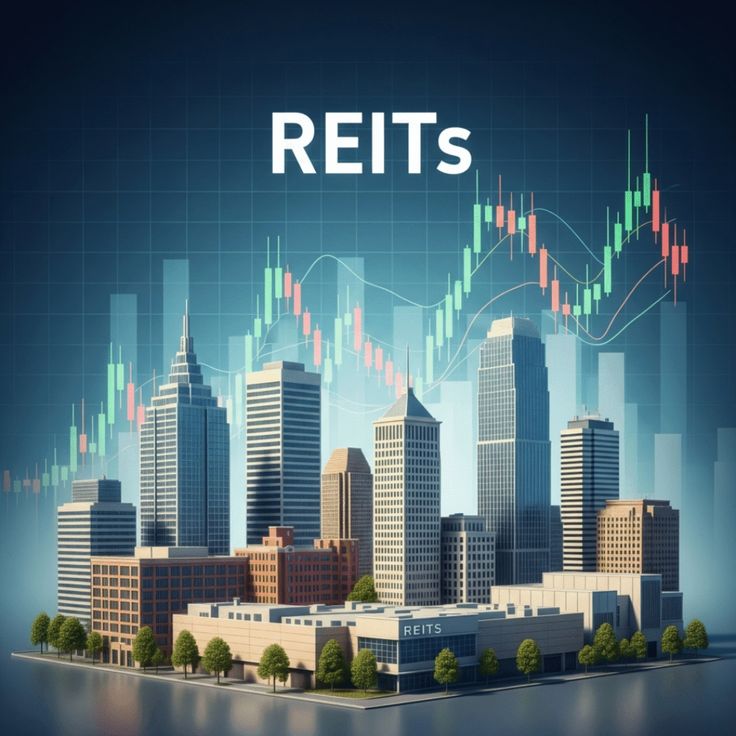
REIT investment in Kenya is entering a new phase following the introduction of dollar-denominated real estate investment instruments to the Kenyan capital market.
For decades, property investment in Kenya has usually meant something physical.
You buy:
- An apartment
- A house
- A commercial building
- A plot of land
- An off-plan unit
You receive ownership rights over that particular property and, if it is an investment, you hope to earn rent or eventually sell it at a higher price.
A Real Estate Investment Trust, or REIT, works differently.
Instead of buying one apartment yourself, investors buy securities representing an interest in a professionally managed pool of real-estate assets.
In 2026, Kenya’s REIT market became even more interesting with dollar-denominated property instruments entering the Nairobi Securities Exchange ecosystem.
The development raises an important question:
Could dollar-denominated REIT investment in Kenya offer investors—and particularly diaspora investors—a serious alternative to buying physical apartments?
Possibly.
But the two investments are fundamentally different.
Here are seven major differences every investor should understand.
1. REIT Investment in Kenya Gives You Exposure to Property Without Buying an Apartment
The first difference is ownership.
When you purchase an apartment, you are buying a specific physical asset.
That means you can identify:
- Your exact unit
- Your floor
- Your parking space
- Your view
- Your tenant
- Your building
A REIT investor does not ordinarily own one specific apartment or warehouse.
Instead, the investor owns REIT securities or units representing an interest in a larger property portfolio.
The underlying portfolio might include assets such as:
- Warehouses
- Commercial buildings
- Residential property
- Industrial property
- Retail assets
- Other qualifying income-generating real estate
So instead of saying:
“I own Apartment A-1204 in Westlands.”
the REIT investor can effectively say:
“I own units representing an interest in a professionally managed property investment vehicle.”
That distinction affects almost everything else.
2. Dollar-Denominated REITs Add Currency Exposure
This is where the new development becomes particularly interesting.
Traditional Nairobi apartments are normally bought and sold in Kenyan shillings, even where developers occasionally quote dollar equivalents.
Rent is also frequently collected in Kenyan shillings.
A US-dollar-denominated REIT introduces another layer:
currency exposure.
Suppose an investor puts USD 20,000 into a dollar-denominated REIT.
If distributions and the investment itself are denominated in dollars, the investor is exposed to movements between the Kenyan shilling and US dollar.
That can be attractive to certain investors.
For example, a Kenyan earning in dollars overseas may prefer an investment whose denomination is closer to the currency in which they earn and save.
It can potentially reduce the need to:
- Convert USD savings into Kenyan shillings.
- Purchase property.
- Collect shilling rental income.
- Eventually convert the proceeds back into dollars.
But currency exposure can work both ways.
If your income and future expenses are primarily in Kenyan shillings, movements in the exchange rate can affect the shilling value of your investment.
The Central Bank of Kenya publishes official foreign-exchange market data and indicative exchange rates, which investors can use to understand currency movements.
Dollar denomination therefore does not eliminate risk.
It simply changes the type of risk.
3. Buying a Physical Apartment Gives You More Control

Direct property ownership offers something REIT investors generally do not have:
control over the individual asset.
If you own an apartment, you can often decide:
- Whether to rent it
- How much rent to charge
- Whether to furnish it
- Whether to use it for short-term accommodation
- Which agent manages it
- Whether to renovate
- When to sell
- Whether to occupy it yourself
A REIT investor delegates most operational decisions to professionals.
The REIT manager makes investment and asset-management decisions within the scheme’s legal mandate.
That reduces the work required from the individual investor.
But it also reduces control.
You generally cannot tell the REIT:
“Renovate this particular warehouse.”
or
“Sell that building and buy a two-bedroom apartment in Westlands instead.”
This makes REITs more comparable to securities investments than to personally managing a rental apartment.
The trade-off is straightforward:
Physical property = more control and more responsibility.
REIT = less direct control and more professional management.
Neither is automatically better.
It depends on the investor.
4. REIT Investment in Kenya Can Offer Better Liquidity Than Physical Property
Liquidity means:
How easily can you turn your investment back into cash?
This is one of the biggest weaknesses of physical real estate.
Suppose you own a KSh 25 million apartment and suddenly need your money.
You cannot normally sell 10% of the bedroom.
You need to sell the entire property.
The process may require:
- Finding a buyer
- Negotiating
- Legal due diligence
- Financing approval
- Transfer documentation
- Payment of transaction costs
- Completion
That can take weeks or months.
A listed REIT is designed to make real-estate exposure more tradable.
In principle, an investor can buy or sell REIT securities through the relevant market mechanism rather than selling the underlying property.
However, there is an important qualification:
Being listed does not guarantee that there will always be an immediate buyer at the price you want.
Actual liquidity depends on:
- Trading activity
- Number of investors
- Market depth
- Demand
- REIT structure
- Transfer restrictions
Kenya’s REIT market is still developing.
Investors should therefore distinguish between:
theoretical liquidity
and
actual market liquidity.
Still, selling securities is structurally very different from selling an apartment.
5. Not Every REIT Is Open to Every Investor
This is one of the biggest points investors need to understand.
Many people hear:
“A REIT allows you to invest in property without buying a building.”
They then assume every REIT can be purchased by anyone with a few thousand shillings.
That is not necessarily the case in Kenya.
The regulatory framework distinguishes between different REIT structures.
Kenya has two major forms:
Income REIT – I-REIT
An I-REIT generally owns income-producing real estate.
Its returns are commonly linked to rental and other property income.
Kenya’s REIT regulations require an I-REIT, after the relevant initial period, to earn at least 70% of its income from rent, licence fees, access or usage rights or similar income streams from eligible income-producing real estate.
The detailed framework is contained in the Capital Markets (Real Estate Investment Trusts) Regulations available through Kenya Law.
Development REIT – D-REIT
A D-REIT is more focused on property development and construction.
This means the risk profile can be different from that of a mature income-generating REIT.
Restricted Investments
Some REIT structures are restricted to professional investors.
Under Kenya’s current regulatory framework, investment in a D-REIT or restricted I-REIT is subject to professional-investor requirements, historically including a minimum investment threshold of KSh 5 million.
This means an investor must verify the terms of the specific REIT.
Do not assume:
“It is on the NSE, therefore any retail investor can automatically buy it.”
Check:
- Whether it is restricted or unrestricted
- Minimum investment
- Eligible investor categories
- Trading rules
- Currency denomination
- Transfer restrictions
6. REITs Can Give Investors Property Diversification

Imagine you have KSh 20 million.
Option A: Buy One Apartment
You put the entire KSh 20 million into one Nairobi apartment.
Your investment is exposed to:
- One building
- One developer
- One neighbourhood
- One tenant market
- One management company
If something goes wrong with that particular property, your investment is heavily concentrated.
Option B: Invest Through a Diversified REIT
A REIT may own several assets.
That can spread the investor’s exposure across multiple properties or tenants.
Diversification could include differences in:
- Location
- Property type
- Tenant
- Lease structure
This can reduce the impact of one tenant leaving or one building temporarily underperforming.
But diversification does not eliminate risk.
A logistics-focused REIT, for example, may still have concentrated exposure to the industrial-property sector.
Similarly, a commercial-property REIT could suffer if office demand weakens broadly.
The correct question is not simply:
“Is the REIT diversified?”
It is:
“What exactly does the REIT own?”
Before investing, examine:
- Portfolio composition
- Major tenants
- Lease terms
- Occupancy
- Debt
- Asset valuations
- Geographic concentration
- Sector concentration
7. Physical Property Can Serve Purposes a REIT Cannot

This is perhaps the biggest reason REITs are unlikely to completely replace direct property ownership.
A physical apartment can be both:
an investment
and
a home.
A diaspora investor might buy a two-bedroom apartment in Nairobi, rent it for five years and eventually move into it after returning to Kenya.
A family may buy a property for their children.
Someone may purchase a home because they want an asset they can physically see and control.
A REIT cannot provide that utility.
You cannot move into your REIT units.
You cannot give your family one of the REIT’s warehouses to live in.
You cannot redesign the kitchen.
So the comparison depends on what the investor actually wants.
If the objective is purely:
financial exposure to real estate
a REIT may be very attractive.
If the objective includes:
- Personal occupation
- Family use
- Renovation
- Direct control
- Long-term residence
physical property may remain more suitable.
Why Dollar REITs Could Be Especially Interesting for Kenya’s Diaspora
This is where the 2026 development could become particularly significant.
Kenya receives billions of dollars in diaspora remittances each year.
Historically, physical real estate has been one of the main destinations for diaspora investment.
But direct property ownership from abroad can be difficult.
A diaspora investor may need to deal with:
- Property viewings
- Lawyers
- Developers
- Title verification
- Construction monitoring
- Tenants
- Repairs
- Property managers
- Service charges
- Rental collections
REIT investment offers a different proposition.
Instead of managing one apartment remotely, the investor can potentially gain regulated property exposure through a professionally managed vehicle.
For someone already earning and saving in US dollars, a USD-denominated REIT may also reduce some of the friction involved in converting into and out of Kenyan shillings.
That does not mean it is automatically safer or more profitable.
It means it solves a different problem.
REIT Investment in Kenya vs Buying a Nairobi Apartment
Here is the simplest comparison:
| Factor | Dollar REIT | Physical Apartment |
|---|---|---|
| What you own | REIT securities | Specific property |
| Currency | May be USD-denominated | Usually KES |
| Management | Professional REIT manager | Owner/agent |
| Control | Limited | High |
| Liquidity | Potentially tradable | Usually slower to sell |
| Personal use | No | Yes |
| Diversification | Potentially multiple assets | Usually concentrated |
| Tenant management | Indirect | Direct responsibility |
| Minimum investment | Depends on scheme | Property price/deposit |
| Income | Distributions | Rent |
| Capital growth | Unit-value appreciation | Property appreciation |
| Currency risk | Can be significant | Usually KES-based |
| Transaction process | Securities-market process | Conveyancing/property transfer |
Neither side automatically wins.
How Are Income REIT Investors Paid?
For an I-REIT, returns normally come from income generated by the underlying assets.
The legal framework is specifically designed around income-producing real estate.
Rental income received by the REIT contributes to the money available for distribution after relevant costs and obligations.
For a dollar-denominated REIT, distributions may also be denominated in dollars depending on the scheme terms.
This can make the investment appealing to investors who want dollar-based income.
But investors should inspect:
- Distribution policy
- Historical distributions
- Occupancy
- Tenant quality
- Lease duration
- Operating expenses
- Debt
Never invest based solely on an advertised yield.
Does a Dollar REIT Protect You From Shilling Depreciation?
Not automatically.
This point needs particular care.
If the REIT is denominated in dollars and generates dollar-linked income, it can provide some protection from direct Kenyan-shilling exposure.
But this does not mean currency risk disappears.
Ask:
- What currency do tenants actually pay?
- What currency are expenses incurred in?
- What currency is debt denominated in?
- What currency are distributions paid in?
- What happens when the shilling strengthens?
Currency mismatches can affect investment returns.
A Kenyan investor whose future expenses are in shillings will experience currency movements differently from a diaspora investor whose income and future spending are in dollars.
Does Listing on the NSE Make the Investment Safe?
No.
Regulation and listing provide important investor protections.
They do not eliminate investment risk.
CMA’s regulatory framework establishes requirements around:
- Trustees
- REIT managers
- Disclosures
- Investment limits
- Asset valuation
- Borrowing
- Scheme structure
That allows investors to verify that they are dealing with authorised products.
But even a properly regulated REIT can experience:
- Lower property values
- Vacancies
- Tenant defaults
- Lower distributions
- Interest-rate pressure
- Currency movements
- Market-price declines
“Regulated” does not mean “guaranteed return.”
Could REIT Investment in Kenya Make Property More Accessible?
Potentially.
One of the traditional problems with property investing is the size of the initial capital requirement.
To buy a Nairobi apartment, an investor may need:
- Millions of shillings
- A mortgage
- Significant deposit
- Legal and transaction costs
An unrestricted REIT can theoretically make it possible to gain exposure to real estate through smaller securities investments.
However, this point must be qualified.
Some Kenyan REIT structures remain restricted to professional investors and therefore have significant minimum-investment requirements.
So the question is not:
“Are REITs cheaper than apartments?”
It is:
“Is this particular REIT accessible to me?”
What Happens If You Need Your Money?
This is where listed REITs may offer one of their strongest structural advantages.
Selling an apartment can involve:
- Finding a buyer.
- Negotiating.
- Due diligence.
- Sale agreement.
- Financing.
- Transfer.
- Completion.
Selling listed REIT securities can potentially be much simpler.
But liquidity depends on the market.
If trading volume is low, you may not be able to sell immediately at your preferred price.
So investors should check actual trading activity rather than assuming liquidity merely because an instrument is listed.
What About Taxes?
Tax treatment can materially affect the final investment return.
REIT structures in Kenya can receive specific tax treatment where they meet applicable statutory requirements, while distributions to investors can have their own tax consequences.
Physical landlords, meanwhile, may be subject to rental-income taxation, depending on the property, ownership structure and taxpayer status.
Because tax rules can change and investor circumstances differ, buyers should confirm current treatment with the Kenya Revenue Authority or a qualified tax adviser before making a comparison based solely on headline yields.
Do not compare:
REIT distribution yield
with
apartment gross rental yield
without considering tax and expenses.
A Better Comparison: Net Return
Suppose a physical apartment produces an 8% gross rental yield.
The investor may still pay:
- Rental tax
- Service charge
- Maintenance
- Management fees
- Insurance
- Vacancy costs
The real return may therefore be substantially below 8%.
A REIT may advertise a distribution yield.
But the investor should still evaluate:
- Management expenses
- Asset performance
- taxation
- market price
- liquidity
- currency effects
The correct comparison is always:
What return remains after realistic costs and risks?
REIT Investment in Kenya Could Change How Investors Think About Property
Perhaps the most interesting impact of dollar-denominated REITs is not whether they replace apartment ownership.
They probably will not.
The bigger change may be that investors gain more ways to allocate money to real estate.
A future investor might hold:
- A physical Nairobi apartment
- REIT securities
- Government bonds
- Equities
- Dollar investments
Instead of putting all capital into one property.
That could make Kenyan property investment increasingly resemble modern portfolio investing.
What Should You Check Before Investing in a REIT?
Before buying, ask:
- Is the REIT authorised by CMA?
- Is it an I-REIT or D-REIT?
- Is it restricted or unrestricted?
- Am I eligible to invest?
- What is the minimum investment?
- What assets does it own?
- Who are the tenants?
- What currency is the REIT denominated in?
- What currency generates the underlying income?
- How frequently does it distribute income?
- How much debt does the REIT carry?
- How liquid are its units?
- What management fees apply?
- What risks are disclosed in the offer documents?
CMA advises investors to deal only with licensed entities and to understand their own risk profile before investing. Read the Capital Markets Authority’s official investor guidance.
Final Thoughts: Could Dollar REITs Change Property Investment in Kenya?
REIT investment in Kenya is becoming more sophisticated.
The arrival of dollar-denominated real-estate instruments adds something that Kenya’s property market has historically lacked:
regulated real-estate exposure combined with foreign-currency denomination and securities-market tradability.
For diaspora investors, that could be particularly interesting.
It may offer property exposure without:
- Buying an individual apartment
- Managing tenants
- Handling repairs
- Monitoring a construction project remotely
For Kenyan investors, it adds another potential way to diversify real-estate exposure.
But dollar REITs should not be viewed as automatically better than physical property.
Physical apartments still offer advantages including:
- Direct ownership
- Personal use
- Greater control
- Ability to renovate
- Individual property appreciation
- Rental-management flexibility
REITs offer a different set of advantages:
- Professional management
- Potential diversification
- Potential liquidity
- Access to larger real-estate assets
- Possible dollar-denominated income
The real question is therefore not:
“Should I buy a REIT or property?”
It is:
“What type of real-estate exposure best fits my objectives, currency needs, liquidity requirements and risk tolerance?”
Kenya’s property market may no longer be limited to choosing between an apartment, house or plot.
Dollar-denominated REITs mean investors increasingly have another option:
owning real estate through the capital markets.
Considering an Off-Plan or Newly Completed Apartment in Nairobi?
Contact Realty Boris to explore carefully selected developments across Westlands, Kilimani, Kileleshwa, Riverside, Lavington and Nairobi’s other premium locations—and compare direct property ownership with other investment alternatives based on purchase price, expected rental income, currency exposure, liquidity, legal documentation and long-term investment objectives before committing to a property or making substantial payments.