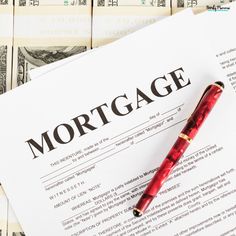
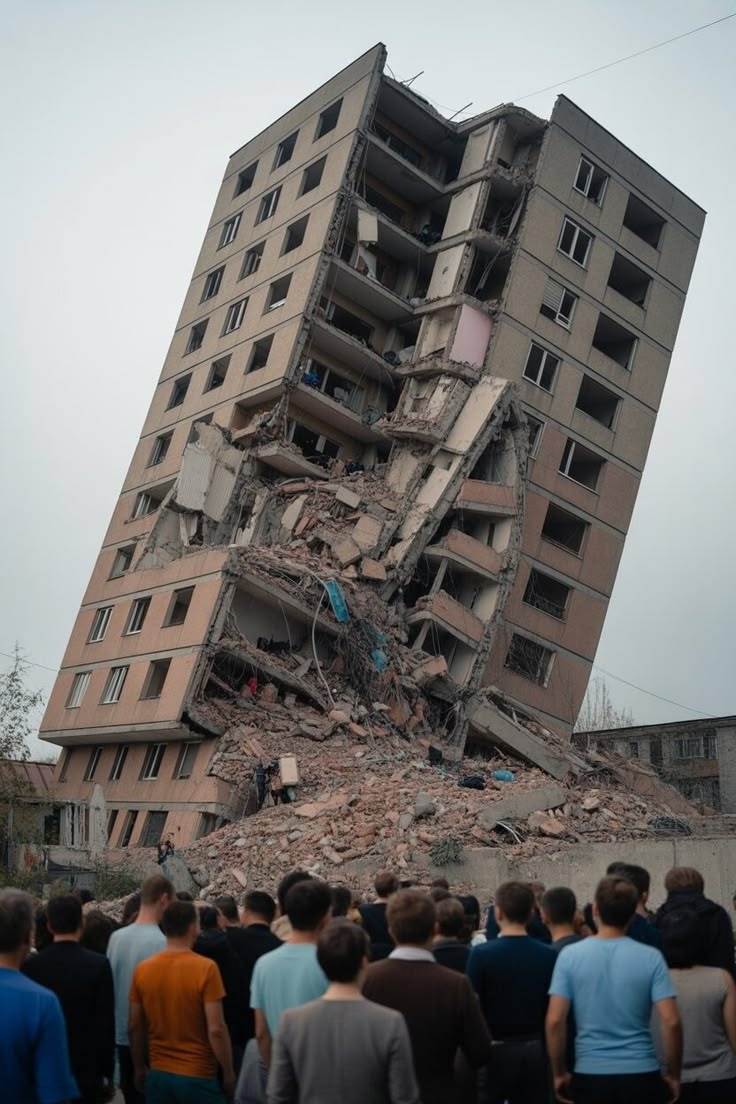
Building collapses in Kenya raise a much bigger question than what happened to one particular development.
For anyone buying an apartment, investing off-plan or renting in a high-rise building, the real question should be:
How do I know that the building I am putting my money—and potentially my family—into is actually safe?
A building can look luxurious on the outside and still have problems that are invisible during an ordinary property viewing.
Beautiful tiles, imported kitchens, rooftop swimming pools and impressive show houses tell you almost nothing about:
- Foundation quality
- Concrete strength
- Reinforcement
- Structural design
- Soil conditions
- Fire safety
- Waterproofing
- Electrical systems
- Construction supervision
- Compliance with approved plans
Kenya now operates under the National Building Code 2024, which came into force on 1 March 2025. The National Construction Authority says the Code establishes standards covering the planning, design, approval, construction, maintenance and demolition of buildings.
Read the National Construction Authority’s National Building Code 2024 resources
But regulations on paper do not eliminate construction risk.
Buyers still need to understand what approvals should exist, which professionals should be involved, what documents they should request and what warning signs should never be ignored.
Here are nine critical questions every property buyer should understand when thinking about building collapses in Kenya and the wider risks facing buildings.
1. How Can a Building Reach More Than 15 Floors Without the Proper Approvals?

This is one of the most troubling questions raised whenever an unauthorised or structurally questionable building is discovered at an advanced stage of construction.
You might reasonably ask:
How can someone excavate a foundation, construct a podium and continue building floor after floor without anybody stopping them?
Legally, a developer is not supposed to simply acquire land and begin constructing whatever they want.
Construction projects require several layers of compliance.
The Physical and Land Use Planning Act requires development permission from the relevant county authority. Carrying out development contrary to approved conditions or without the required permission can constitute an offence.
Construction projects must also be registered with the National Construction Authority.
NCA states that developers registering a project are required to provide, among other things:
- Approved architectural drawings
- Approved structural drawings
- County planning approvals
- Registered contractor details
- Registered engineers and architects
- Relevant NEMA and other regulatory approvals where applicable
- Quantity-surveyor documentation
- Consultant supervision commitments
See the National Construction Authority’s official project registration requirements
So how can an unauthorised building still become very tall?
Several things can potentially go wrong.
Construction Can Deviate From the Approved Plans
A project may initially receive approval for one design but later be constructed differently.
For example, additional floors could be introduced without corresponding amendments to structural designs and approvals.
The existence of an approved plan does not automatically prove that the building standing on the ground matches that plan.
Construction Can Proceed Without Complete Approvals
Some developers may start construction while approvals remain incomplete.
That does not make the construction legal simply because work has progressed.
Documentation Can Be False or Defective
Kenyan courts have previously dealt with collapsed-building investigations where authorities found that plans presented for construction were not genuine and that required approval procedures had not been followed.
Inspections or Enforcement Can Fail
There can also be a difference between what regulation requires and what is actually detected or enforced on site.
That is why a buyer should never assume:
“It has already reached the 15th floor, therefore somebody must have approved it.”
Height is not proof of compliance.
2. How Do I Know Whether an Apartment I Am Buying Is Structurally Safe?
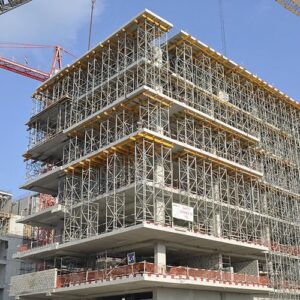
You cannot confirm structural safety simply by walking through the apartment.
Structural integrity is a technical engineering question.
The safest approach is to combine document verification with professional inspection.
Ask for the Approved Structural Drawings
These should have been prepared and signed by the relevant qualified structural engineer.
Do not confuse architectural drawings with structural drawings.
Architectural drawings show things such as:
- Room layouts
- Doors
- Windows
- Circulation
- Building form
Structural drawings deal with the elements carrying the building’s loads, including:
- Foundations
- Columns
- Beams
- Slabs
- Reinforcement
- Structural walls
Verify the Structural Engineer
The Engineers Board of Kenya regulates engineering professional services and maintains registers of qualified engineers and engineering firms. Its mandate includes registration, licensing, setting engineering standards and inspecting sites where engineering works are being undertaken.
Verify engineering professionals through the Engineers Board of Kenya
Confirm NCA Project Registration
NCA requires all construction projects—public and private—to be registered.
Project registration helps establish whether:
- The contractor is registered
- Consultants are properly licensed
- Approved drawings were provided
- County approvals exist
- Relevant regulatory approvals were submitted
Commission Your Own Structural Engineer When Necessary
For a high-value purchase, especially where you have concerns, appointing an independent structural engineer can be money well spent.
Do not depend entirely on the developer’s engineer.
Your professional should represent your interests as the buyer.
They can investigate issues such as:
- Significant cracks
- Uneven settlement
- Deflection
- Water penetration
- Structural modifications
- Corrosion
- Concrete deterioration
- Suspicious additions
- Foundation distress
A normal property agent or buyer cannot determine these issues reliably by sight alone.
3. Who Approves Buildings, Inspects Them and Is Held Accountable?
Kenya’s building regulatory system involves several institutions rather than one single “building authority.”
Understanding their different roles is important.
County Government
The relevant county government handles development-control functions, including development permission and building approvals.
Under Kenya’s planning framework, occupation certificates are also issued through the county system once a building is certified fit for occupation. The planning regulations distinguish temporary occupation certificates from permanent occupation certificates for fully constructed buildings certified fit for use.
National Construction Authority
The National Construction Authority regulates the construction industry, registers contractors and projects, and enforces the National Building Code.
NCA states that all private and public construction projects must be registered with the Authority.
Visit the National Construction Authority
Engineers Board of Kenya
The Engineers Board of Kenya regulates engineers and engineering consulting firms.
If structural engineering work is involved, the relevant engineers should be properly registered and licensed.
Check registered engineers through the Engineers Board of Kenya
BORAQS
The Board of Registration of Architects and Quantity Surveyors regulates architects and quantity surveyors.
Buyers can therefore verify whether professionals presented as architects or quantity surveyors are properly registered.
Visit the Board of Registration of Architects and Quantity Surveyors
NEMA
Certain developments also require environmental assessment and approval.
The National Environment Management Authority states that projects likely to have significant environmental impacts—including residential and mixed-use projects in appropriate cases—may require Environmental Impact Assessment processes.
Read NEMA’s official Environmental Impact Assessment guidance
The important point is that building compliance is multi-agency and multi-professional.
There is rarely only one responsible party.
4. What Happens to Buyers Who Paid for an Investment but the Building Collapses?
This is where the consequences become financially devastating.
Imagine paying KSh 10 million, KSh 20 million or more toward an off-plan apartment.
Then, during construction, the building collapses.
Your rights will depend heavily on:
- Your sale agreement
- What caused the collapse
- Insurance
- Developer solvency
- Professional negligence
- Contractor liability
- Representations made to buyers
- Whether approvals were obtained
- How the project company was structured
The buyer may potentially have contractual and other legal claims, but recovery is not automatically guaranteed simply because money was paid.
That is why the sale agreement matters enormously.
An off-plan agreement should be reviewed by an independent property lawyer before significant payments are made.
Important provisions include:
- Completion obligations
- Construction timelines
- Developer default
- Buyer default
- Refund rights
- Long-stop completion dates
- Insurance
- Force majeure
- Dispute resolution
- Termination
- Treatment of money already paid
A brochure cannot protect your investment.
A WhatsApp message cannot replace legal documentation.
And a developer saying, “Don’t worry, the project is fully approved,” is not a substitute for independent verification.
5. Who Is Legally Responsible When a Building Collapses?
There is no automatic answer saying one party is always responsible.
Liability depends on why the building collapsed.
Potentially responsible parties could include:
The Developer or Owner
The developer may face responsibility where failures relate to matters under the developer’s control, such as proceeding without approvals, employing unqualified parties or ignoring safety requirements.
Contractor
A contractor could potentially face liability if construction departed from drawings, workmanship was defective or inappropriate materials were used.
Structural Engineer
An engineer could face professional consequences or civil liability where negligent design, certification or supervision is proven.
Kenya’s engineering rules require practicing engineers to accept responsibility for professional activities under their charge.
Architect
An architect may also carry responsibilities depending on the scope of the professional appointment and the failure involved.
BORAQS professional standards require registered architects and quantity surveyors to act with reasonable care and comply with applicable law.
Public Authorities
In particular circumstances, questions may also arise about regulatory or enforcement failures.
But liability must be established based on evidence and applicable law.
Kenyan negligence cases generally require the person bringing the claim to prove the relevant negligence and causal connection.
This is why major building failures normally require technical investigations.
You need to determine what failed before determining who caused it.
6. Which Documents Should You Demand When Buying an Off-Plan Project?
For buyers, this is one of the most practical ways of reducing risk.
Do not buy off-plan based only on:
- Renderings
- Show apartments
- Videos
- Payment plans
- Promised returns
- Developer reputation
Your lawyer and technical advisers should establish which documents are relevant to the particular project.
At a minimum, ask about:
1. Title and Ownership Documents
Confirm who legally owns the land and whether the developer has authority to develop and sell the project.
2. Official Land Search
Verify ownership and registered interests rather than relying exclusively on a photocopy of a title.
3. Approved Architectural Drawings
Confirm that the proposed building has been approved by the relevant authority.
4. Approved Structural Drawings
These are critical for the structural design of the project.
5. County Development Approval
The project should have appropriate planning and development permission.
6. NCA Project Registration
NCA specifically lists approved architectural drawings, structural drawings, county approvals and registered consultants among the documents required for project registration.
7. NEMA Approval Where Applicable
Environmental approval may be required depending on the project’s category and environmental impacts.
8. Professional Registration Details
Verify:
- Architect
- Structural engineer
- Quantity surveyor
- Contractor
Do not merely accept the names printed on a brochure.
9. Sale Agreement
Have your own advocate review it.
10. Construction and Payment Schedule
Your payment obligations should ideally correspond to clearly defined contractual milestones.
11. Occupation Certificate for Completed Projects
For completed buildings, establish whether the relevant occupation certificate has been issued.
A finished-looking building is not necessarily a building formally certified fit for occupation.
7. Are Expensive Houses Necessarily Safer?
No.
Price is not a structural engineering standard.
A KSh 100 million house is not automatically safer than a KSh 15 million apartment.
Price may reflect:
- Location
- Land value
- Imported finishes
- Brand positioning
- Views
- Amenities
- Interior design
- Size
None of these proves structural quality.
A building can contain:
- Italian marble
- German appliances
- Smart-home systems
- Rooftop infinity pools
and still suffer serious construction defects if the structural work was poorly executed.
Likewise, a relatively simple building can be structurally sound if it was properly designed, constructed and maintained.
Buyers should therefore separate:
luxury
from
safety.
The structural questions remain the same regardless of price:
- Was it properly designed?
- Was it approved?
- Were qualified professionals involved?
- Was it built according to the drawings?
- Were appropriate materials used?
- Was construction properly supervised?
- Has it been maintained?
8. Can a Completed Building Develop Structural Problems Years Later?
Yes.
A building being safe at completion does not mean it requires no further attention for the rest of its life.
Kenya’s National Building Code 2024 explicitly recognises this.
The Code requires building inspections within every five years after completion and provides for several forms of inspection, including:
- Visual inspection
- Full structural or civil inspection
- Full building condition survey
- Building-services inspection
- Specialised investigations
This is extremely important.
Buildings age.
Problems can develop because of:
Water Penetration
Persistent leaks can damage finishes, reinforcement and other building components.
Reinforcement Corrosion
Where steel reinforcement corrodes, expansion can cause cracking and concrete deterioration.
Foundation Movement
Changes in soil conditions, drainage or neighbouring construction may affect foundations.
Unauthorised Alterations
Owners sometimes remove walls, create openings or alter layouts without understanding whether the elements are structural.
Additional Loads
Installing heavy tanks, equipment or other loads beyond what a structure was designed for can create problems.
Poor Maintenance
Small defects become major defects when ignored.
Neighbouring Excavation
Deep excavation on an adjacent site can potentially affect surrounding structures if not properly designed and managed.
So when buying an older apartment, do not look only at the interior of the unit.
Ask about the condition of the entire building.
Building Collapse Is Not the Only Risk Buyers Should Think About
Structural collapse is the most dramatic outcome, but it is not the only serious building risk.
A property can remain standing while becoming unsafe, expensive or difficult to live in.
Fire Risk
Buyers should examine:
- Fire escapes
- Staircases
- Fire doors
- Alarm systems
- Firefighting equipment
- Emergency access
- Evacuation routes
A luxury tower without adequate fire-safety systems can still expose residents to major risk.
Electrical Risk
Poor electrical installations can lead to:
- Fires
- Electric shock
- Equipment damage
Flooding and Drainage
Basements, parking areas and foundations can be affected by poor storm-water management.
Water Leakage
Persistent water penetration can create mould, damage finishes and accelerate deterioration.
Lift and Mechanical-System Failure
High-rise residents depend heavily on:
- Lifts
- Pumps
- Backup power
- Ventilation
- Fire systems
Poorly maintained building services can significantly reduce safety and habitability.
Poor Waste and Sewer Systems
A building may be structurally sound but still suffer major sanitation problems.
Neighbouring Development Risk
Construction next door can create:
- Excavation risk
- Vibration
- Drainage changes
- Access problems
The correct question is therefore not simply:
“Will this building collapse?”
It is:
“What risks could affect the safety, usability and long-term value of this building?”
9. What Should Buyers and Tenants Do If They Suspect a Building Is Unsafe?
Do not ignore unusual structural warning signs.
Examples that may justify professional investigation include:
- Large or growing cracks
- Columns showing serious cracking
- Exposed reinforcement
- Concrete falling away
- Floors appearing uneven
- Significant building movement
- Doors suddenly failing to close
- Major water penetration
- Visible foundation distress
- Unauthorised structural alteration
- Severe corrosion
Not every crack means a building is about to collapse.
Some cracks are cosmetic.
Others can be serious.
The problem is that an ordinary resident usually cannot tell the difference.
Step 1: Document What You See
Take photographs and note:
- Location
- Date
- Whether the defect is changing
- Other unusual signs
Step 2: Notify Building Management or the Owner
Put the concern in writing.
Step 3: Get a Qualified Professional Assessment
For structural concerns, use an appropriately qualified engineer.
Verify professional registration through the Engineers Board of Kenya.
Step 4: Report a Suspected Non-Compliant Project
NCA provides a formal mechanism for reporting faulty or non-compliant construction projects.
The Authority advises complainants to provide the exact location, building name and photographs when reporting concerns.
See NCA guidance for reporting non-compliant construction projects
Step 5: Do Not Remain in a Building Where Authorities or Engineers Advise Evacuation
Property and possessions can potentially be replaced.
Life cannot.
What Should an Investor Check Before Buying Into a High-Rise?
If you are considering an apartment in a major Nairobi development, create a due-diligence process covering three separate areas.
Legal Due Diligence
Verify:
- Land ownership
- Title
- Encumbrances
- Developer’s authority
- Sale agreement
Planning and Regulatory Due Diligence
Verify:
- County approval
- Architectural approval
- Structural approval
- NCA registration
- Environmental approval where applicable
- Occupation certification for completed buildings
Technical Due Diligence
Verify:
- Structural professionals
- Contractor
- Construction progress
- Material quality where possible
- Building condition
- Fire safety
- Mechanical and electrical systems
One category cannot substitute for another.
A clean title does not prove the structure is safe.
An excellent structural design does not prove the developer owns the land.
A beautiful completed building does not prove the sale agreement protects you.
You need all three.
Never Assume Approval Because Construction Is Advanced
This may be the most important lesson for off-plan investors.
Do not assume:
“Surely someone would have stopped it if it wasn’t approved.”
The correct approach is:
Verify.
The NCA requires projects to have qualified registered contractors and consultants, approved architectural and structural drawings, county approvals and other relevant statutory documentation before registration.
Ask for evidence.
Have your lawyer verify legal documentation.
Have technical professionals check technical documentation where the investment justifies it.
The larger the amount of money involved, the less sense it makes to depend on assumptions.
Final Thoughts on Building Collapses in Kenya
Building collapses in Kenya should change the way buyers think about property due diligence.
Structural safety cannot be determined by:
- The asking price
- The neighbourhood
- The developer’s marketing
- The height already constructed
- The beauty of the show house
- The number of units already sold
A building is safe because it has been properly designed, approved, constructed, supervised, inspected and maintained.
And even after completion, safety is an ongoing responsibility.
Kenya’s National Building Code now requires periodic building inspections, reflecting the fact that structural and building-service risks can develop long after residents move in.
Before buying an apartment—especially off-plan—ask:
- Who owns the land?
- What exactly has the county approved?
- Are the architectural and structural drawings approved?
- Is the project registered with NCA?
- Who is the structural engineer?
- Is the engineer registered with EBK?
- Who is the architect?
- Who is the contractor?
- Are the professionals properly licensed?
- Does the finished building have the appropriate occupation certification?
- Has anything been built differently from the approved plans?
- What does my sale agreement say if construction fails?
Do not rely on the statement:
“Everything is approved.”
Ask to see what proves it.
When millions of shillings—and potentially lives—are involved, proper due diligence is not an unnecessary delay.
It is part of buying property responsibly.
Considering an Off-Plan or Newly Completed Apartment in Nairobi?
Contact Realty Boris to explore carefully selected developments across Westlands, Kilimani, Kileleshwa, Riverside, Lavington and Nairobi’s other premium locations—and complete proper legal, structural, regulatory and project due diligence before committing to a property or making substantial payments.