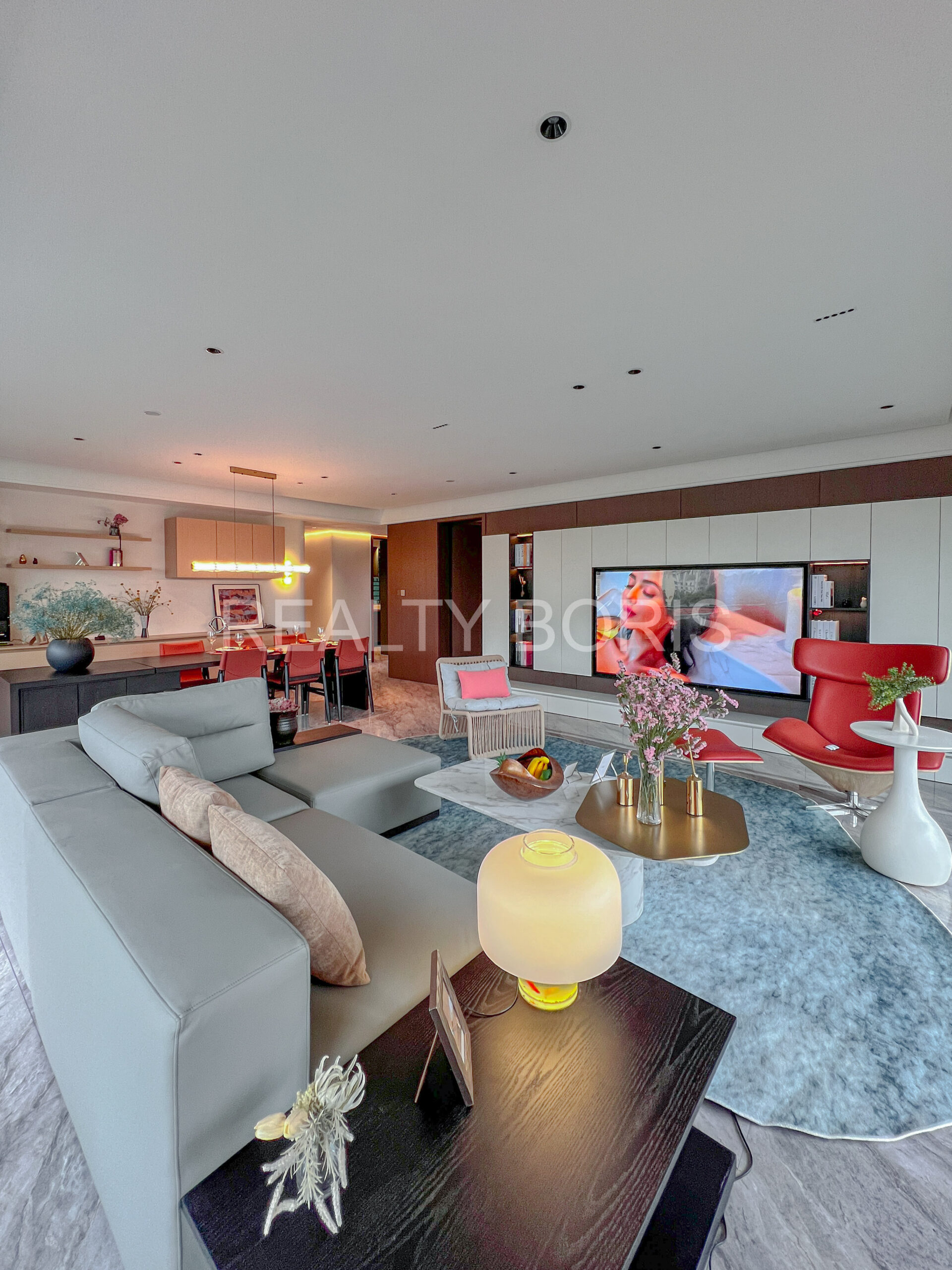


What makes a property a good investment is not simply whether it is beautiful, located in an expensive neighbourhood or being sold by a popular developer.
A genuinely good property investment should make financial and practical sense.
That means looking beyond marble countertops, rooftop swimming pools, impressive show houses and promises of future appreciation.
The real questions are:
Who will want this property?
How much income can it realistically generate?
How much will it cost to own?
How easy will it be to rent or resell?
What risks are you taking?
And ultimately:
Will the return justify the amount of money invested?
This is particularly important in Nairobi, where two apartments of similar size can produce very different outcomes depending on location, purchase price, rental demand, management quality, unit mix and competition.
Kenya’s housing market is also diverse. The 2023/24 Kenya Housing Survey by the Kenya National Bureau of Statistics examines affordability, home ownership, tenancy, housing quality, infrastructure and property prices across the country, demonstrating how many variables influence housing decisions.
For an investor, the goal should not be to find the most impressive property.
It should be to find the property with the strongest investment fundamentals.
Here are nine factors that help explain what makes a property a good investment.
1. What Makes a Property a Good Investment Starts With Location

Location remains one of the most important factors in real estate.
But “good location” does not simply mean expensive location.
A good investment location should have a reason for people to live there.
That demand may come from proximity to:
- Employment centres
- Business districts
- Schools
- Hospitals
- Shopping centres
- Entertainment
- International organisations
- Major roads
- Public transport
- Universities
- Diplomatic institutions
In Nairobi, neighbourhoods such as Westlands, Kilimani, Kileleshwa, Riverside and Lavington attract different tenant and buyer profiles.
Westlands, for example, has substantial commercial activity.
Kilimani provides central access to several parts of Nairobi.
Kileleshwa appeals to people looking for a more residential environment while remaining relatively central.
Riverside attracts premium tenants and buyers seeking proximity to Westlands without necessarily living within its busiest commercial sections.
The important question is therefore not:
“Is this a famous neighbourhood?”
It is:
“What continues to create demand for people to live here?”
A property investment needs demand.
Without demand, everything else becomes more difficult.
2. Strong Rental Demand Is One of the Clearest Signs of a Good Investment
If you intend to generate rental income, tenant demand matters enormously.
You need to understand who will rent the property.
That could include:
- Young professionals
- Families
- Corporate tenants
- Diplomats
- Students
- Diaspora visitors
- Executives
- Long-stay expatriates
- Short-term guests
The property should ideally match the people most likely to live in that neighbourhood.
For example, a compact one-bedroom apartment can make sense in an area dominated by professionals and younger tenants.
The same property type may be much less attractive in a neighbourhood where the strongest demand is from families looking for three- and four-bedroom homes.
This is why an investor should research the tenant profile before selecting the unit.
Ask:
- What unit sizes are most frequently rented?
- What is the realistic monthly rent?
- How quickly do good units find tenants?
- Are there many vacant competing properties?
- Are tenants mostly short-term or long-term?
- What amenities do they expect?
The stronger and more consistent the demand, the less dependent your investment becomes on aggressive discounting.
3. A Good Property Investment Must Have a Sensible Purchase Price
A great apartment bought at the wrong price can become a bad investment.
This is one of the most overlooked principles in real estate.
Suppose two similar apartments can each generate KSh 100,000 per month in rent.
One costs KSh 12 million.
The other costs KSh 20 million.
Assuming comparable expenses, the KSh 12 million property is generating the same income on significantly less invested capital.
That difference matters.
Investors sometimes become so focused on the development itself that they forget to ask whether the price is justified.
Before buying, compare:
- Price per square metre
- Rental potential
- Competing developments
- Unit size
- Location
- Amenities
- Service charge
- Completion status
- Developer track record
- Payment plan
- Comparable resale properties
Never assume that a discount automatically makes a property cheap.
A developer can advertise a KSh 2 million discount on a unit that was overpriced by KSh 3 million to begin with.
The correct reference point is market value and return potential, not the size of the advertised discount.
4. Rental Yield Helps Determine What Makes a Property a Good Investment
Rental yield is one of the most useful basic calculations for comparing investment properties.
A simple gross rental yield calculation is:
Annual Rental Income ÷ Property Purchase Price × 100
For example, suppose an apartment costs KSh 12 million and rents for KSh 100,000 per month.
Annual rent:
KSh 100,000 × 12 = KSh 1.2 million
Gross rental yield:
KSh 1.2M ÷ KSh 12M × 100 = 10%
Now compare that with a KSh 20 million apartment generating the same KSh 100,000 monthly rent.
Annual income is still KSh 1.2 million.
But gross rental yield is only:
KSh 1.2M ÷ KSh 20M × 100 = 6%
The second apartment may be more luxurious.
But based purely on rental yield, the first is producing more income relative to the amount invested.
However, gross yield is only the beginning.
Investors should also calculate net rental yield after expenses.
5. Cash Flow Matters More Than Headline Rent
A property generating KSh 150,000 in monthly rent is not necessarily more profitable than one generating KSh 110,000.
Why?
Because ownership costs can differ dramatically.
Common expenses include:
- Service charge
- Repairs
- Maintenance
- Property management
- Insurance
- Land rates where applicable
- Utilities paid by the landlord
- Furnishing replacement
- Vacancy
- Cleaning for furnished rentals
- Financing costs
- Taxes
This is why investors should calculate:
Income – expenses = actual cash flow
Consider two properties.
Property A
Monthly rent: KSh 150,000
Monthly equivalent expenses: KSh 55,000
Approximate cash flow before financing and tax: KSh 95,000
Property B
Monthly rent: KSh 125,000
Monthly equivalent expenses: KSh 20,000
Approximate cash flow before financing and tax: KSh 105,000
Property B generates less rent but produces more operating cash flow.
That is why headline rent should never be the only number you consider.
Property owners should also understand their tax obligations. The Kenya Revenue Authority provides official guidance on residential rental income taxation, including who falls within the applicable regime and how rental income tax is handled.
Tax rules can change, so investors should verify the current treatment applicable to their property and ownership structure.
6. Low Vacancy Risk Makes an Investment Stronger
An impressive projected rental yield is meaningless if the property remains empty.
Vacancy is one of the biggest hidden costs in real estate investment.
Suppose your expected rent is KSh 120,000 per month.
If the property remains vacant for two months each year, you lose:
KSh 240,000 in potential annual income.
This reduces your effective return considerably.
Properties with lower vacancy risk often share characteristics such as:
- Strong location
- Appropriate unit size
- Competitive rent
- Good building management
- Practical layouts
- Reliable water
- Backup power
- Parking
- Security
- Proximity to daily amenities
Vacancy risk is another reason investors should be cautious about buying into highly saturated developments.
Imagine a development contains 500 units.
If 300 owners intend to rent similar one-bedroom apartments, tenants suddenly have significant choice.
Owners may then compete through:
- Lower rent
- Free months
- Furnishing
- Flexible payment terms
- Additional services
Your investment analysis should therefore include not only demand but also future supply.
7. Appreciation Potential Should Have a Logical Reason
Many properties are marketed using one phrase:
“The value will appreciate.”
But why?
Real estate can appreciate over time, but investors should understand what could realistically drive that appreciation.
Potential drivers include:
- Infrastructure improvements
- Increased commercial activity
- Limited land supply
- Population growth
- Improved accessibility
- New employment centres
- Higher-quality surrounding development
- Improved neighbourhood amenities
- Strong housing demand
Appreciation should therefore be treated as a hypothesis that needs supporting evidence.
Do not assume a property will rise dramatically in value simply because the developer says so.
The KNBS Kenya Housing Survey includes dedicated data on housing development and property prices, providing useful national context for investors trying to understand Kenya’s housing environment.
The better investment thesis is:
“This location has identifiable demand drivers that could support long-term value.”
Not:
“Property always goes up.”
8. Good Liquidity and Resale Demand Matter
Investors frequently analyse how to buy a property but spend less time considering how they will eventually exit.
A good investment should ideally have a reasonably broad pool of future buyers.
Suppose you buy an extremely unusual five-bedroom apartment costing KSh 100 million.
It may be spectacular.
But how many people will realistically be able and willing to buy it from you?
Compare that with a well-priced two-bedroom apartment in a strong residential neighbourhood.
The smaller unit could appeal to:
- Investors
- Couples
- Young professionals
- Small families
- Diaspora buyers
- First-time homeowners
A wider pool of potential buyers can improve resale liquidity.
When evaluating resale potential, consider:
- Price bracket
- Unit size
- Layout
- Location
- Number of competing units
- Maintenance condition
- Service charge
- Parking
- Development reputation
A property that is easy to buy but extremely difficult to resell may not be the strongest investment.
9. Legal Due Diligence Is Part of What Makes a Property a Good Investment

A property cannot be considered a good investment if its legal position is uncertain.
This applies whether you are buying:
- Off-plan
- Newly completed
- Resale
- Land
- Townhouse
- Apartment
- Villa
Before making substantial payments, buyers should work with an independent advocate and verify the relevant documentation.
Depending on the transaction, this can include:
- Ownership
- Title
- Encumbrances
- Charges
- Cautions
- Restrictions
- Land rates
- Land rent where applicable
- Survey information
- Approved plans
- Development approvals
- Sale agreement
- Seller authority
Kenya’s official ArdhiSasa platform provides digital land-related services including searches, transfers, registration, valuation, survey and mapping functions.
Legal due diligence is not simply an administrative step.
It is part of investment risk management.
A property offering an attractive yield means very little if ownership cannot be transferred properly.
What About Financing?
If you are using debt, the cost of financing can dramatically affect investment performance.
Suppose your rental yield is 7%, but your effective borrowing cost is significantly higher.
The investment may generate negative cash flow unless capital appreciation or another component of the strategy compensates for that difference.
Financed buyers should therefore analyse:
- Interest rate
- Deposit requirement
- Monthly repayment
- Loan term
- Variable versus fixed rate
- Insurance
- Additional bank charges
- Rental income
According to the Central Bank of Kenya’s 2025 Bank Supervision Annual Report, the average mortgage interest rate in Kenya during 2025 was 13.5%, while mortgage rates across the surveyed market ranged from 7.5% to 19.6%.
That illustrates why investors using mortgages must analyse financing carefully rather than comparing rental income with the purchase price alone.
A Good Property Should Match the Right Investment Strategy
Not every investment property should be operated the same way.
A property could be suitable for:
Long-Term Rental
Suitable where there is stable tenant demand and investors prioritise predictable occupancy.
Furnished Long-Term Rental
Can appeal to corporate tenants, executives and relocating professionals.
Short-Term Rental
Potentially appropriate in locations with strong visitor demand, although management requirements and operating costs are higher.
Capital Appreciation
Some investors prioritise buying early in locations expected to mature over several years.
Buy, Improve and Resell
Older properties may create opportunities where renovation materially improves market value.
The best strategy depends on the specific property.
Do not buy a unit first and then try to invent an investment strategy afterwards.
Off-Plan Property: What Makes It a Good Investment?
Off-plan property can offer advantages, but being off-plan does not automatically make a development attractive.
A strong off-plan investment may offer:
- Competitive entry price
- Payment flexibility
- Strong location
- Sensible unit sizes
- Credible developer
- Realistic completion timeline
- Clear legal documentation
- Genuine demand upon completion
One of the biggest risks is relying entirely on projected future rents.
If a developer tells you a one-bedroom apartment will rent for KSh 150,000 in three years, investigate whether existing comparable properties support that number.
Also consider how many competing units will enter the market before completion.
If several thousand similar apartments are scheduled for the same neighbourhood, rental competition could be very different when you finally receive the keys.
Don’t Confuse Amenities With Investment Quality
Modern developments frequently advertise long lists of amenities:
- Infinity pools
- Gyms
- Cinemas
- Yoga studios
- Golf simulators
- Rooftop lounges
- Libraries
- Children’s areas
- Games rooms
- Concierge desks
These can make a property more attractive.
But they do not automatically make it a better investment.
Amenities have costs.
Someone eventually pays to maintain:
- Pools
- Lifts
- Gardens
- Security
- Common-area electricity
- Gyms
- Backup generators
Usually that cost appears in the service charge.
Therefore ask:
Will tenants or future buyers value these amenities enough to justify their cost?
A simpler development with a lower service charge may sometimes generate better net returns.
Property Size Also Affects Investment Performance
Bigger does not always mean better.
A 150 sqm two-bedroom apartment may feel luxurious, but if tenants in that area primarily want affordable 80–100 sqm units, the additional space may not translate into equivalent additional rent.
Investors should compare:
Purchase price per square metre
against
Rent per square metre and actual tenant demand.
This is particularly important in Nairobi’s premium apartment market, where large differences in unit size can exist even within the same bedroom category.
How to Compare Two Investment Properties
Suppose you are comparing two Nairobi apartments.
Property A
Purchase price: KSh 10M
Expected monthly rent: KSh 80,000
Annual rent: KSh 960,000
Gross yield: 9.6%
Property B
Purchase price: KSh 15M
Expected monthly rent: KSh 100,000
Annual rent: KSh 1.2M
Gross yield: 8%
Property B generates more rent.
But Property A offers the stronger gross rental yield.
Does that automatically make Property A better?
No.
You still need to consider:
- Location
- Vacancy
- Service charge
- Building quality
- Tenant profile
- Future supply
- Appreciation potential
- Resale liquidity
- Developer quality
This is why good property investment decisions require several metrics rather than one.
Red Flags That Can Make a Property a Poor Investment

Be cautious when:
- Projected rents seem unrealistic
- The area has excessive competing supply
- Service charges are unusually high
- The unit has an awkward layout
- Parking is inadequate
- The developer has an unclear track record
- Documentation cannot be verified
- Infrastructure around the property is poor
- The purchase price is substantially above comparable property
- Appreciation projections appear exaggerated
- The investment works only under perfect assumptions
A particularly important warning sign is when the sales pitch focuses almost entirely on future appreciation.
A strong investment should ideally make sense using today’s fundamentals, even if appreciation is slower than expected.
Run Three Scenarios Before Buying
Before investing, build at least three scenarios.
Conservative Case
Assume:
- Lower rent
- Some vacancy
- Higher costs
- Slower appreciation
Expected Case
Use realistic market assumptions.
Optimistic Case
Assume stronger occupancy, rent and appreciation.
The investment should not depend entirely on the optimistic scenario.
For example, ask:
What happens if rent is 15% lower than expected?
What happens if the property remains vacant for two months?
What happens if service charges rise?
What happens if I need to sell earlier than planned?
Good investments should have some margin for error.
What Makes a Property a Good Investment? The 9-Point Checklist
Before buying, ask whether the property has:
- A location with genuine demand
- A clear target tenant or buyer
- A sensible acquisition price
- A competitive rental yield
- Positive or acceptable cash-flow potential
- Manageable vacancy risk
- Logical appreciation drivers
- Strong resale potential
- Clear and verifiable legal documentation
If several of these fundamentals are weak, attractive interiors alone will not rescue the investment.
Final Thoughts: What Makes a Property a Good Investment?
Ultimately, what makes a property a good investment is the relationship between the price you pay, the income and growth potential you receive, and the risks you accept.
A good property does not have to be the cheapest property.
It does not have to have the highest rent.
It does not have to be in the most expensive neighbourhood.
And it certainly does not need the longest list of amenities.
A strong investment is one where the numbers, location, demand, legal position and exit strategy work together.
Before purchasing, understand:
- Who will rent it
- What they will realistically pay
- How much competition exists
- What expenses you will carry
- What net return is achievable
- Why the area may appreciate
- Who might buy the property from you later
- Whether all documentation can be independently verified
The strongest investors do not simply ask:
“Do I like this property?”
They ask:
“Does this property make sense as an investment?”
Those are two very different questions.
Considering an Off-Plan or Newly Completed Investment Property in Nairobi?
Contact Realty Boris to explore carefully selected developments across Westlands, Kilimani, Kileleshwa, Riverside, Lavington and Nairobi’s other premium locations—and assess purchase price, rental demand, projected yield, location, developer quality, legal documentation and long-term investment potential before committing to a property or making substantial payments.