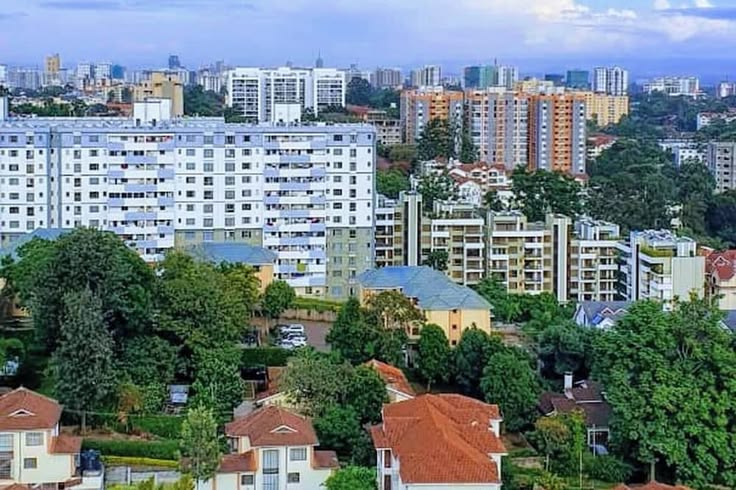
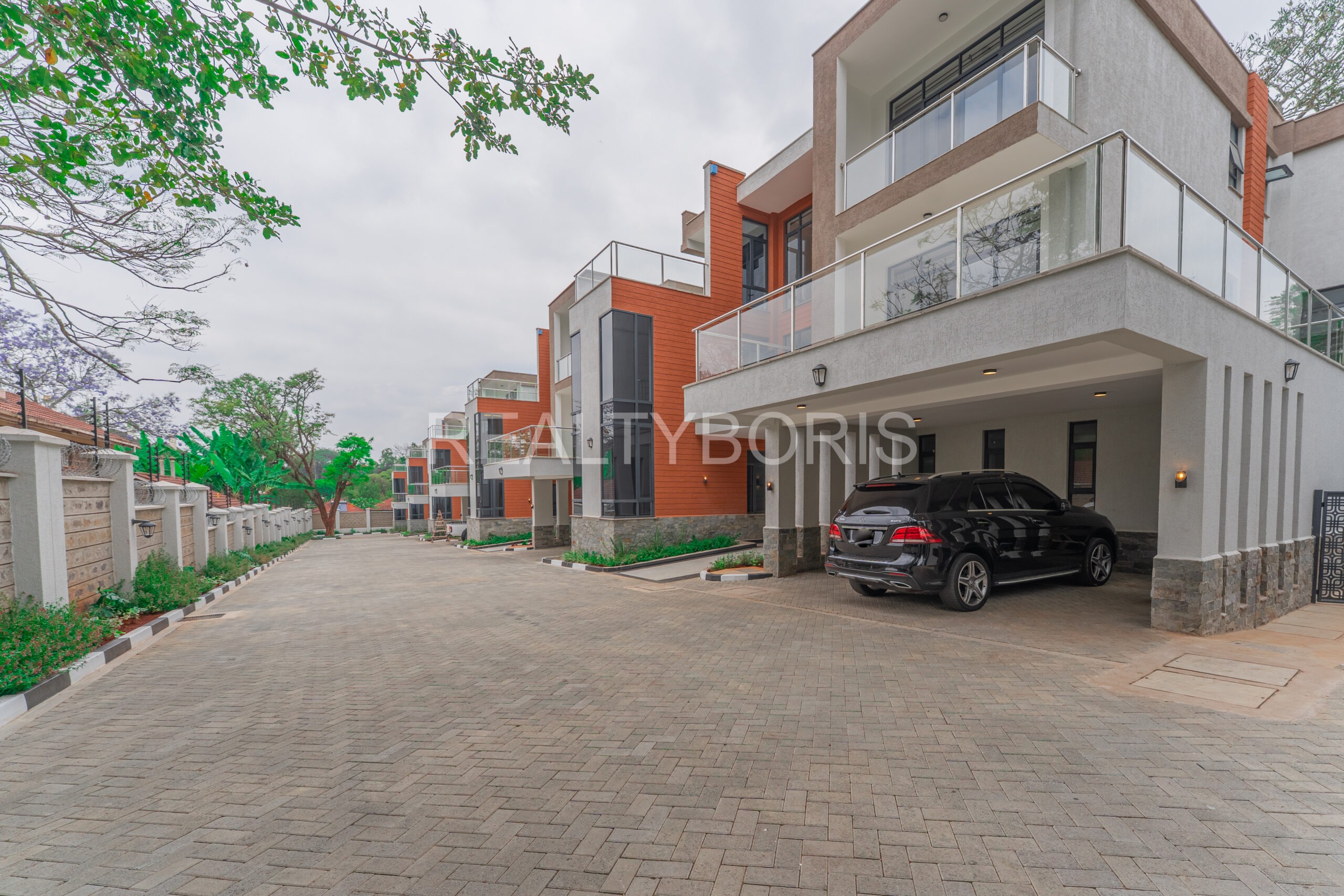
Why Invest in Real Estate when there are stocks, bonds, businesses, money-market funds and many other places to put your money?
It is a fair question.
Real estate usually requires more capital than opening an investment account. Property transactions take time. Buildings require maintenance. Tenants can leave. Property prices do not rise every year, and buying the wrong development can tie up money for years.
So why do individuals, families, companies and institutional investors continue putting significant capital into property?
Because a well-selected property has the potential to do several things at the same time.
It can:
- Generate rental income
- Increase in value over time
- Provide a physical asset
- Allow the use of financing
- Diversify an investment portfolio
- Support retirement income
- Create a family asset
- Provide a home or business premises
- Benefit from urban growth
- Give the investor significant control over performance
Kenya’s property market also remains an important part of the wider economy. The Kenya National Bureau of Statistics reported that construction activity grew by 6.8% in 2025, while residential property prices nationally were 4.8% higher year-on-year in Q1 2026.
Those numbers do not mean every property will make money.
They do show that real estate continues to be a significant economic and investment sector.
At Realty Boris, we believe the correct question is therefore not simply:
“Should I invest in property?”
It is:
“Which property, at what price, in which location, for which tenant, and with what investment strategy?”
This guide explains why invest in real estate can make sense for long-term investors—and where buyers need to remain disciplined.
Why Invest in Real Estate? Understanding the Investment Case
There is no single reason people invest in property.
One buyer may purchase a one-bedroom apartment in Westlands primarily for rental income.
Another may buy land and hold it for future development.
A family may purchase a home partly as an investment and partly to eliminate rent.
A developer may acquire land specifically to construct apartments for sale.
A retirement investor may prefer a completed property producing monthly rental income.
This flexibility is one of real estate’s biggest strengths.
Unlike many financial investments, the investor can often influence the outcome through:
- Property selection
- Renovation
- Furnishing
- Tenant strategy
- Management
- Development
- Pricing
But this also means results can vary dramatically.
Real estate rewards good decisions.
It can punish poor ones.
1. Real Estate Can Produce Rental Income

The first answer to why invest in real estate is income.
A property can produce recurring rent while the investor continues owning the underlying asset.
For example, imagine an investor purchases an apartment for:
KSh 15 million
and achieves monthly rent of:
KSh 100,000
Annual gross rent would be:
KSh 1.2 million
That represents an 8% gross rental yield before expenses.
However, good investment analysis should never stop at gross rent.
The owner may need to pay for:
- Service charge
- Property management
- Repairs
- Insurance
- Vacancy
- Furnishing
- Utilities where applicable
- Taxes
The true return is therefore based on net income, not merely advertised rent.
Kenya Revenue Authority formally recognises residential rental income as taxable income and provides a dedicated framework for landlords receiving rental income.
Kenya Revenue Authority — Residential Rental Income
That illustrates an important point:
Rental property should be treated as an investment business.
Good landlords track:
Revenue – expenses – vacancy = actual return.
The strongest property is not necessarily the one charging the highest rent.
It is the one producing attractive and sustainable net income relative to the money invested.
2. Property Can Appreciate in Value

The second major reason people ask why invest in real estate is capital appreciation.
If you buy a property for KSh 15 million and later sell it for KSh 20 million, the increase represents capital growth before considering transaction costs, taxes and improvements.
Several factors can contribute to appreciation:
- Infrastructure
- Population growth
- Commercial development
- Scarcity
- Better roads
- New schools
- Business expansion
- Improved neighbourhood amenities
- Increasing buyer demand
Current official data demonstrates that property prices can rise—but also that performance varies.
KNBS reported that Kenya’s overall Residential Property Price Index reached 118.4 in Q1 2026, compared with 113.0 in Q1 2025, producing annual price inflation of 4.8%.
KNBS Residential Property Price Index — Q1 2026
But this does not mean every Nairobi property increased by exactly 4.8%.
An oversupplied studio market can behave differently from a scarce family-villa market.
Westlands can behave differently from Lavington.
One project can appreciate while the neighbouring one struggles because of:
- Poor management
- Weak construction
- Excessive pricing
- Oversupply
Capital appreciation should therefore be treated as a potential benefit—not a guarantee.
3. Real Estate Is a Tangible Asset

Another reason investors are attracted to property is that they can physically see what they own.
You can:
- Visit it
- Inspect it
- Rent it
- Renovate it
- Live in it
- Develop it
This psychological element should not be underestimated.
For many investors, owning:
an apartment
a villa
an office
or
a parcel of land
feels different from owning a number on an investment statement.
A physical asset can also have multiple possible uses.
An apartment initially purchased for rental income could later become:
- Your residence
- A child’s home
- A furnished rental
- An asset for resale
That flexibility gives real estate a practical dimension many investors value.
But physical ownership also creates physical responsibility.
Buildings deteriorate.
Roofs leak.
Lifts fail.
Paint fades.
A tangible asset requires maintenance.
4. Investors Can Use Financing to Acquire Property

Another powerful answer to why invest in real estate is leverage.
Real estate is one of the asset classes where investors commonly use borrowed money to acquire a much larger asset.
Imagine a property worth:
KSh 20 million.
Depending on financing terms, the buyer may not need KSh 20 million entirely in cash.
They may contribute part of the purchase price and borrow the balance.
Kenya’s mortgage market demonstrates how significant property-backed financing remains.
The Central Bank of Kenya reported that outstanding mortgage loans increased from KSh 279.3 billion in 2024 to KSh 307.2 billion in 2025, a 10% increase.
There were 30,762 mortgage loans outstanding at the end of 2025.
The average mortgage loan size was approximately KSh 10 million, while the average mortgage interest rate was 13.5% in 2025.
Central Bank of Kenya — 2025 Bank Supervision Annual Report
Leverage can increase returns when used correctly.
It can also increase losses.
If an investor borrows too aggressively and:
- Rent falls
- The unit remains vacant
- Interest rates rise
- Income changes
the loan still has to be serviced.
Financing should therefore strengthen a viable property investment—not rescue a weak one.
5. Real Estate Can Diversify an Investment Portfolio
Putting all your money in one asset creates concentration risk.
An investor may already hold:
- Shares
- Bonds
- Money-market funds
- Businesses
- Cash
Adding property can provide another asset class.
Diversification matters because different investments may respond differently to economic conditions.
Real estate itself can also be diversified.
An investor might own:
- Residential property
- Commercial property
- Warehouses
- Student housing
- Land
Investors who do not want to purchase physical property directly can also obtain real-estate exposure through Real Estate Investment Trusts.
Kenya’s Capital Markets Authority describes REITs as structures that allow investors to participate in larger-scale real estate investments. Income REITs primarily generate revenue from rental-producing property, while Development REITs focus on development projects.
Capital Markets Authority — Real Estate Investment Trusts
That means property investing does not always require buying an apartment yourself.
There are multiple ways to gain exposure to real estate.
6. Urban Growth Can Create Long-Term Property Demand
Another important reason behind why invest in real estate is urbanisation.
People need places to:
- Live
- Work
- Shop
- Study
- Store goods
- Operate businesses
As cities grow, that demand can create opportunities for property investors.
World Bank data estimates Kenya’s urban population at roughly 18.5 million people in 2025, with urban population growth of approximately 2.9% that year.
That does not mean every development in Nairobi is automatically a good investment.
Urban growth can exist alongside local oversupply.
For example:
A city may need more housing overall while a specific neighbourhood contains too many identical one-bedroom apartments.
Investors therefore need to distinguish:
Macro demand
from
Micro oversupply.
The fact that Nairobi is growing does not eliminate the need to analyse the exact unit type and neighbourhood.
7. Property Gives Investors More Control
Many investments are largely passive.
If you purchase shares in a public company, you generally cannot personally change:
- Management
- Pricing
- Product strategy
- Marketing
Real estate can offer more direct control.
A landlord can decide to:
- Renovate
- Furnish
- Change property manager
- Improve landscaping
- Reposition the property
- Upgrade appliances
- Change tenant strategy
Imagine two identical apartments.
Apartment A
Poor photography.
Cheap furniture.
Weak management.
Slow maintenance.
Apartment B
Professionally furnished.
Strong marketing.
Responsive management.
Well maintained.
Apartment B may achieve:
- Higher occupancy
- Better tenants
- Stronger rent
- Better resale presentation
despite having the same floor plan.
That ability to actively improve performance is one reason sophisticated investors continue choosing property.
8. Real Estate Can Support Retirement Planning
A well-managed rental property can potentially generate income long after the investor stops working.
This is another common answer to why invest in real estate.
A person may spend their working years gradually building a portfolio.
By retirement, the objective may be to own assets producing recurring income.
For example:
Three fully paid apartments generating net rental income each month could create a supplementary retirement cash flow.
This strategy requires planning.
Investors should consider:
- Mortgage repayment timeline
- Maintenance
- Property age
- Tenant demand
- Management
The ideal retirement property is probably not one that requires constant emergency repairs.
Investors approaching retirement may therefore prioritise:
- Reliable demand
- Good management
- Lower maintenance
- Established locations
over speculative appreciation
9. Real Estate Provides Multiple Investment Strategies
Real estate is not one investment strategy.
This is one of its biggest attractions.
An investor can choose between:
Buy-to-Let
Purchase property and rent it long term.
Furnished Rentals
Target corporate, medium-term or short-stay tenants.
Off-Plan Investment
Purchase during construction and potentially benefit from payment plans or future value.
Renovation
Buy an older property, improve it and reposition it.
Land Banking
Acquire land and hold it for longer-term growth.
Development
Purchase land and build property for sale or rent.
Commercial Property
Invest in offices, retail, warehouses or other business space.
REITs
Invest indirectly in property through regulated investment structures.
This flexibility means investors can match real estate to:
- Capital
- Risk tolerance
- Time horizon
- Expertise
A young investor and a retiree do not need the same strategy.
10. Real Estate Can Become a Generational Asset
The final major reason behind why invest in real estate is long-term family wealth.
Property can potentially outlive the original investor.
A parent may purchase:
- A home
- Rental apartments
- Commercial property
- Land
that later passes to children or other beneficiaries.
This is one reason real estate often forms part of family wealth planning.
A well-selected asset can potentially provide:
- Income today
- Appreciation over time
- An asset available to future generations
But generational wealth requires proper planning.
Property ownership should be supported by:
- Clean documentation
- Estate planning
- Succession planning
- Proper records
- Clear ownership structures
An asset becomes significantly less useful to the next generation if ownership becomes trapped in a long-running family dispute.
Why Invest in Real Estate Instead of Keeping Everything in Cash?
Cash provides liquidity.
That is extremely important.
Investors should maintain appropriate emergency reserves.
But holding all long-term wealth entirely in cash may create another issue: purchasing power can change over time.
Property is sometimes described as an inflation hedge because rents and property values may rise alongside broader prices.
However, this relationship is not guaranteed.
A badly selected property can underperform even during inflation.
Real estate should therefore be viewed as one component of a diversified long-term wealth strategy rather than a magical protection against every economic condition.
Property Can Also Provide Personal Utility
One unusual characteristic of real estate is that an investment can also improve your life.
If you purchase a home, you gain:
financial ownership
and
somewhere to live.
If you purchase an office, your business can occupy it.
If you purchase land, you may later:
- Build
- Farm
- Develop
This combination of investment value and practical use differentiates property from many financial assets.
Why Real Estate Can Go Wrong
A responsible answer to why invest in real estate must also discuss the risks.
Property is not automatically safe.
Overpaying
Buying an excellent property at an unrealistic price can still produce a poor investment.
Oversupply
Too many competing apartments can reduce rent and resale demand.
Vacancy
No tenant means no rental income.
Maintenance
Buildings require money to operate.
Poor Management
Bad property management can damage rental performance and resale value.
Construction Delays
Off-plan investors may face delayed completion.
Liquidity
Selling property usually takes longer than selling publicly traded investments.
Financing Risk
Debt magnifies both opportunity and risk.
Legal Problems
Title issues and ownership disputes can create serious complications.
Wrong Location
A beautiful property can underperform in a weak micro-location.
The lesson is simple:
Real estate can be a powerful investment—but only when the fundamentals make sense.
How to Choose a Good Real Estate Investment
Before investing, evaluate the property systematically.
Location
Ask:
- Who wants to live here?
- Where do they work?
- What schools are nearby?
- What infrastructure supports the area?
Purchase Price
Compare:
- Similar listings
- Price per square metre
- Recent market evidence
Rental Income
Use realistic rent.
Not the developer’s most optimistic projection.
Supply
How many competing properties exist?
Demand
Who is the target tenant?
Service Charge
High monthly costs reduce returns.
Developer
For off-plan purchases, investigate the developer’s track record.
Exit Strategy
Who will buy the property from you in five or ten years?
Documentation
Verify ownership and conduct full due diligence.
Good property investing begins before the purchase.
Frequently Asked Questions
Why Invest in Real Estate in Kenya?
Real estate can potentially provide rental income, capital appreciation, diversification, financing opportunities and long-term asset ownership.
Kenya’s growing urban population and continued property-market activity can create opportunities, but investors still need to choose specific properties carefully.
Is Real Estate Better Than Stocks?
Neither is automatically better.
Stocks can offer greater liquidity and easier diversification.
Physical property can provide rental income, leverage, direct control and tangible ownership.
Many investors use both.
Is Real Estate a Guaranteed Investment?
No.
Property values can fall, rent can decline and units can remain vacant.
Returns depend heavily on purchase price, location, demand, financing and property management.
Is Rental Property Profitable?
It can be.
The correct calculation should consider net income after:
- Service charges
- Management
- Maintenance
- Vacancy
- Tax
- Other expenses
Is Off-Plan Property a Good Investment?
It can provide attractive entry pricing and payment plans.
However, investors must investigate:
- Developer track record
- Approved plans
- Documentation
- Construction progress
- Completion risk
Do I Need Millions to Invest in Real Estate?
Buying physical property often requires significant capital.
However, regulated structures such as REITs can provide another way of obtaining exposure to real estate without purchasing an entire property directly.
Realty Boris Expert View: Why Invest in Real Estate?
At Realty Boris, we believe why invest in real estate should never be answered with:
“Because property always goes up.”
That is not a serious investment strategy.
A better answer is that the right real estate can combine several characteristics that are difficult to find in one investment:
Income.
Potential capital growth.
A tangible asset.
Investor control.
Financing options.
Long-term utility.
But those benefits depend entirely on the quality of the decision.
When analysing a property, we advise investors to ask:
Who will rent this?
What rent can they realistically pay?
How much competing stock exists?
Am I paying a fair price?
What will my actual expenses be?
What happens if the property remains vacant for three months?
Who will buy it from me later?
Those questions are more important than a beautiful brochure.
For Nairobi investors, one of the biggest mistakes is buying only because a project is new.
New does not automatically mean profitable.
Likewise, buying only because a neighbourhood is popular can be dangerous.
A popular neighbourhood can still become oversupplied.
The strongest investors understand the difference between:
buying property
and
buying a good investment.
They are not always the same thing.
Conclusion
Why Invest in Real Estate?
Because carefully selected property can potentially generate income, appreciate in value, create diversification, support retirement and become a long-term family asset.
The Kenyan property market also sits within broader trends including continued urban growth, construction activity and an established mortgage and rental market. KNBS reported residential property-price growth of 4.8% year-on-year in Q1 2026, while construction expanded by 6.8% during 2025.
But those statistics should never be interpreted as a promise.
The right investment still depends on:
- Location
- Price
- Demand
- Supply
- Property type
- Management
- Financing
- Due diligence
Real estate does not create wealth simply because someone owns it.
Good real estate decisions create the possibility of building wealth.
The goal should therefore never be:
“I want to own property.”
The stronger goal is:
“I want to own property that serves a clear financial purpose.”
That may be:
- Monthly rental income
- Long-term growth
- Retirement income
- Portfolio diversification
- Family wealth
Once the goal is clear, it becomes much easier to identify the type of property that actually makes sense.
Call to Action
Thinking of investing in Nairobi real estate?
Contact Realty Boris for expert property guidance, investment analysis and carefully selected opportunities.