
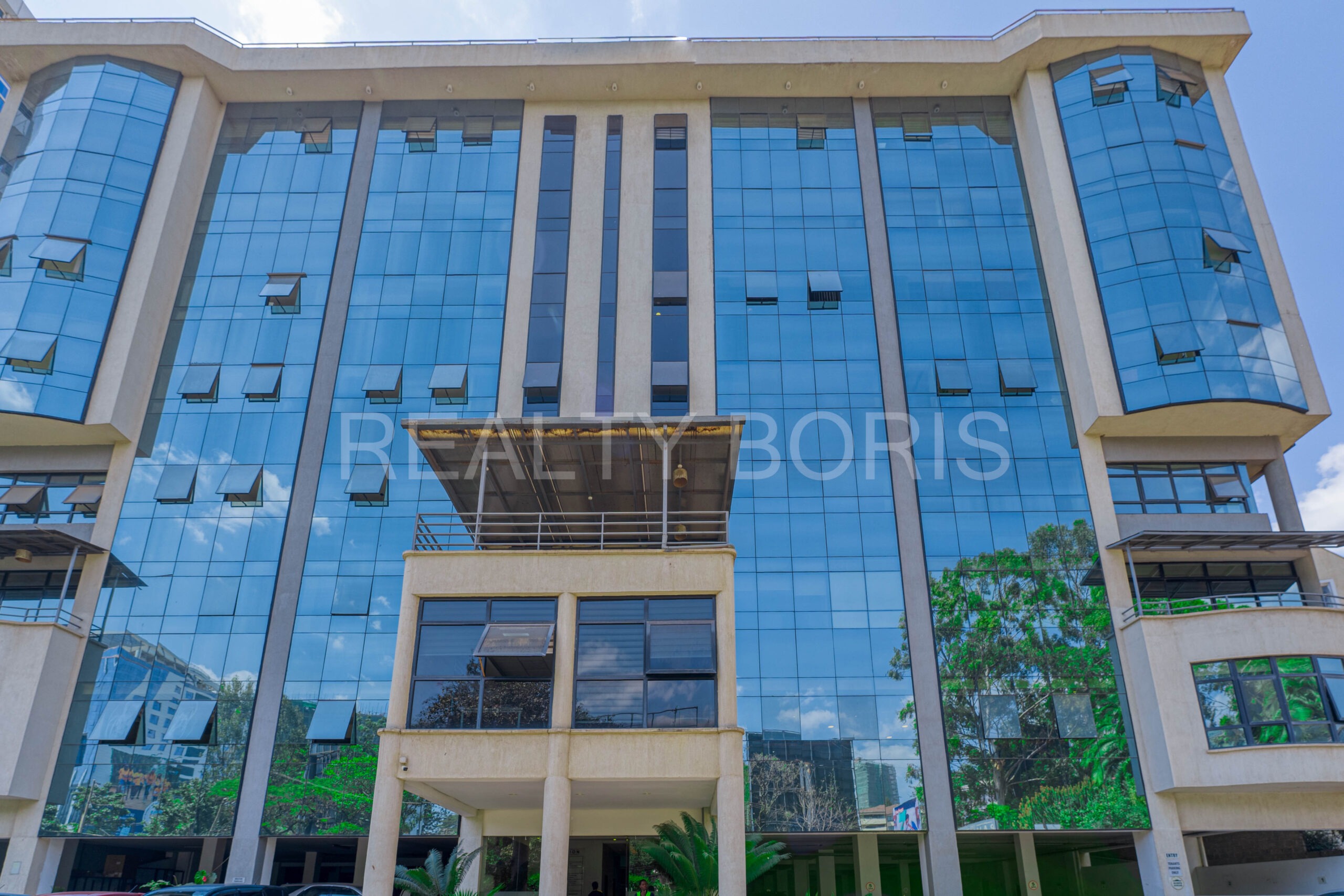
Corporate Office Space in 2026 is no longer judged simply by how many square metres a company can lease, how prestigious the reception looks or whether the building has enough desks for every employee.
Corporate occupiers are asking much more difficult questions.
Can employees get to the office conveniently?
Does the building make people actually want to come to work?
Can the space support both quiet individual work and collaboration?
Is the internet reliable?
What happens when electricity goes off?
Can the company expand or contract without relocating?
How much will the office cost to operate?
Does the building support the organisation’s sustainability commitments?
And perhaps most importantly:
Does this office help the company perform better?
The role of the workplace has changed significantly.
Hybrid work did not eliminate the office.
Instead, it changed what companies expect from it.
Gensler’s Global Workplace Survey 2026, based on more than 16,000 office workers across 16 countries, found that workers currently spend around 55% of their typical workweek in the office. The research also found persistent problems involving meeting-space availability, noise, ergonomics, temperature and visual privacy.
Gensler Global Workplace Survey 2026
That changes the commercial real estate conversation.
Companies are no longer necessarily asking:
“How much office space can we afford?”
Increasingly, they are asking:
“What kind of office space will our people actually use?”
For Nairobi landlords, investors and developers, understanding this shift could become one of the most important factors determining which office buildings remain competitive over the next decade.
Corporate Office Space in 2026: What Has Changed?
Corporate Office Space in 2026 operates in a very different environment from the traditional office model.
Historically, corporate office planning was relatively straightforward.
A company had 100 employees.
It calculated how many desks were required.
It added:
- Reception
- Boardroom
- Meeting rooms
- Executive offices
- Kitchen
- Storage
Then it leased enough square metres to accommodate everyone.
Hybrid working disrupted that calculation.
Some employees may work from home certain days.
Others may spend time:
- Visiting clients
- Travelling
- Working from coworking spaces
- Working from satellite offices
- Working remotely
Yet collaboration still matters.
Gensler’s 2026 research found that the workplace increasingly supports not only focused work, but also learning, collaboration and social connection.
The office therefore has to do several jobs simultaneously.
It needs to support:
- Focus
- Meetings
- Collaboration
- Virtual calls
- Training
- Social interaction
- Client engagement
- Creativity
- Company culture
That means the best corporate office may no longer be the largest.
It may be the office that performs the most functions effectively.
1. Corporate Tenants Want the Right Location, Not Simply a Prestigious Address
Location remains one of the strongest factors influencing Corporate Office Space in 2026.
But what companies mean by a good location has changed.
A prestigious business address is useful.
Convenience is increasingly more important.
Companies need to think about:
- Where employees live
- Where clients are located
- Road access
- Public transport
- Traffic
- Restaurants
- Banking
- Hotels
- Healthcare
- Parking
- Nearby amenities
In Nairobi, this is why corporate office demand tends to concentrate around established commercial locations such as:
- Westlands
- Riverside
- Upper Hill
- Kilimani
- Parklands
- Gigiri
Each serves a slightly different corporate market.
Westlands
Strong for companies seeking:
- Corporate visibility
- Restaurants
- Hotels
- Banking
- Retail
- International business access
Upper Hill
Strong for:
- Professional services
- Institutional occupiers
- Financial organisations
- Healthcare-related businesses
Riverside
Often attractive to companies looking for:
- Premium corporate environment
- Greater privacy
- Proximity to Westlands and the CBD
- International tenant profile
Gigiri
Relevant for businesses connected to:
- Diplomatic organisations
- International agencies
- NGOs
- Development organisations
The important lesson is that corporate tenants are increasingly evaluating the employee’s entire working day.
A beautiful office becomes less attractive if staff spend excessive amounts of time reaching it.
2. Flexible Floor Plans Are Becoming Essential
One of the strongest requirements in Corporate Office Space in 2026 is flexibility.
Companies do not necessarily know exactly how many employees will be physically present every day three years from now.
Headcount changes.
Hybrid policies change.
Departments grow.
Projects end.
Teams reorganise.
Office design therefore needs to adapt.
Corporate tenants increasingly value floor plates that can support:
- Open-plan areas
- Private offices
- Meeting rooms
- Phone booths
- Collaboration zones
- Training rooms
- Quiet rooms
- Breakout areas
A rigid office layout creates problems.
If every wall is permanent, changing the organisation can become expensive.
Flexible spaces allow companies to modify the workplace without undertaking major construction every time their workforce changes.
This also affects landlords.
A building with efficient floor plates can potentially attract more types of tenants than a building with awkward columns, poor circulation or difficult subdivision.
Corporate tenants should therefore evaluate not only:
“Does this office work today?”
but:
“Can this office still work if our organisation changes?”
That is a much stronger leasing question.
3. Corporate Office Space in 2026 Needs More Than Desks
A major mistake landlords make is assuming companies primarily need workstations.
Modern companies need different spaces for different types of work.
Consider a typical employee’s day.
They might:
- Spend one hour answering emails
- Join a virtual meeting
- Meet a client
- Work privately on a document
- Collaborate with colleagues
- Attend training
- Have lunch with the team
One desk cannot perfectly support all of those activities.
Gensler’s workplace research measures work across several modes including individual work, in-person collaboration, virtual collaboration, learning and social interaction. Its 2025 and 2026 research shows that offices increasingly need to support this range of activities rather than assuming everyone works the same way.
This means strong corporate offices increasingly include:
- Workstations
- Small meeting rooms
- Large meeting rooms
- Boardrooms
- Phone booths
- Collaboration tables
- Informal meeting areas
- Quiet rooms
- Training spaces
The office is becoming less like a room full of desks and more like a collection of different working environments.
4. Privacy and Acoustics Matter More Than Open-Plan Design
Open-plan offices became popular because they appeared collaborative and efficient.
But poor open-plan design can create another problem:
noise.
Employees may struggle to focus when they can hear:
- Phone calls
- Meetings
- Colleagues talking
- Printers
- Kitchen activity
- Video calls
Gensler’s 2026 research found noise and workspace-performance gaps continue to affect employees, with workers sometimes creating their own solutions for problems involving privacy, ergonomics and comfort.
The WELL Building Standard also treats acoustic comfort as an important component of productive indoor environments, alongside thermal comfort and other factors influencing occupant well-being.
WELL Building Standard — Comfort
For corporate tenants, acoustic performance should therefore become part of the viewing checklist.
Ask:
- Can employees take confidential calls?
- Can legal teams discuss sensitive matters?
- Can HR conduct private meetings?
- Can executives speak without being overheard?
- Are meeting rooms properly insulated?
- Can staff concentrate?
For law firms, banks, financial institutions, medical businesses and professional services companies, confidentiality is particularly important.
Privacy is no longer something only executive offices need.
The entire workplace needs different levels of acoustic separation.
5. Reliable Technology Infrastructure Is Non-Negotiable
A modern corporate office can survive without an impressive marble lobby.
It cannot function properly without connectivity.
Corporate tenants increasingly need:
- Reliable fibre internet
- Multiple internet-provider options
- Strong internal network infrastructure
- Proper server-room provision
- Mobile network coverage
- Video-conferencing capability
- Backup connectivity
- Sufficient power outlets
- Modern electrical infrastructure
The importance of this becomes obvious when considering how much corporate work now involves:
- Cloud applications
- Microsoft Teams
- Zoom
- Google Meet
- CRM systems
- ERP software
- Online banking
- Cloud storage
- AI tools
- Remote collaboration
Corporate office buildings should therefore be evaluated partly as technology infrastructure.
A tenant should ask:
How many fibre providers serve the building?
Can another provider be installed?
Where will servers be located?
How reliable is mobile signal inside the building?
Can the building support the company’s IT-security requirements?
A beautiful office with unreliable internet is not a premium corporate office.
It is a productivity problem.
6. Corporate Office Space in 2026 Must Have Reliable Power and Building Systems
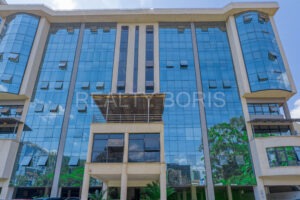
Kenyan corporate tenants understand the importance of operational resilience.
A company cannot repeatedly stop working because:
- Electricity fails
- Lifts stop
- Internet equipment loses power
- Water is unavailable
Corporate office buildings should therefore clearly explain their backup infrastructure.
Tenants increasingly ask about:
- Generator capacity
- Backup power coverage
- UPS provision
- Solar systems
- Water storage
- Borehole availability
- Lift backup
- Fire systems
- Building maintenance
The question is not simply:
“Does the building have a generator?”
It is:
“What exactly does the generator power?”
Some buildings may provide backup only for:
- Common areas
- Lifts
- Security
Others may provide meaningful backup capacity for tenant offices.
Corporate tenants need to understand the difference.
Resilience can become especially important for:
- Technology companies
- Financial institutions
- Call centres
- Professional-service firms
- International organisations
Operational continuity has real financial value.
7. Employees Want Healthier and More Comfortable Offices
Another important shift affecting Corporate Office Space in 2026 is growing attention to employee well-being.
An office is not comfortable simply because it has air conditioning.
Employees experience the building through:
- Air quality
- Temperature
- Light
- Noise
- Ergonomics
- Ventilation
- Water
- Movement
- Outdoor space
The WELL Building Standard evaluates buildings through factors including air, water, light, fitness, comfort and mental well-being.
International WELL Building Institute
Gensler’s workplace research also found employees increasingly favour environments with features such as natural light, outdoor space and settings that support creativity and productivity.
For office landlords, this means relatively simple design decisions can matter.
Consider:
- Natural daylight
- Operable windows where appropriate
- Outdoor terraces
- Green spaces
- Good ventilation
- Comfortable temperature
- Quiet work areas
- Proper washrooms
- Quality common areas
A corporate employee may spend eight or more hours inside the workplace.
That makes indoor environmental quality part of the leasing decision.
8. Sustainability Is Moving From Marketing to Business Requirement
Sustainability used to be treated as an optional advantage in office buildings.
That is changing.
For multinational organisations especially, environmental performance can connect directly to corporate sustainability commitments.
Companies may increasingly ask:
- How much electricity does the building consume?
- Is energy monitored?
- Is there solar generation?
- Is water reused?
- Are efficient fixtures installed?
- Is waste separated?
- Does the building have green certification?
IFC’s EDGE framework evaluates buildings against resource efficiency in:
- Energy
- Water
- Embodied energy in materials
Projects achieving at least a 20% projected improvement across the relevant EDGE categories compared with conventional baselines can qualify for certification.
This matters to tenants for more than environmental reputation.
Efficient buildings can also reduce operating costs.
A building that uses less:
- Electricity
- Water
- Cooling
may create lower long-term occupancy expenses.
Corporate tenants increasingly understand that rent is only one component of real estate cost.
Operating efficiency matters too.
9. Security and Access Control Remain Critical

Corporate tenants need to know exactly who can access the building.
This is particularly important for:
- Financial services
- Law firms
- Embassies
- NGOs
- International companies
- Technology companies
Modern office security may include:
- CCTV
- Access cards
- Visitor registration
- Security personnel
- Vehicle screening
- Controlled lift access
- Reception management
- Emergency procedures
But security needs balance.
A building can be extremely secure while creating an unpleasant arrival experience.
Imagine a client arriving for an important meeting and spending 20 minutes trying to enter the building.
That is not ideal either.
Corporate buildings need security systems that are:
- Controlled
- Professional
- Efficient
- Predictable
The tenant should understand how:
- Employees
- Clients
- Deliveries
- Contractors
- Visitors
move through the building.
Good security should protect occupants without making everyday business unnecessarily difficult.
10. Flexible Lease Terms Can Be as Important as the Office Itself
Perhaps one of the biggest changes in Corporate Office Space in 2026 is the need for commercial flexibility.
Companies are reluctant to make long-term real estate commitments when future space requirements are uncertain.
A tenant may currently employ 60 people.
Within three years it could employ:
- 40
- 80
- 120
That uncertainty makes lease structure extremely important.
Corporate tenants may evaluate:
- Lease length
- Break clauses
- Expansion rights
- Renewal options
- Rent escalation
- Service charge
- Fit-out period
- Rent-free period
- Reinstatement obligations
- Subletting rights
The best landlord-tenant relationship recognises that businesses change.
A tenant should not need to relocate simply because they need another 200 square metres.
Buildings that allow companies to expand within the same property may have a major advantage.
Likewise, access to serviced or flexible office space within or close to the building can help tenants manage temporary growth.
Corporate Office Space in 2026: Parking Still Matters in Nairobi
Global workplace discussions frequently emphasise public transport.
Nairobi requires another consideration:
parking.
For many corporate tenants, parking remains significant.
Businesses may need space for:
- Executives
- Employees
- Clients
- Visitors
- Company vehicles
Corporate occupiers should establish:
- Number of allocated bays
- Visitor parking
- Additional parking cost
- Basement access
- Security
- Vehicle height restrictions
- Traffic entering and leaving the property
The National Construction Authority’s National Building Code 2024 includes requirements relating to commercial-building parking, vehicular circulation, garage dimensions and other building-design considerations.
National Construction Authority — National Building Code 2024
For landlords targeting corporate tenants, inadequate parking can significantly reduce the competitiveness of an otherwise attractive office building.
Building Management Can Determine Whether Tenants Stay
A corporate office building may look excellent during the first viewing.
The real test begins after the tenant moves in.
Companies quickly notice:
- Lift downtime
- Broken air conditioning
- Poor cleaning
- Security problems
- Water interruptions
- Slow maintenance
- Poor communication
Professional property management therefore becomes part of the product.
Corporate tenants need building managers who respond quickly when:
- A lift fails
- Plumbing breaks
- Access systems malfunction
- Generators require maintenance
- Common areas deteriorate
An office building does not remain Grade A because it was Grade A when it opened.
It has to be managed like a Grade A building every day.
This is one of the most overlooked aspects of corporate leasing.
Corporate Tenants Want Better Space, Not Necessarily More Space
The traditional assumption was:
Large company = large office.
That relationship is becoming weaker.
Hybrid work allows some companies to reduce desk numbers while investing more in:
- Meeting rooms
- Collaboration
- Client areas
- Training rooms
- Employee amenities
A smaller but better-designed office may therefore outperform a larger conventional office.
This is why landlords should be careful about marketing only:
“10,000 square feet available.”
The better conversation may be:
“What can this 10,000 square feet allow your organisation to do?”
Corporate tenants increasingly care about utilisation.
Unused office space is expensive.
A boardroom occupied twice per month is expensive.
An executive office that sits empty three days every week is expensive.
The modern workplace needs to make every square metre work harder.
What Corporate Tenants Should Ask During an Office Viewing
When inspecting Corporate Office Space in 2026, companies should ask more than the monthly rent.
Location
- Where do employees live?
- How difficult is the commute?
- Are restaurants nearby?
- Are banks and hotels accessible?
Space
- How efficient is the floor plate?
- Can it be subdivided?
- Can the layout change later?
- Is there adequate natural light?
Technology
- Which fibre providers serve the building?
- Is mobile network coverage strong?
- Is there space for IT infrastructure?
Power
- What does backup power cover?
- How quickly does backup activate?
- Is there solar?
Parking
- How many bays are included?
- How much are extra bays?
- Where do visitors park?
Building
- How many lifts?
- Is there a service lift?
- What are the operating hours?
- Who manages the property?
Financial
- What is the rent?
- What is the service charge?
- What is the escalation?
- Are there fit-out concessions?
- What is the deposit?
Lease
- What is the minimum term?
- Is there a break clause?
- Can the company expand?
- Can the company sublease?
These questions reveal the true cost and practicality of the office.
Corporate Office Space in 2026: What Landlords Should Prioritise
For landlords, the shift in tenant requirements creates a clear message.
Do not compete only on rent.
Compete on performance.
Strong corporate buildings increasingly need:
- Reliable infrastructure
- Efficient floor plates
- Strong internet options
- Backup power
- Professional management
- Natural light
- Good ventilation
- Security
- Parking
- Flexible layouts
- Sustainability
Many of these qualities are difficult to add after construction.
Developers should therefore think about corporate tenant requirements during design.
A poorly designed commercial building may need to discount rent later to compensate for weaknesses that could have been addressed before construction.
Corporate Office Space in 2026: What Developers Should Stop Doing
Developers should avoid assuming that an impressive façade automatically creates a premium office.
Corporate tenants ultimately operate inside the building.
They care about:
- Lift waiting times
- Temperature
- Internet
- Parking
- Power
- Meeting rooms
- Noise
- Service charge
- Management
A dramatic lobby is valuable.
But if employees wait ten minutes for a lift every morning, the building experience deteriorates.
The strongest commercial development starts with the daily tenant journey.
From:
Driving into the building
to:
Entering security
to:
Taking the lift
to:
Working
to:
Meeting clients
to:
Leaving at the end of the day.
Every point matters.
Common Mistakes Companies Make When Choosing Office Space
Choosing Mainly by Rent
Cheaper rent may be offset by:
- Poor location
- Higher operating costs
- Weak infrastructure
- Employee dissatisfaction
Taking Too Much Space
Unused office space creates unnecessary cost.
Taking Too Little Space
A company that cannot grow may need another expensive relocation.
Ignoring Parking
This can become a daily source of frustration.
Ignoring Internet Infrastructure
Never assume every building has equivalent connectivity.
Ignoring Backup Power
Understand what is actually backed up.
Ignoring Service Charge
Always calculate total occupancy cost.
Ignoring Employees
Senior management may love an office that employees find inconvenient.
Focusing Only on Appearance
The building has to work operationally.
Frequently Asked Questions
What Do Corporate Tenants Want From Office Space in 2026?
Corporate tenants increasingly prioritise location, flexible layouts, reliable internet, backup power, meeting and collaboration space, privacy, employee comfort, sustainability, security and flexible lease structures.
Is Hybrid Work Reducing the Need for Offices?
Hybrid work is changing how offices are used rather than eliminating them.
Gensler’s Global Workplace Survey 2026 found workers still spend around 55% of their typical working week in the office, while workplaces increasingly need to support collaboration, learning and social connection alongside individual work.
What Makes a Good Corporate Office in Nairobi?
A strong Nairobi corporate office generally combines:
- Strategic location
- Reliable connectivity
- Backup power
- Parking
- Security
- Efficient layout
- Professional management
- Reasonable total occupancy costs
Is Sustainability Important to Corporate Tenants?
Increasingly, yes.
Multinational and sustainability-focused organisations may have real-estate requirements linked to energy efficiency, water use and environmental performance.
IFC’s EDGE framework is one example of how building resource efficiency can be measured.
Should Companies Choose Open-Plan or Partitioned Offices?
The best answer is often a combination.
Modern workplaces may require:
- Open collaborative areas
- Private offices
- Meeting rooms
- Quiet rooms
- Phone booths
The correct mix depends on the organisation.
How Much Parking Should a Corporate Tenant Request?
That depends on staff numbers, client visits, executive requirements and employee commuting patterns.
Companies should establish parking requirements before shortlisting buildings rather than negotiating parking after agreeing on the office.
Realty Boris Expert View on Corporate Office Space in 2026
At Realty Boris, we believe Corporate Office Space in 2026 should be evaluated as a business tool rather than simply a commercial property.
The question is no longer only:
How many employees can we fit here?
The better questions are:
Will employees want to work here?
Can clients reach us easily?
Can the office adapt as the company grows?
Can people concentrate?
Can teams collaborate?
Will the building keep operating when infrastructure fails?
What will the office actually cost us every month?
Those questions change the property search.
For landlords, they also change what a strong office building looks like.
The most competitive buildings will not necessarily be the buildings offering the most square metres.
They will be the buildings offering the best combination of:
- Location
- Flexibility
- Infrastructure
- Employee experience
- Efficiency
- Management
We believe this will increasingly separate stronger Nairobi office assets from ordinary commercial stock.
Businesses have more data.
Employees have higher expectations.
Corporate sustainability requirements are becoming more sophisticated.
Hybrid work has made companies more conscious of space efficiency.
That means landlords must give tenants stronger reasons to choose their building.
Final Thoughts
Corporate Office Space in 2026 is not disappearing.
It is becoming more demanding.
Corporate tenants still need physical workplaces.
But they increasingly expect those workplaces to justify their cost.
The office needs to support:
- Productivity
- Collaboration
- Technology
- Employee experience
- Client experience
- Business continuity
- Corporate culture
This is why the future is unlikely to be defined simply by bigger office buildings.
It will be defined by better-performing buildings.
Corporate tenants want spaces that are easy to reach.
Easy to operate.
Easy to adapt.
Comfortable to work in.
Reliable when things go wrong.
And professional enough to represent the company properly.
For Nairobi landlords and developers, that creates a clear opportunity.
Do not simply build offices.
Build workplaces companies have a reason to choose.
Call to Action
Looking for corporate office space in Nairobi?
Contact Realty Boris for expert property guidance and carefully selected commercial spaces.